英语
英语 中文简体
中文简体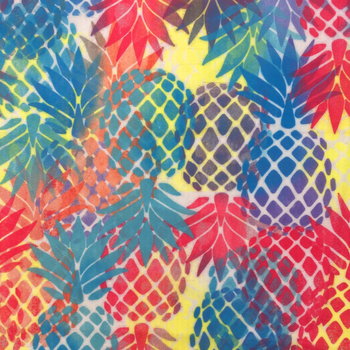
News
-
23
2026.09Common Problems with Polyester Knit Fabric and Practical Sol...
After three wash cycles, a polyester knit T-shirt begins to show fuzzy pills on the chest panel, and the collar edge starts to curl. This is the exact failure mode garment buyers... -
21
2026.09Polyester Knit Fabric vs Cotton Fabric: Key Differences
Selecting the right fabric for garment production requires understanding the distinct performance characteristics of different materials. Polyester Knit Fabric vs Cotton Fabric r... -
18
2026.09How to Test Polyester Knit Fabric Quality: A Complete Fabric...
A 3,000-meter roll of polyester interlock lands at your cutting table. The hand feels right and the shade matches, but the real risks are invisible: uneven shrinkage across rolls,... -
16
2026.09How Fabric Weight and GSM Affect Polyester Knit Fabric Perfo...
An apparel specification sheet asks for a 140 GSM polyester jersey, and the sample weighs in at 160 GSM. That 20 gram difference changes price, drape, and drying time before a sin... -
14
2026.09How to Choose the Right Polyester Knit Fabric: A Buyer's Gui...
Two polyester knit swatches can look almost identical across a meeting table and perform completely differently on the sewing line. One may spring back cleanly after a season of w...

Swimwear & Beachwear Fabrics Industry Knowledge
Haining Yitai Knitting Co., Ltd. has been developing and manufacturing performance knit fabrics since 2004. Our Nylon Spandex Swimsuit Fabric Manufacturers range covers solid, rib, shiny, calendered, foil-printed and digitally printed constructions for swimwear, beachwear and resort collections. We supply brands, OEM factories and distributors that need consistent stretch recovery, chlorine resistance and repeatable shade control.
What We Manufacture in This Category
Our swimwear and beachwear fabric family is built around nylon–spandex and polyester–spandex knits. We knit, dye, finish and print in-house, which lets us control loop structure, elastane tension and heat-setting as one continuous process. The result is fabric that holds its shape in chlorinated pools, salt water and repeated wash cycles.
Typical constructions include single jersey, rib, interlock and power-net structures. Weights generally run from 180 to 270 GSM, with widths around 150–160 cm. Elastane content ranges from 14% to 27%, depending on the compression and recovery target of the end garment.
Our Swimwear & Beachwear Range
| Fabric Type | Composition | Typical Weight | Application Fit |
|---|---|---|---|
| Solid Matt Nylon Spandex | 80% Nylon / 20% Elastane | 210 GSM | One-piece swimsuits, bikinis, training suits |
| Rib Nylon Spandex | 75% Nylon / 25% Spandex | 270 GSM | Beachwear tops, cover-ups, fashion swim |
| Shiny Single Jersey | 73% Nylon / 27% Spandex | 243 GSM | Competition swimwear, fashion bikinis |
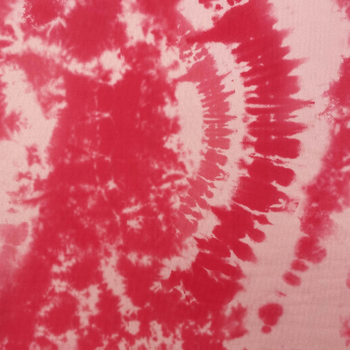
| Foil-Printed Nylon | 80% Nylon / 20% Elastane | 210 GSM | Resort wear, statement swim pieces |
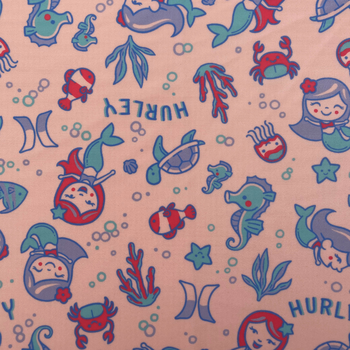
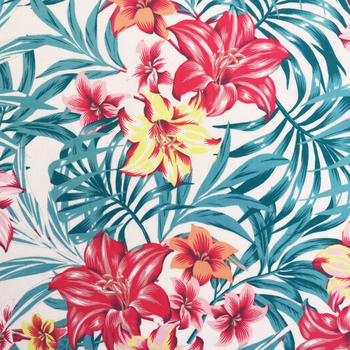
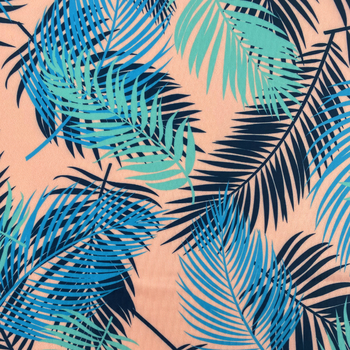
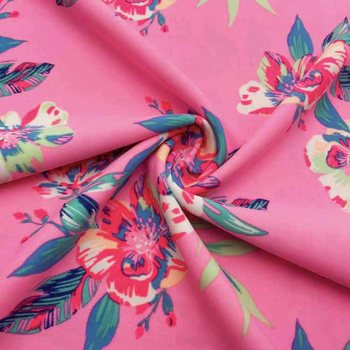
| Printed Polyester Spandex | 86% Polyester / 14% Elastane | 200 GSM | Beachwear, board shorts, active swim |
Application Fit and Material Selection
Nylon spandex is the preferred choice for swimwear that needs soft hand feel, high stretch and excellent chlorine resistance. Polyester spandex offers superior color fastness to sunlight and is often used for beachwear and board shorts. We help match the fiber blend to the end use, the care label and the target market.
For competitive swimwear, we recommend higher elastane content and a compact knit structure to deliver compression and shape retention. For fashion bikinis, lighter weights and softer hand feel are usually more important. Our Activewear Fabrics range shares similar performance requirements and can be cross-referenced when a collection spans both categories.
Critical Specifications and Performance
- Composition: Nylon/spandex blends from 73/27 to 80/20; polyester/spandex from 86/14.
- Weight: 180–270 GSM, with tolerance typically ±5%.
- Width: 150–160 cm tubular or open width.
- Stretch and recovery: ≥95% recovery after 75% extension; residual set ≤3 mm.
- Chlorine resistance: Elastic retention ≥90% after 100 hours at 5 ppm chlorine.
- Dimensional stability: Shrinkage ≤±2.0% after three washes at 40°C.
- Colorfastness: Grade 4+ to washing, chlorinated water and perspiration.
- UPF: UPF 50+ available on request for sun protection styles.
Configuration Options and Customization
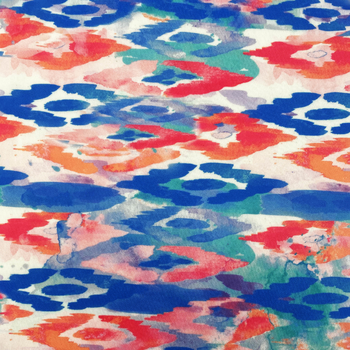
We configure each order around the garment specification. Options include solid dyeing, yarn-dyed stripes, digital printing, foil printing, calendering and embossing. We can also adjust hand feel through finishing, add moisture-wicking or anti-static properties, and supply matched samples for approval.
For brands developing a full collection, our Yoga Wear Fabrics and Underwear Fabrics ranges use compatible dyeing and finishing platforms, which helps maintain shade consistency across product lines.
Quality Assurance and Acceptance Testing
Our quality control system covers incoming yarn, knitting tension, dyeing shade, finishing and final inspection. We test GSM, stitch density, shrinkage, stretch recovery, pilling, colorfastness and chlorine resistance against agreed limits. For recycled content, we hold GRS certification and can provide transaction certificates through the supply chain.
Acceptance testing follows AATCC or ISO methods as specified. We retain control swatches from each lot and compare against the approved sample before shipment. Third-party lab testing can be arranged when required.
Information We Use to Configure Your Solution
To prepare an accurate quotation and development timeline, we need the following project inputs:
- End garment type and target market
- Required composition, weight and width
- Stretch and recovery requirements
- Color standards or Pantone references
- Print artwork or pattern files
- Performance requirements (chlorine, UPF, wicking)
- Order quantity per color and per size
- Packaging and labeling instructions
- Delivery destination and Incoterms
Frequently Asked Questions
What is the difference between nylon spandex and polyester spandex for swimwear?
Nylon spandex offers softer hand feel, higher stretch and better chlorine resistance, making it ideal for performance swimwear. Polyester spandex provides superior color fastness to sunlight and is often chosen for beachwear and board shorts. We can supply both and help select the right blend for your end use.
Can you customize the fabric weight and width?
Yes. We knit to order and can adjust weight from 180 to 270 GSM and width from 150 to 160 cm. Tolerances are typically ±5% for weight and ±2 cm for width. Custom specifications are confirmed against a development sample before bulk production.
How do you ensure chlorine resistance in your swimwear fabrics?
We use high-quality chlorine-resistant elastane and apply protective finishing treatments. Our testing shows elastic retention of ≥90% after 100 hours in 5 ppm chlorine, compared with ≤45% for standard nylon spandex. This helps garments maintain fit and appearance over many pool sessions.
What is your minimum order quantity?
Minimum order quantities vary by fabric type, color and customization. For solid dyed fabrics, we typically require 500–1,000 meters per color. Printed fabrics may have higher minimums due to setup. Please share your project details and we will confirm the MOQ and lead time.
Do you provide samples for approval?
Yes. We provide yardage samples for hand feel, stretch and color approval. For printed designs, we supply strike-offs. Sampling usually takes 7–10 days depending on complexity. Bulk production begins after written sample approval.
What certifications do you hold?
We are GRS certified for recycled content, covering processing, manufacturing, packaging, labeling, trading and distribution. We can provide transaction certificates for orders containing recycled materials. Other certifications may be available on request.