Article Directory
After three wash cycles, a polyester knit T-shirt begins to show fuzzy pills on the chest panel, and the collar edge starts to curl. This is the exact failure mode garment buyers encounter when they source 150 GSM single jersey without specifying fiber denier, yarn twist, and finishing route. Polyester knit problems are not random—they trace back to specific fiber properties and processing decisions that a fabric mill can control. Understanding how polyester fabric is made reveals why these defects appear, and it also points to the exact checks to add to your purchase order.
Pilling on polyester knit fabric occurs when loose fiber ends on the fabric surface tangle into small balls, and the root cause is fiber denier selection combined with insufficient surface finishing.
Short-denier fibers in the 1.0 to 1.5 D range are common in single jersey garments, but they create a soft hand that releases fiber ends after repeated abrasion. When those loose ends entangle with each other, they form pills, and the high tensile strength of polyester means the pills resist breaking off naturally. The result is a rough, worn-looking surface after just a few washes.
Static cling and poor moisture management in polyester knit fabrics both stem from the same root property: polyester is hydrophobic, with a moisture regain of only 0.4 percent compared to 8 percent for cotton.
Because polyester does not absorb water, the surface stays dry but also retains electrical charge when it rubs against skin or other synthetic layers. In low-humidity environments, the charge builds until the fabric sticks to the body or snaps when separated. For sweat-intensive activewear, the same hydrophobic surface prevents moisture from wicking away, leaving the wearer damp and uncomfortable.
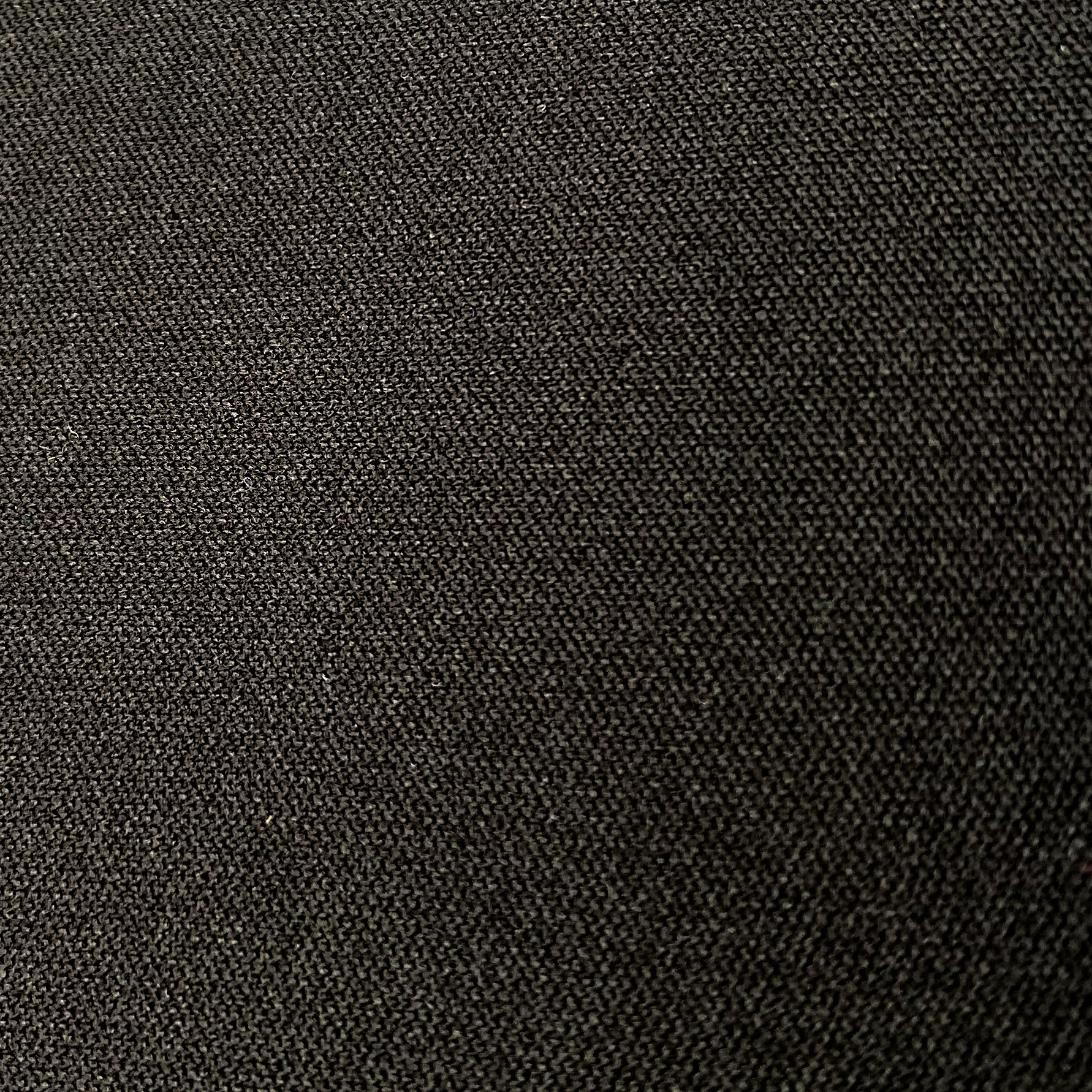 Quick-Dry Polyester Knit Fabric for Moisture ManagementThis black quick-dry polyester fabric addresses the electrostatic buildup and moisture retention discussed above, making it suitable for activewear that needs to stay comfortable and dry.View Product →
Polyester knit fabric shrinkage is heat-induced rather than water-induced, and it is controlled by heat-setting temperature and residual stress in the loop structure.
Polyester does not absorb enough water to swell or shrink like cotton, but it is a thermoplastic fiber. When it is exposed to temperatures above 130°C during washing or ironing, the molecular chains relax and the fabric pulls inward. Knitted structures are more susceptible than wovens because the loop geometry allows the fabric to compress when stress is relieved.
| Construction | Warp Shrinkage | Weft Shrinkage | Heat-Setting Temp |
| Single Jersey | 3-5% | 5-8% | 180-190°C |
| Interlock | 2-3% | 3-5% | 185-195°C |
| Rib | 4-6% | 6-10% | 175-185°C |
| Mesh | 1-2% | 2-3% | 190-200°C |
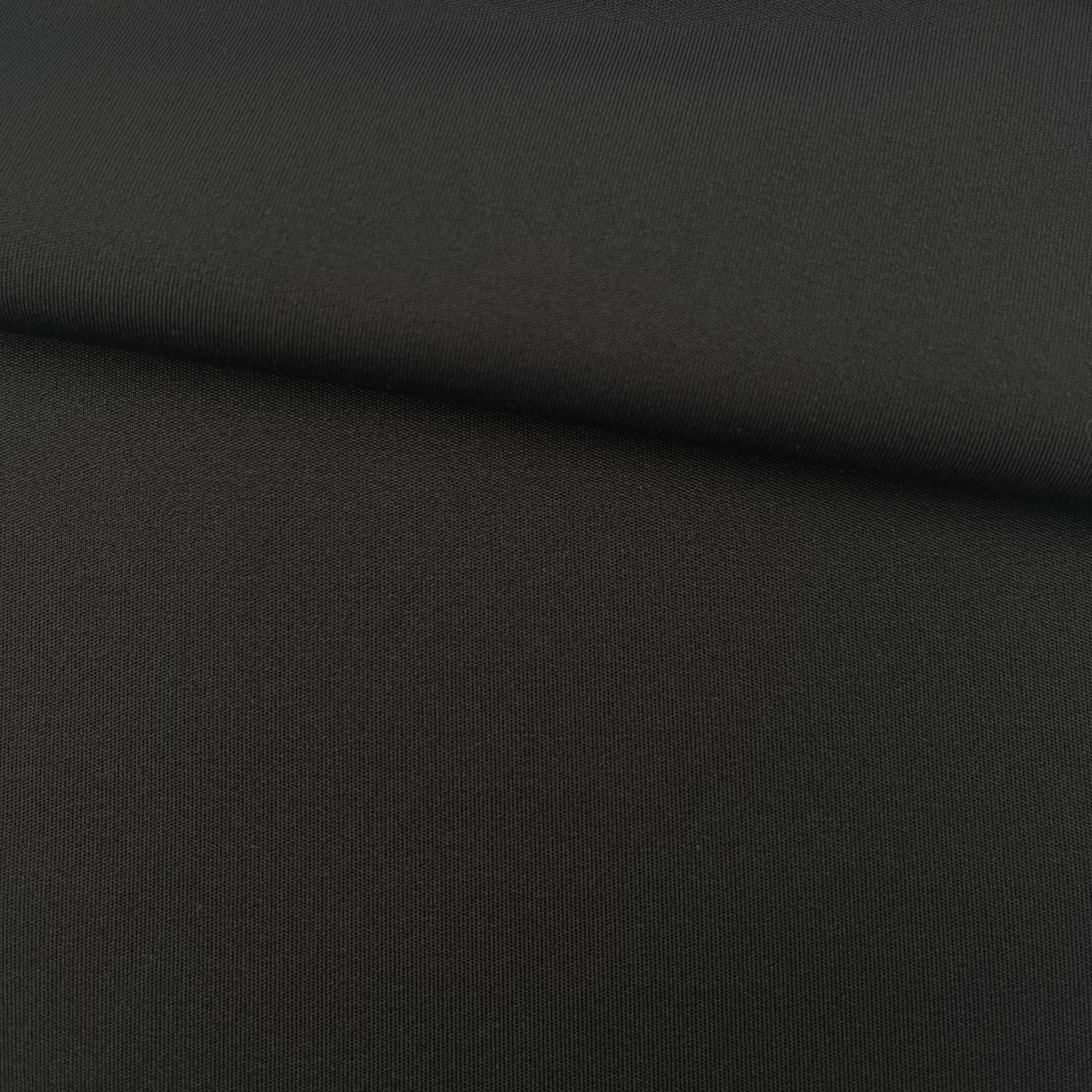 Polyester-Spandex Interlock Fabric with Thermal StabilityThis interlock fabric, composed of 83% polyester and 17% spandex, resists heat-induced shrinkage and offers high recovery, making it a reliable choice for garments requiring dimensional stability.View Product →
Color fading in polyester knit fabrics is a dye sublimation problem, while dye migration on polyester-spandex blends is a thermal migration problem, but both are solved with careful disperse dye selection and finishing control.
Polyester is colored with disperse dyes, which are non-ionic and applied at 130°C under pressure. The energy level of the dye determines its sublimation temperature. Low-energy dyes sublime at around 150°C, which is below the heat-setting temperature used in finishing. During heat-setting, the dye sublimes out of the fiber and can deposit on adjacent yarns or the garment lining.
 Skin-Friendly Underwear Fabric with ColorfastnessDesigned for underwear, this polyester knit fabric minimizes dye sublimation issues, ensuring colors remain stable during heat-setting and prolonging the garment's appearance.View Product →
Snagging in polyester knit fabric is caused by exposed loops that catch on sharp or rough surfaces, and resistance is determined by stitch length, gauge, and fiber toughness.
Single jersey fabrics have one exposed loop side, making them the most vulnerable construction. When a loop catches on a zipper, a gym machine, or a rough surface, the fiber does not break—it pulls out of the stitch and forms a long run. Polyester's high strength actually works against the fabric here, because the fiber resists snapping, so the pull propagates across the panel.
Implementing a reliable quality control framework for polyester knit fabric starts before production: the spec sheet must define acceptable ranges for pilling, shrinkage, colorfastness, and snag resistance.
For garment brands, the most effective approach is to request test certificates with every lot. Suppliers such as Haining Yitai Knitting Co., Ltd that operate an in-house laboratory can provide much faster turnaround and more consistent quality than those that outsource testing.
No fabric is completely pill-free, but polyester knit can be engineered to resist pilling at a high grade. By using 2.0 to 3.0 denier fibers, compact-spun yarn, and a singeing route, mills routinely achieve a pilling grade of 4 or higher on the ISO 12945-2 scale.
Prevent post-sewing shrinkage by ensuring the fabric is heat-set at a temperature above the garment's maximum use temperature. If the fabric can be washed at 40°C, heat-setting at 180°C or higher is sufficient. Also, test a pre-production sample using AATCC 135 before any bulk order.
Polyester's 0.4 percent moisture regain means it cannot neutralise static charge. A hydrophilic finish or fabric softener reduces cling by allowing a thin layer of moisture to conduct the charge. For knit activewear, choosing an interlock or mesh construction with a wicking finish keeps the fabric more comfortable.
Interlock with 4-way stretch spandex is the best all-round construction for activewear because it offers dimensional stability, a smooth surface, and reduced pilling risk compared to single jersey. For ventilation zones, a mesh knit panel is effective.

As Yitai, since 2004, we have manufactured sportswear knitted fabrics such as interlock fabric, nylon fabric, spandex fabric, polyester fabric etc. With excellent R&D group, marketing team, quality control system, experienced dyeing & finishing supporting facility and customer service system.
Haining Yitai Knitting Co., Ltd
No. 198 Canghai Road, Warp Knitting Zone, Haining City, Zhejiang, 314419, China Tel: +0086 135 6738 5757 Email: [email protected] [email protected] [email protected]FOLLOW US




 英语
英语 中文简体
中文简体