Article Directory
A garment factory sends a request for "polyester knit fabric" and receives quotes ranging from a 120 gsm lightweight jersey to a 320 gsm brushed fleece. Both are technically polyester knits, but they behave completely differently at the sewing table and in the finished garment. Polyester knit fabric is not a single material; it is a family of fabrics defined by three variables: knit structure, fiber blend, and finishing process. A buyer who understands those three variables can turn vague product labels into actionable technical specifications.
Purchasing mistakes usually happen when a buyer assumes that "polyester knit" will perform the same as the last one they ordered. It will not. A mesh jersey and a waffle thermal knit are both polyester knits, yet they serve different garments, different seasons, and different price points. The practical approach is to separate the three dimensions and evaluate each one against the end use.
Knit structure determines how a fabric drapes, stretches, recovers, and feels. Polyester knits fall into two broad technical families: weft knits, where a continuous yarn forms horizontal loops across the fabric width, and warp knits, where multiple parallel yarns interlock vertically. Weft knits dominate most apparel applications; warp knits such as tricot are more common in linings, swimwear, and lingerie. The same structural logic applies to most types of knitted fabric, but polyester deserves attention because of the range of structures available.
Single jersey is the most widely used polyester knit structure. It has a smooth face, a distinctly textured back, and a light-to-medium weight. It offers good horizontal stretch but limited recovery, which makes it suitable for T-shirts, dresses, sportswear tops, and garment linings rather than compression wear. When the design brief calls for drape and breathability at a moderate cost, single jersey is normally the starting point.
Rib knit is produced by alternating knit and purl wales, creating visible vertical columns on both sides of the fabric. This structure is significantly more elastic than single jersey, particularly crosswise, and it recovers well after stretching. Rib is the standard choice for cuffs, collars, necklines, and close-fitting garments. It is normally specified as 1×1 rib or 2×2 rib, referring to the number of knit and purl columns in each repeat. For a collar or sleeve opening that must hold its shape, a polyester-spandex rib with strong widthwise recovery is the safe specification.
Interlock is formed by knitting two layers of single jersey together so that both faces appear smooth. The result is a heavier, more stable fabric with excellent shape retention, a clean surface for printing, and a soft hand on both sides. Interlock is widely used for polo shirts, performance tops, yoga garments, and outerwear because it holds its structure through repeated wear and laundering. A black interlock fabric is a typical example: it combines the stability of a double knit with enough stretch to follow body movement.
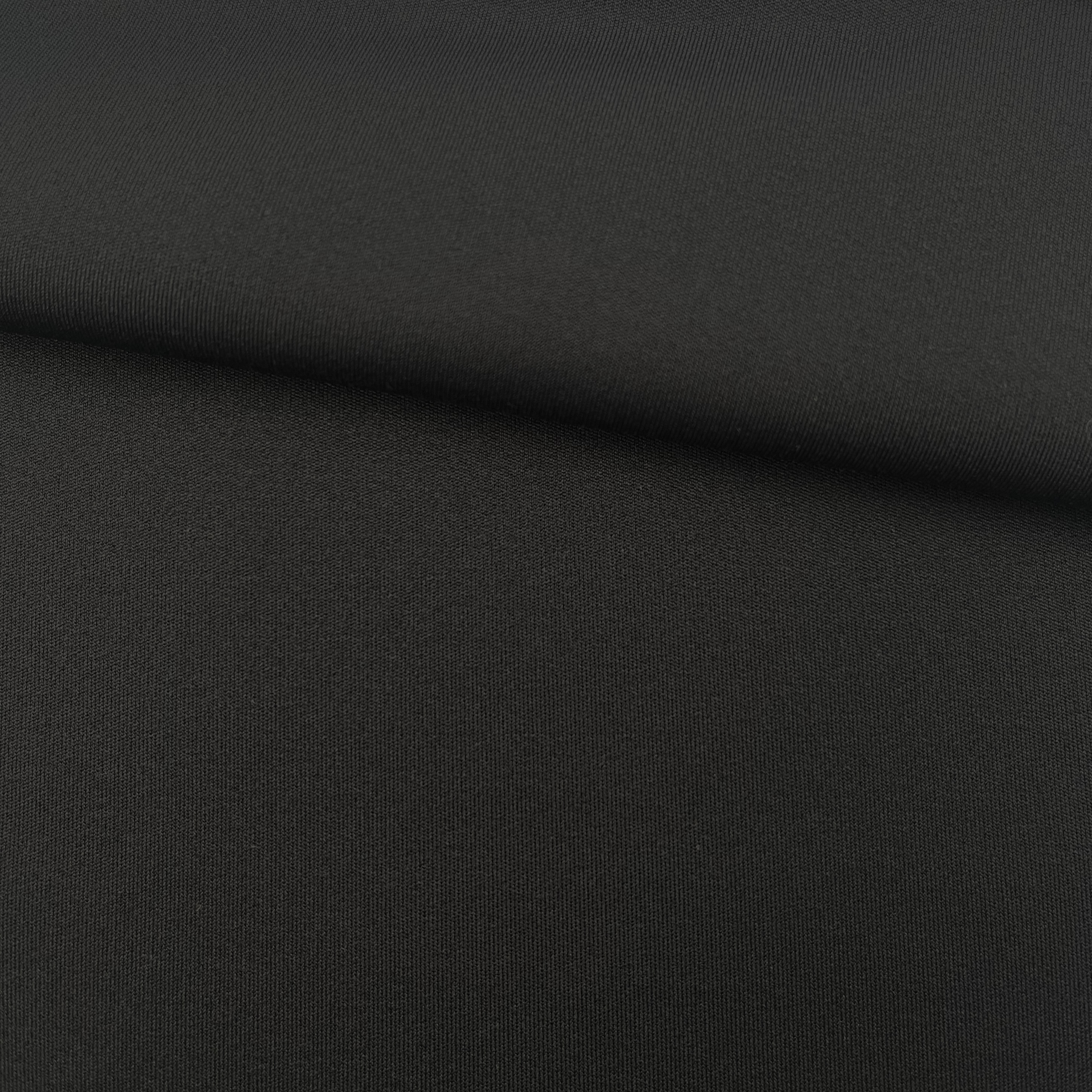 Wholesale 83% Polyester, 17% Spandex BLACK INTERLOCK FABRIC Suppliers, ExportersHaining Yitai Knitting Co., Ltd is China wholesale 83% Polyester, 17% Spandex BLACK INTERLOCK FABRIC suppliers and Exporters, The stretch...View Product →
Beyond the three base weft knits, polyester knits include structures designed for specific functions. Mesh uses tuck or miss stitches to create open perforations for airflow, making it essential for football jerseys, high-exertion sportswear, and ventilation panels. Pique is a textured double knit with a honeycomb-like face, best known for polo shirts and team apparel. Waffle is a three-dimensional cellular structure that traps still air, which makes it a strong candidate for thermal layers and athleisure. These structures are not interchangeable; substituting one for another changes both the look and the function of the garment.
Structure determines geometry; the blend determines feel, stretch, and durability. The same interlock geometry behaves differently in 100% polyester than it does in a polyester-spandex combination.
Pure polyester knit delivers durability, quick drying, and strong colorfastness, but its stretch is limited. Adding spandex in proportions of roughly 5% to 20% introduces elasticity and, more importantly, recovery. This is why compression sportswear, fitted swimwear, and performance leggings are almost always polyester-spandex rather than pure polyester. When you specify a stretch knit, confirm the spandex content and the stretch-recovery percentage, not just the name of the fabric.
Recycled polyester is made from PET bottles or post-industrial waste and retains most of the mechanical performance of virgin polyester. It has become a default requirement for activewear and swimwear programs with sustainability targets. Fabrics such as a honeycomb recycled polyester fabric demonstrate that an eco-friendly fiber base does not require sacrificing texture or structure.
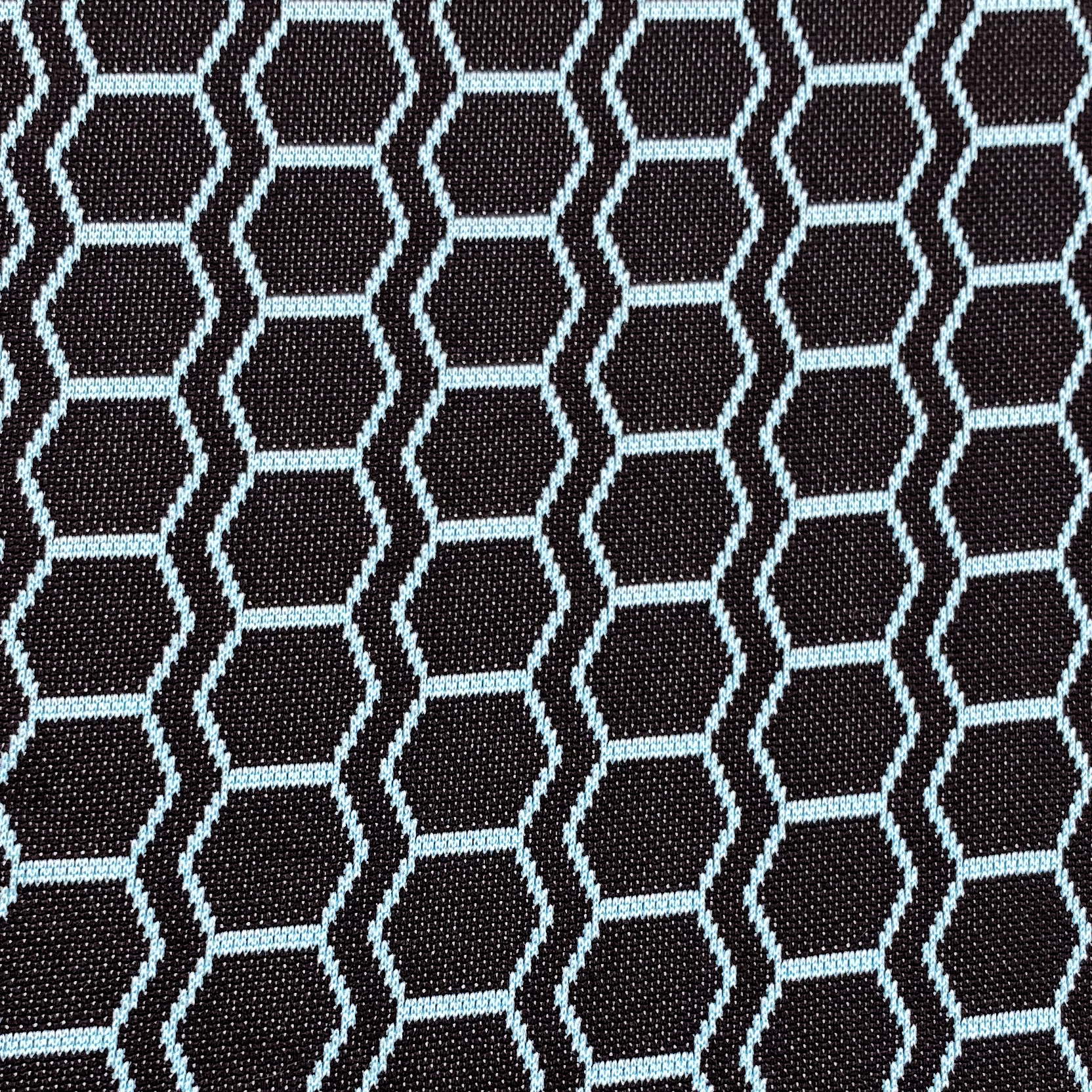 Sustainable 100% Recycled Polyester Honeycomb Fabric for Performance WearSource premium 100% recycled polyester honeycomb fabric (150gsm, 170cm) for sustainable apparel. Ideal for high-performance and eco-frien...View Product →
Cationic polyester is a modified polyester that accepts cationic dyes, producing deep, rich shades and enabling two-tone effects when knitted alongside regular polyester. Specialty variants include partially bio-based PTT polyester, often branded as Sorona, which offers a soft hand and elastic recovery similar to nylon. These materials are specified when the design requires a particular hand feel or color effect that standard polyester cannot deliver.
In practice, most fabric buyers search by end use rather than by structure. Each garment category places different demands on the fabric, and the same base structure will be specified differently depending on where it will be used. The range of activewear knit fabric types alone is much wider than most new buyers expect.
Activewear polyester knits focus on moisture wicking, breathability, four-way stretch, and pilling resistance. Lightweight single jersey and interlock in polyester-spandex blends dominate running tops and training wear, while mesh is added in panels for ventilation. Team sportswear shifts toward heavier interlock and pique for durability, often with quick-dry finishes and jacquard-knitted graphics. Confirming the fabric standard early in the design process prevents costly corrections later.
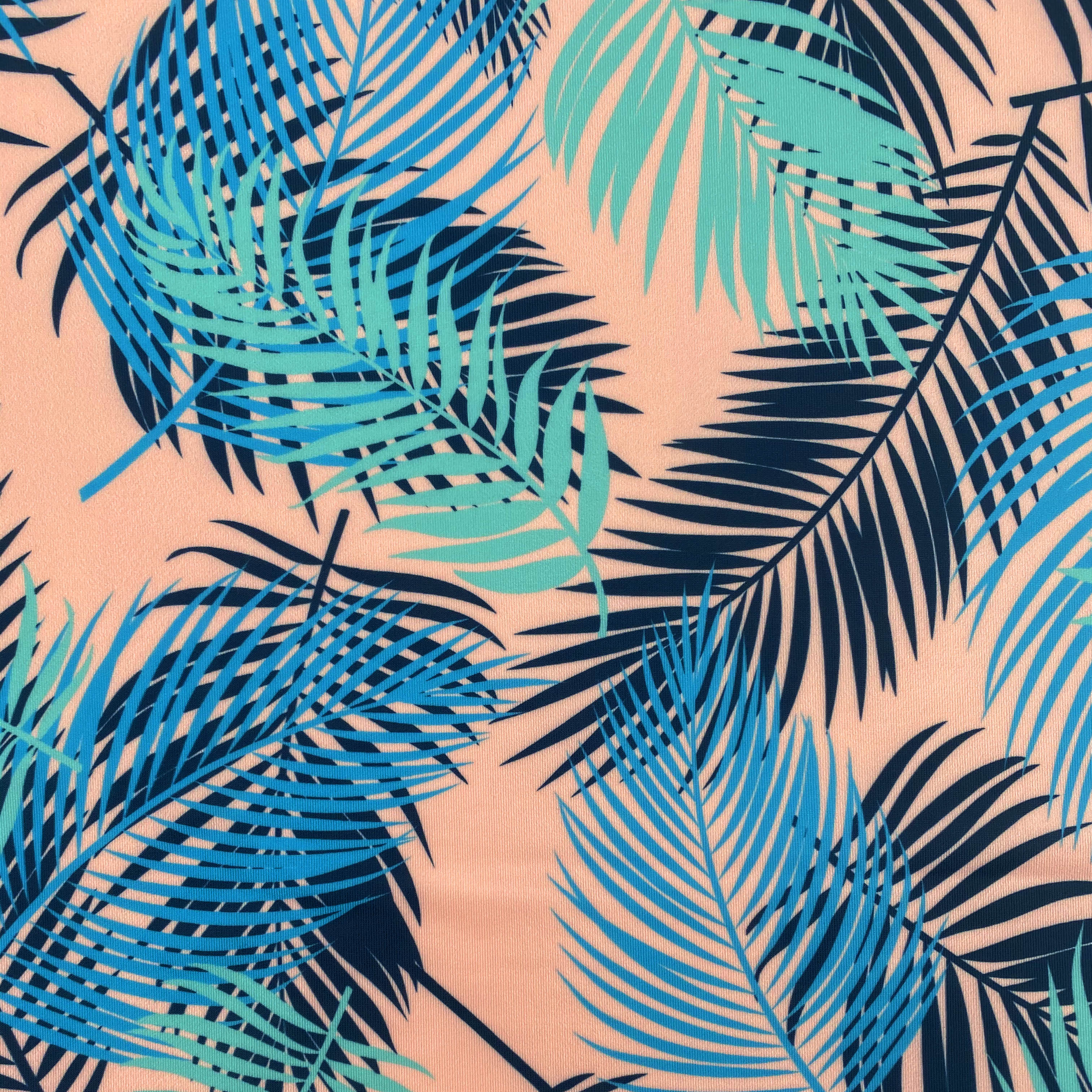
Swimwear polyester knits must resist chlorine, UV exposure, and abrasion from sand and bag contact. Chlorine-resistant yarns, sun-proof finishes, and quick-drying constructions are common specifications. A floral printed sun-proof fabric is an example of a decorative print combined with a protective function. Beachwear also uses lighter polyester knits for rash guards and cover-ups, where UPF rating and drying speed matter more than stretch.
 Wholesale 86% NYLON 14% SPANDEX WEIGHT 195 GSM WIDTH 165 CM FLORAL PRINTED SUN-PHaining Yitai Knitting Co., Ltd is China wholesale 86% NYLON 14% SPANDEX WEIGHT 195 GSM WIDTH 165 CM FLORAL PRINTED SUN-PROOF FABRIC supp...View Product →
Underwear polyester knits prioritize softness, moisture management, and skin comfort. Microfiber polyester knits offer a very fine, smooth hand, while thermal versions use brushed or waffle structures to retain body heat. Many underwear programs blend polyester with spandex or CVC to balance easy care with comfort. The critical purchasing check is performance after repeated washing: colorfastness, elastic recovery, and softness retention.
Casual polyester knits focus on drape, texture, and easy care. French terry, polar fleece, waffle, faux denim, and hoodie knits appear in joggers, hoodies, and relaxed jackets. These fabrics trade some of the technical performance of activewear for a softer hand and a more fashion-oriented appearance.
The finishing stage determines the fabric's final identity. Brushed and peached finishes soften the surface and add warmth; calendering adds a smooth sheen; lamination bonds a membrane for waterproofing; hot-stamping and foil printing create metallic decorative effects; digital printing and tie-dye expand the range of patterns. Two fabrics with identical structure and blend can serve completely different markets purely because of finishing. When you evaluate a swatch, ask which finishing processes were applied and how they affect care instructions and durability.
Choosing a polyester knit comes down to matching structure, blend, and finishing to a specific end use. The table below summarizes the most common options and the main property to verify for each.
| Structure | Typical Blend | Common Uses | Main Buying Check |
|---|---|---|---|
| Single jersey | 100% polyester or poly-spandex | T-shirts, dresses, sportswear tops | Shrinkage and stretch recovery |
| Rib | Polyester-spandex | Cuffs, collars, fitted garments | Widthwise recovery after stretching |
| Interlock | Polyester, CVC, poly-spandex | Polos, performance tops, outerwear | Shape retention after laundering |
| Mesh | 100% polyester | Sports jerseys, liners, ventilation panels | Air permeability and tear strength |
| Pique | Polyester or CVC | Polo shirts, teamwear | Pilling resistance and texture consistency |
| Waffle | Polyester or poly-spandex | Thermal layers, athleisure | Thermal retention and compression behavior |
| Fleece / brushed | 100% polyester | Hoodies, casual jackets | Brushing uniformity and pilling |
Follow these five steps to narrow the selection:
A supplier with in-house dyeing and finishing capability reduces the risk of inconsistency between development samples and bulk delivery. Haining Yitai Knitting Co., Ltd. is one example of a polyester and functional knit supplier that operates its own dyeing and finishing support, along with a quality control system and laboratory testing, which makes the transition from sample to production smoother for buyers.
For project-specific decisions, including stitch selection and sampling, our guide to choosing knitted fabric for your project covers the practical steps in more detail.

As Yitai, since 2004, we have manufactured sportswear knitted fabrics such as interlock fabric, nylon fabric, spandex fabric, polyester fabric etc. With excellent R&D group, marketing team, quality control system, experienced dyeing & finishing supporting facility and customer service system.
Haining Yitai Knitting Co., Ltd
No. 198 Canghai Road, Warp Knitting Zone, Haining City, Zhejiang, 314419, China Tel: +0086 135 6738 5757 Email: [email protected] [email protected] [email protected]FOLLOW US



 英语
 中文简体