Article Directory
When a sportswear brand commits to a 10,000-piece production run, the fabric decision comes first. Polyester knit fabric is the material most manufacturers start with because it combines sweat management, stretch recovery, and production consistency at a cost structure that supports repeat orders.
This guide covers the properties, specifications, and supplier checks that matter when you source polyester knit fabric for sportswear manufacturing, from single jersey to interlock, mesh, and recycled polyester.
Polyester knit fabric is the dominant raw material in sportswear manufacturing because no other fiber family matches its balance of moisture management, dimensional stability, and cost per meter.
Polyester filaments are hydrophobic, so they do not absorb sweat. Instead, the knitted loop structure moves moisture along the yarn surface and spreads it across a larger area, where it evaporates quickly. In a training jersey, that difference is measurable: a well-constructed polyester knit can dry two to four times faster than a cotton jersey of the same weight, depending on construction and finishing.
Definition: polyester knit fabric is a textile produced by interlocking loops of polyester filament yarn on a knitting machine. The loop structure provides stretch, recovery, and drape, while the polyester base delivers strength, quick drying, and colorfastness.
For a broader comparison of athletic materials, read our guide on what is the best fabric for sportswear.
Sportswear fabric programs fail on four numbers more often than on anything else: grams per square meter, spandex content, shrinkage limit, and wick-dry performance.
GSM (grams per square meter) is the first number a manufacturer checks. Lightweight jerseys for team kits typically run 120-160 GSM; interlock base layers sit at 180-220 GSM; brushed fleece for warm-ups moves up to 240-320 GSM. Ordering outside these bands usually means sacrificing drape, opacity, or thermal performance.
Stretch comes from spandex, and spandex content controls both recovery and durability. Most athletic programs use 8-20% spandex. Below 8%, the fabric can bag out at the elbows and knees. Above 20%, recovery slows and the cost per meter rises noticeably.
| Structure | Typical GSM | Sportswear use | Spandex range |
| Single Jersey | 120-160 | jerseys, training tops | 5-10% |
| Interlock | 180-220 | base layers, track tops | 8-12% |
| Mesh | 100-140 | ventilation panels, team kits | 10-15% |
| Rib | 160-200 | cuffs, collars, fitted trims | 10-20% |
| Brushed Fleece | 240-320 | warm-up jackets, hoodies | 5-8% |
The knit structure decides how a sportswear garment breathes, grips, stretches, and survives seam stress, so the structure must match the movement pattern of the finished product.
Single jersey is the workhorse for jerseys and training tops; its smooth face and textured back help moisture spread. Interlock is denser and warmer, with a clean surface that suits printed team kits. Mesh opens the structure for maximum airflow. Rib provides the compression and recovery needed at cuffs and collars. Jacquard builds patterns into the fabric itself instead of printing on top.
Bars show the typical low and high end of the GSM band for each knit structure in sportswear production.
For team kits, mills often produce specialized constructions. One example is a football jersey fabric engineered with a smooth printing face and spandex for shoulder mobility. If you are planning club or school uniforms, review the constructions in our team sportswear fabric range before sampling.
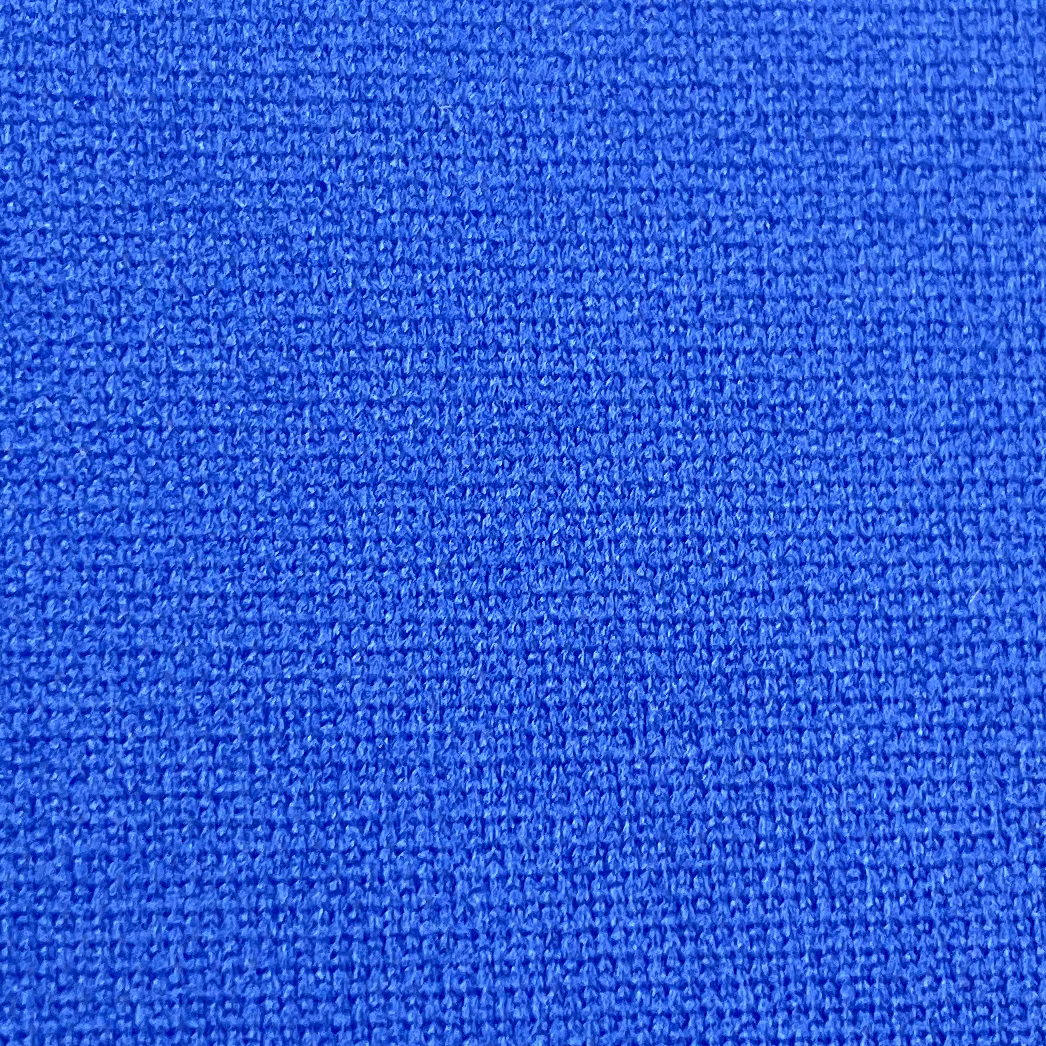 Wholesale FOOTBALL JERSEYS FABRIC Suppliers, ExportersHaining Yitai Knitting Co., Ltd is China wholesale FOOTBALL JERSEYS FABRIC suppliers and Exporters, The stretch & spandex striped fab...View Product →
When in doubt: jersey for low-abrasion motion, interlock for structure and print surface, mesh for airflow, rib for fitted edges, fleece for warmth. These five structures cover roughly 90% of sportswear garment needs.
Moisture management in polyester knit fabric is engineered at three levels: filament shape, knit geometry, and finishing chemistry.
Channeled filaments create capillary pathways at the yarn level. The knit geometry spreads droplets across a wider evaporation surface. Finishing adds a durable hydrophilic wick that lowers surface tension and pulls sweat off the skin. Each layer contributes a measurable share of the final drying time.
In production conditions, a quick-dry polyester knit treated with a wicking finish typically reaches near-full evaporation within 30-45 minutes after a full sweat cycle, while an untreated cotton knit of similar weight remains visibly damp after an hour.
Check that the wicking finish is durable. Some finishes wash out after 10-15 cycles; a properly engineered quick-dry fabric holds its performance for the expected lifetime of the garment. A reliable option for training programs is a quick-dry polyester knit fabric that pairs 130-160 GSM with a hydrophilic finish.
 Wholesale BLACK QUICK DRY FABRIC Suppliers, ExportersHaining Yitai Knitting Co., Ltd is China wholesale BLACK QUICK DRY FABRIC suppliers and Exporters, If you want to be cool, this high qual...View Product →
Sourcing polyester knit fabric from a mill works only if the supplier proves consistency in shade, shrinkage, pilling, and delivery before the bulk order is placed.
Polyester absorbs disperse dyes reliably, but shade variation between dye lots is the most common defect in sportswear production. Ask for lab dips against your approved color standard, then request a production sample from the actual lot. Confirm the heat-set temperature and finishing route, because both affect shrinkage and hand feel.
Haining Yitai Knitting Co., Ltd., a supplier operating in the Haining warp knitting industrial zone since 2004, is one example of a mill that combines in-house dyeing and finishing support with a quality control system and a testing laboratory. The company's product library spans activewear, team sportswear, swimwear, underwear, and casual wear, which means a single supplier can cover multiple fabric categories for one sportswear program. A practical starting point for most buyers is the company's activewear knit fabric collection, which groups constructions by application.
Recycled polyester knit fabric can replace virgin polyester in most sportswear constructions because the performance gap has narrowed to the point where garment-level quality standards are the deciding factor, not the raw material.
Recycled PET yarn starts from cleaned bottle flakes or post-industrial waste, is melted, and is re-extruded into filament that is knitted on the same machines as virgin polyester. Depending on the recycling route, energy consumption can be meaningfully lower than virgin polymer production.
Buyers should request the valid Global Recycled Standard (GRS) certificate from the mill and check that the recycled yarn lot produces the same shrinkage and wicking results as the virgin version. One practical example of a circular construction is a honeycomb recycled polyester fabric, which adds an open-cell surface for airflow while keeping the strength expected from a training garment.
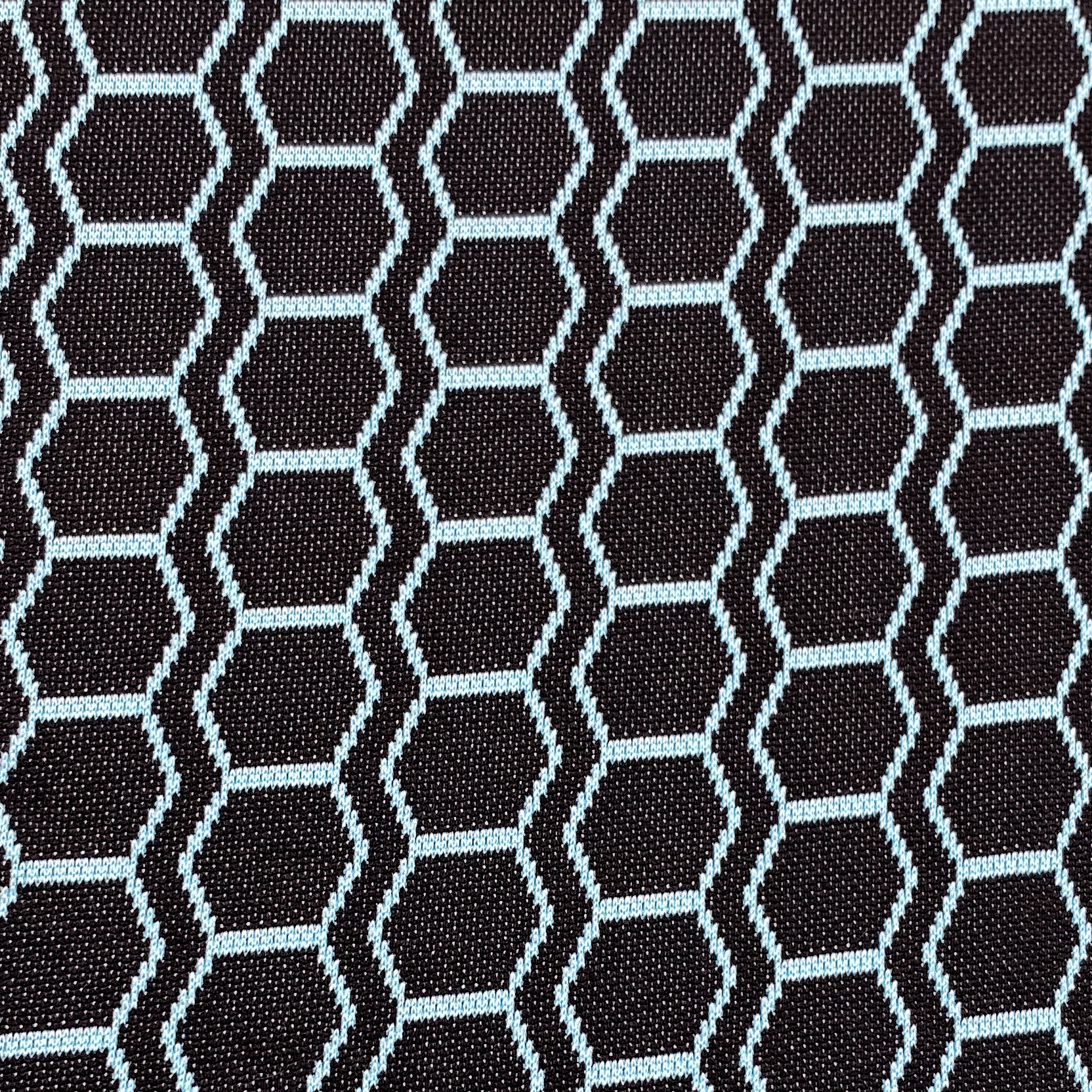 Sustainable 100% Recycled Polyester Honeycomb Fabric for Performance WearSource premium 100% recycled polyester honeycomb fabric (150gsm, 170cm) for sustainable apparel. Ideal for high-performance and eco-frien...View Product →
Recycled polyester programs typically reduce production-stage energy use by roughly half compared with virgin polyester, depending on fiber source, and they close the loop on PET waste that would otherwise be landfilled.
For standard team jerseys and training tops, specify single jersey at 120-160 GSM with 8-12% spandex. Lighter weights at 100-120 GSM suit racing and highly ventilated kits, but they reduce opacity and may need a lining.
Polyester knit fabric can shrink 3-5% before heat-setting. After proper heat-setting and pre-shrinking at the mill, first-wash shrinkage should stay below 3% in both directions. Always require a shrinkage report before production.
Four-way stretch requires 10-20% spandex in most polyester knits. Compression and yoga-type garments need 15-25%; everyday training wear works best at 10-14%, where recovery and durability are easier to control.
In comparable constructions, recycled polyester matches virgin polyester for tensile strength and pilling resistance in most sportswear applications. Variability between recycled yarn lots is higher, so test each new lot against your approved standard before cutting bulk.

As Yitai, since 2004, we have manufactured sportswear knitted fabrics such as interlock fabric, nylon fabric, spandex fabric, polyester fabric etc. With excellent R&D group, marketing team, quality control system, experienced dyeing & finishing supporting facility and customer service system.
Haining Yitai Knitting Co., Ltd
No. 198 Canghai Road, Warp Knitting Zone, Haining City, Zhejiang, 314419, China Tel: +0086 135 6738 5757 Email: [email protected] [email protected] [email protected]FOLLOW US




 英语
英语 中文简体
中文简体