Article Directory
A nylon spandex legging fabric that measures 190 gsm on the approved sample and 208 gsm in bulk will cut differently, sew differently and come back as returns differently. Fixing the specification before the yarn is ordered takes an afternoon; fixing it after bulk takes the season.
Activewear is the hardest test a stretch knit faces. It sits against skin, launders two or three times a week, stretches over knees and shoulders, and is judged within thirty seconds of a fitting. Nylon spandex stays the default because polyamide filament delivers soft hand, abrasion resistance and deep dye uptake, while elastane supplies the recovery that holds a garment's shape.
The sequence below is the order experienced buyers follow: fiber blend, elastane percentage, knit structure, fabric weight, finishing, then supplier verification. Every factor carries a number and a test method that proves whether a mill actually hit it.
Nylon spandex activewear fabric is normally specified between 75/25 and 82/18 nylon-to-elastane by weight, with nylon 6 or nylon 6,6 multifilament at 40D to 100D and elastane at 30D to 70D.
Definition: nylon spandex fabric is a knitted textile in which polyamide multifilament yarn forms the main loops and elastane yarns are plaited or laid in to deliver elastic recovery. A complete specification states the blend percentage by weight, the nylon yarn count, the elastane yarn count, the knit structure and the finished weight in grams per square meter.
The two polyamides are not interchangeable. Nylon 6 dyes more deeply at lower temperatures and feels softer; nylon 6,6 melts near 255 degrees Celsius against roughly 220 for nylon 6, so it survives aggressive heat setting with fewer yellowing problems. Ask which polymer sits behind a quotation before comparing prices, because the difference shows up after the third wash, not on the color card.
Softer hand, deeper dye uptake at lower temperatures, strong abrasion resistance. Suits soft tops and printed panels sold on hand feel.
Melting point near 255 degrees Celsius, better heat-set stability and less yellowing during finishing. Suits compression pieces and high-temperature processes.
Yarn count controls the rest. A 40D nylon paired with 30D or 40D elastane produces a light, fluid fabric around 140 to 170 gsm for tops. Moving to 70D or 100D nylon with 55D to 70D elastane pushes the same construction into the 220 to 260 gsm band that leggings need for opacity and compression.
Elastane content sets both how far the fabric stretches and how well it springs back, and most activewear programs specify four-way stretch of 80 percent or more with residual growth of 8 percent or less on ASTM D2594 or ASTM D4964.
Recovery is the number that decides whether a legging survives a season. Both ASTM D2594 and ASTM D4964 report growth as the percentage of extension the fabric fails to recover after the load is released, and a buyer limit of 5 to 8 percent is normal for leggings and compression tops. Below 15 percent elastane, garments bag at the knee and waistband. Above 25 percent, fabric cost climbs because elastane is the most expensive yarn in the blend, and the heat-setting window narrows, which raises the risk of shade variation between dye lots.
Four-way stretch also depends on stitch density and finished weight, not on elastane alone. The breakdown in this guide to the optimal nylon spandex ratio for four-way stretch knits explains how those three variables interact before a sample is knitted.
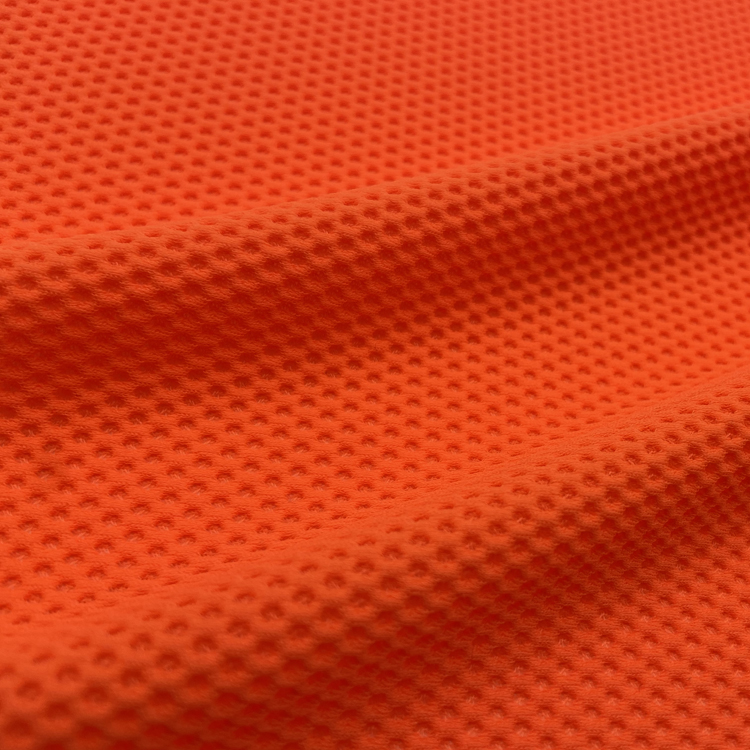
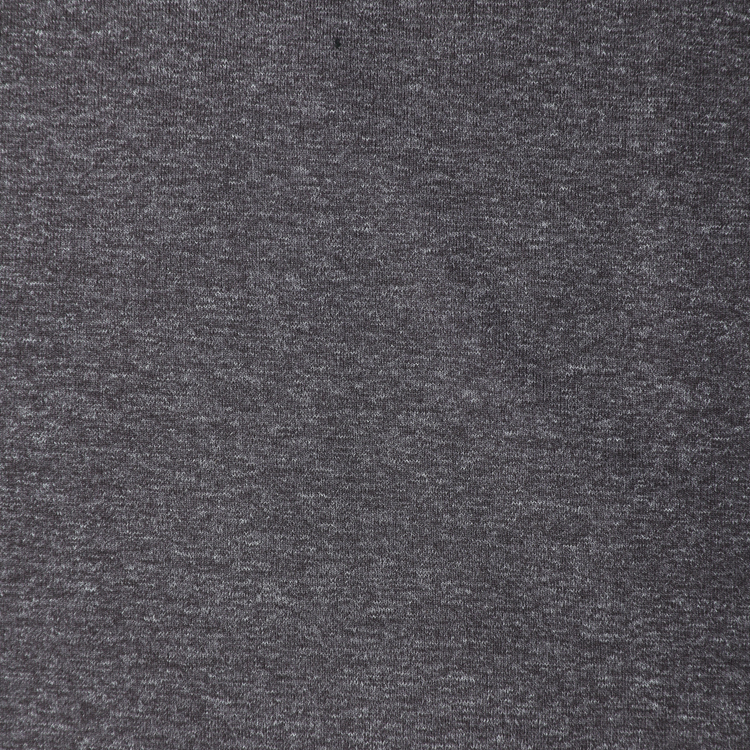 POWER NYLON PLAIN KNITTED FABRIC HT1060PERFORMANCE KNIT MATT & PLAIN HT045View Product →
Stretch sells the garment; recovery keeps it. A fabric that stretches 120 percent and grows 12 percent will look tired at the knee within a month of regular wear.
Single jersey, interlock, rib and mesh cover almost all activewear nylon spandex yardage, and the choice among them changes stretch direction, opacity and drying speed more than any finish applied afterwards.
| Structure | Finished weight | Stretch behavior | Typical use |
| Single jersey | 130-180 gsm | Four-way, light | Training tops, liners, print bases |
| Interlock | 180-260 gsm | Four-way, high recovery | Leggings, sports bras, opaque bottoms |
| 1x1 and 2x2 rib | 160-240 gsm | Strong crosswise stretch | Waistbands, cuffs, side panels |
| Mesh and tricot | 90-160 gsm | Open structure, variable | Ventilation panels, inner liners |
Interlock is the workhorse of opaque bottoms: it knits two interlocked layers with a smooth face on both sides, hiding skin without the weight penalty of a heavier jersey. Single jersey costs less per kilogram and prints beautifully, but shows through in pale colors below roughly 170 gsm. Rib stretches hardest in one direction, which keeps waistbands snug, and mesh trades opacity for airflow in ventilation zones.
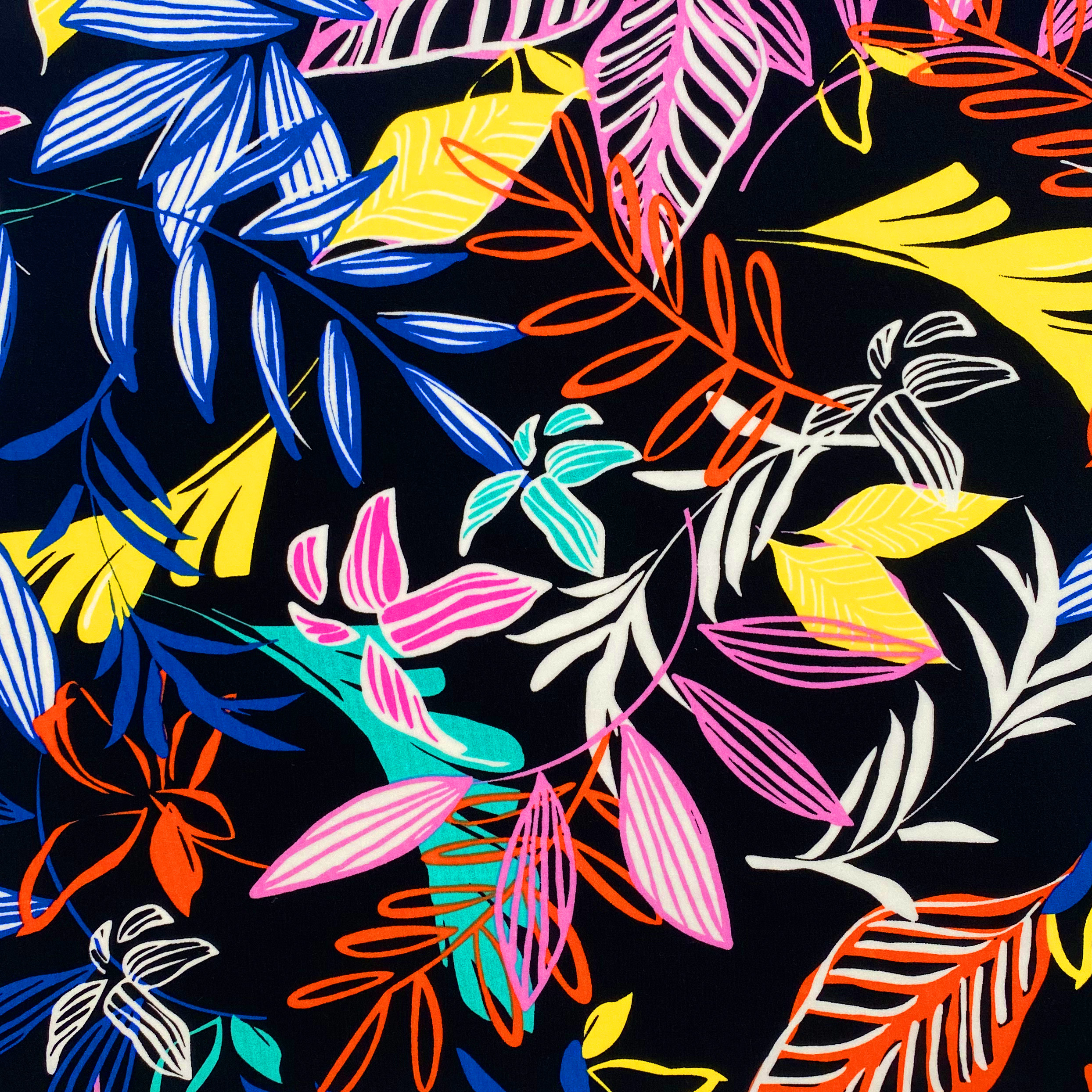
 NYLON INTERLOCK FABRIC HT1418PERFORMANCE KNIT MATT & PLAIN HT045View Product →
Match the structure to the garment before comparing quotations. Two mills quoting a 200 gsm nylon spandex can be quoting different structures with different stretch directions. A supplier that runs several constructions in-house makes that comparison practical, which is why buyers often review a full yoga wear fabric and activewear line-up instead of a single swatch. Haining Yitai Knitting Co., Ltd., a knit fabric mill in Haining, Zhejiang, has produced knitted fabrics since 2004 and supports knitting, dyeing and finishing in one operation.
Single jersey is the cheapest route to stretch. Interlock is the cheapest route to opacity. Choosing between them on price alone is how show-through defects reach the shelf.
Fabric weight is quoted as finished GSM, and the bulk tolerance should be written as plus or minus 5 percent against the approved sample when measured under ASTM D3776 or ISO 3801.
Weight and yield move together. A 200 gsm fabric running 5 percent heavy delivers roughly 5 percent fewer meters per kilogram, and on a 5,000 kg order that difference is real money. Running 5 percent light creates the opposite problem: a thinner hand and visible show-through in white and pastel leggings.
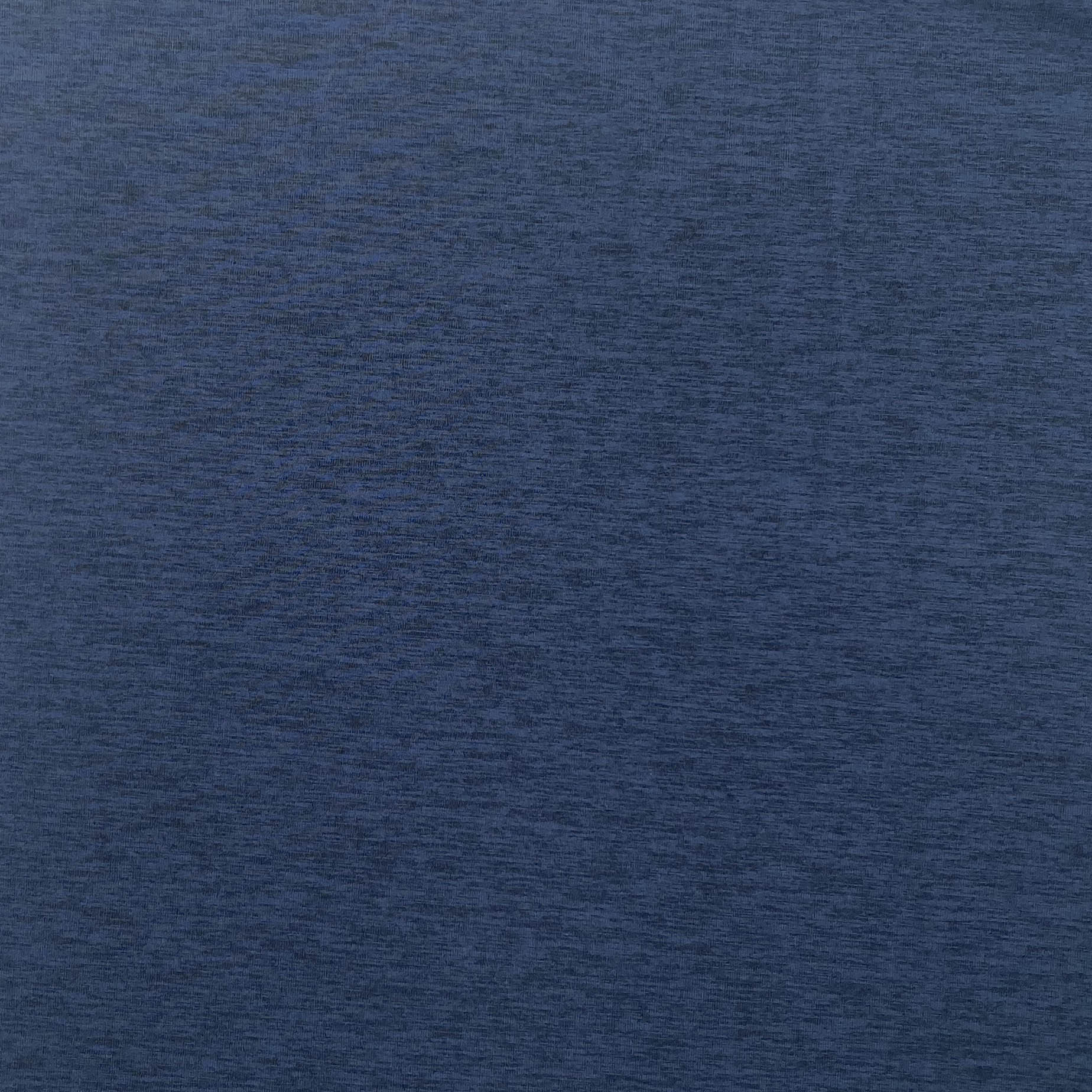
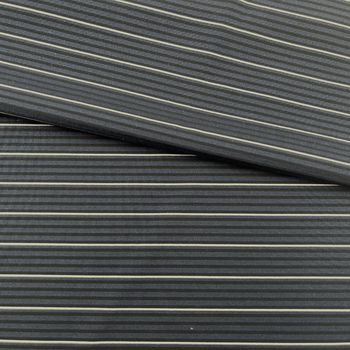 Activewear Knit Fabric Manufacturers72% Nylon 5% Poly 23% Spandex, Weight 175 Gsm Width 154 Cm Weft Single Jersey Fabric Ht1635 HT1635View Product →
Two more numbers belong in the same clause. Width should be stated as a usable range, typically 150 to 180 cm open width for circular knits, with a 2 to 3 cm tolerance on each edge. Shrinkage should follow AATCC 135 or ISO 6330 after three home launderings, with an acceptance limit of 5 percent in both directions and 3 percent for higher-grade programs.
Nylon spandex is dyed with acid or metal-complex dyes and heat set between 160 and 180 degrees Celsius, and most activewear specifications call for grade 4 minimum on AATCC 61 2A laundering and AATCC 116 crocking.
Colorfastness is where inexpensive fabric gets caught. Chlorine in pool water and in laundry cycles, salt water and repeated abrasion all pull dye out of polyamide, and a legging that fades two shades after twenty washes generates returns worth more than the fabric. Ask for laundering, crocking, perspiration and lightfastness reports on the shade you approve, not on a generic sheet covering another color.
Functional finishes need durability evidence too. A hydrophilic wicking finish on nylon spandex should still move moisture after 20 home launderings, and a sink time under 5 seconds on AATCC 79 is a practical target for training wear. Pilling is measured under ASTM D4970, where grade 3 or better after 2,000 rubs keeps a fabric out of the complaint pile. Peached, brushed and foil-printed surfaces add design value, but each adds a process step that can shift stretch and shade, so approve them on a finished bulk sample rather than a greige swatch.
Lock every nylon spandex program with a signed lab dip, a sealed bulk sample and test reports dated within six months, then inspect rolls on the ASTM D5430 four-point system with an acceptance limit of 20 points per 100 square yards.
A mill that shows you its laboratory, its dyeing and finishing line and its quality records is answering questions you have not asked yet. A mill that shows only a color card is inviting you to find out later.
Lead times follow a predictable pattern: lab dips take 5 to 7 working days, sample yardage 7 to 15 days, and bulk production 25 to 40 days after approval, depending on dyeing capacity and the number of shades in the order. A quote far below that range deserves a question about which step, compression, heat setting or inspection, is being skipped.
Nylon spandex is softer, dyes more deeply and resists abrasion better, which makes it standard for leggings, yoga pants and training tops. Polyester spandex holds color longer under UV exposure and resists chlorine better, so it dominates poolside programs. For chlorine contact, polyester or PBT blends usually outlast nylon.
Leggings and compression garments work at 18 to 25 percent elastane by weight, with 20 to 22 percent covering most commercial programs. Tops and lighter training pieces sit at 12 to 18 percent. Stretch below 80 percent four-way, or growth above 8 percent on ASTM D2594, means the blend is too lean for the intended garment.
Finished weight of 220 to 260 gsm in an interlock construction covers most opaque legging programs, and 200 to 220 gsm works for darker colors and lighter compression. Below 180 gsm, pale shades risk show-through under stretch that no finishing step can fully correct.
Four as a minimum: weight and width, stretch and growth, shrinkage after three home launderings, and colorfastness for laundering and crocking. Fabrics sold as moisture-wicking or UV-protective need a fifth report covering that function after repeated laundering, because a finish that disappears after 20 washes is not a performance fabric.

As Yitai, since 2004, we have manufactured sportswear knitted fabrics such as interlock fabric, nylon fabric, spandex fabric, polyester fabric etc. With excellent R&D group, marketing team, quality control system, experienced dyeing & finishing supporting facility and customer service system.
Haining Yitai Knitting Co., Ltd
No. 198 Canghai Road, Warp Knitting Zone, Haining City, Zhejiang, 314419, China Tel: +0086 135 6738 5757 Email: [email protected] [email protected] [email protected]FOLLOW US



 英语
 中文简体