Article Directory
Polyester is the most widely used textile fiber in the world, supplying roughly 54 percent of global fiber production. Yet the same polyester yarn can become a dense, dimensionally stable interlock for thermal underwear or a loose, pilling-prone single jersey for a low-cost T-shirt. The difference is not the polymer. It is the knitting technology that shapes every loop.
Knitting technology controls the geometry of every loop in a polyester fabric, and that geometry governs stretch, recovery, breathability, pilling resistance, and dimensional stability. Buyers who compare polyester fabrics by fiber content alone miss the variable that creates most of the measurable difference between rolls.
In a circular knitting machine, polyester yarn feeds into needles that form loops in rapid succession. A 28-gauge machine with roughly 2,600 needles on a 30-inch cylinder produces a much finer and denser fabric than an 18-gauge machine on the same diameter. Smaller loops mean less trapped air, lower stretch, and a smoother surface. Coarser gauges do the opposite, which is why fleece and bulky thermal knits are deliberately knitted loose.
The knit structure also decides how elastane performs inside a polyester blend. In a single jersey, spandex recovers less predictably than in an interlock, where the two-sided loop structure holds stretch evenly. Yarn properties matter upstream too; knowing how polyester fabric is made helps buyers separate polymer quality issues from knitting-process defects, which is the first step in a reliable fabric audit. The key characteristics of knitted fabric - loop structure, porosity, and elasticity - are exactly what machine settings manipulate.
Five parameters - machine gauge, stitch structure, yarn count, feed tension, and take-down force - account for most of the quality differences between otherwise identical polyester fabrics. Each one can be verified before production and measured again on the finished roll.
Stitch structure is the most visible expression of knitting technology, and it changes hand feel, stretch, air permeability, and durability more than any other single parameter. Before selecting a construction, review the types of knitted fabric and how they map to apparel end uses.
| Structure | Stretch | Recovery | Breathability | Pilling resistance | Common applications |
| Single jersey | Medium | Medium | High | Low-medium | T-shirts, activewear tops, dresses |
| Interlock | Low-medium | High | Medium | High | Polo shirts, underwear, thermal layers |
| Rib | High | High | Medium | Medium | Cuffs, collars, fitted knitwear |
| Mesh | Medium | Medium | Very high | Low | Sports panels, quick-dry liners, beachwear |
For a dense, dimensionally stable polyester base, the interlock is the strongest candidate. A black interlock polyester fabric with high structural integrity holds its shape through repeated washing, which is why brands specify interlock for underwear, polo shirts, and performance tops.
 Wholesale 83% Polyester, 17% Spandex BLACK INTERLOCK FABRIC Suppliers, ExportersHaining Yitai Knitting Co., Ltd is China wholesale 83% Polyester, 17% Spandex BLACK INTERLOCK FABRIC suppliers and Exporters, The stretch...View Product →
When airflow matters more than density, the mesh structure should be the starting point. A quick-dry polyester fabric built on an open mesh or piqué construction moves moisture and heat faster than any closed interlock, making it the preferred shell for sports jerseys and lining panels.
 Wholesale BLACK QUICK DRY FABRIC Suppliers, ExportersHaining Yitai Knitting Co., Ltd is China wholesale BLACK QUICK DRY FABRIC suppliers and Exporters, If you want to be cool, this high qual...View Product →
Machine gauge and stitch structure are the two highest-leverage parameters in polyester knitting, each contributing more than twice the quality impact of machine speed. The chart below estimates the relative influence of five knitting-side parameters on final polyester fabric quality, based on mill experience and published textile engineering data.
Buyers should verify four documents before committing to a polyester knit order: the technical data sheet, the pilling test report, the shrinkage report, and a physical sample matched to a specified gauge and structure. These four items convert a price conversation into a performance conversation.
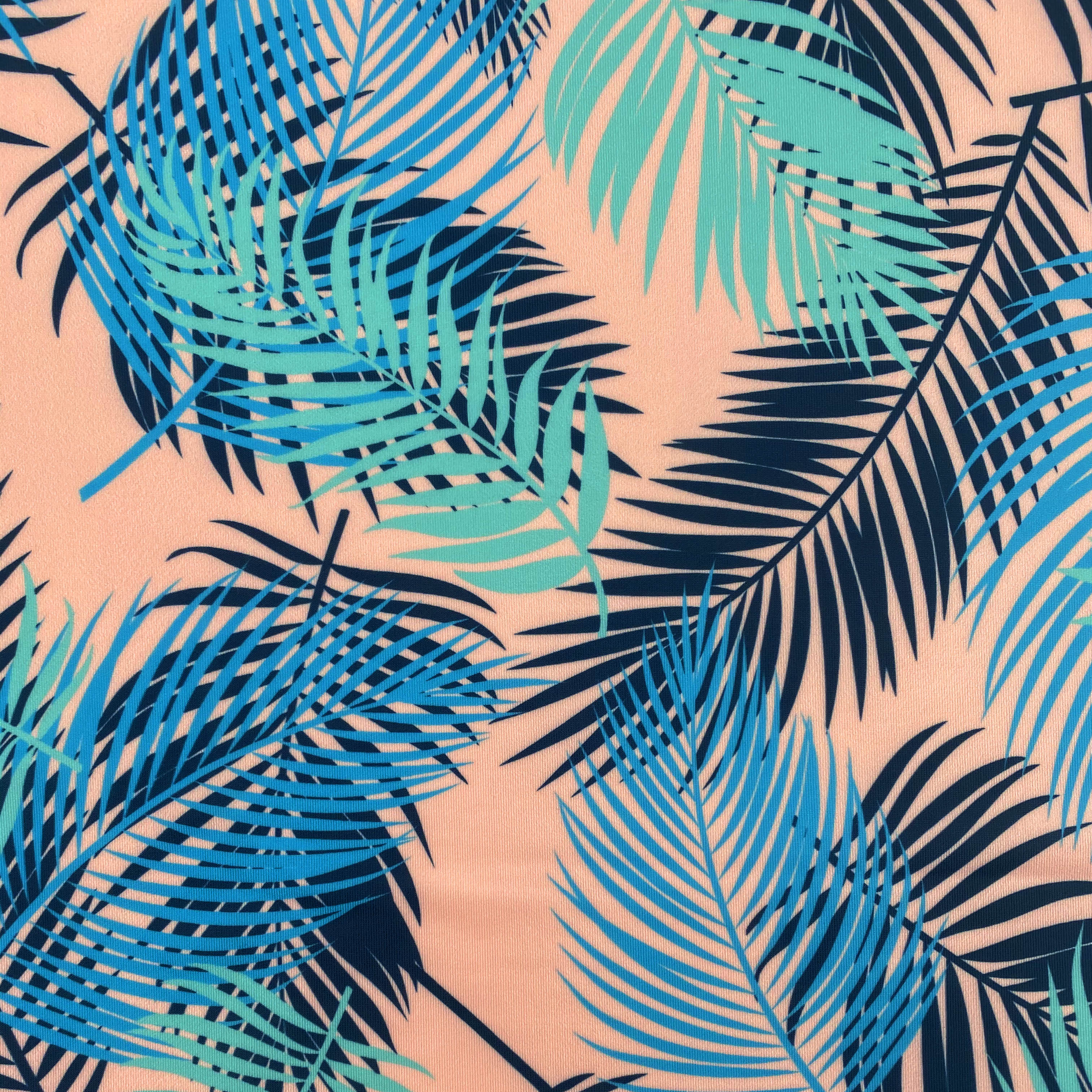
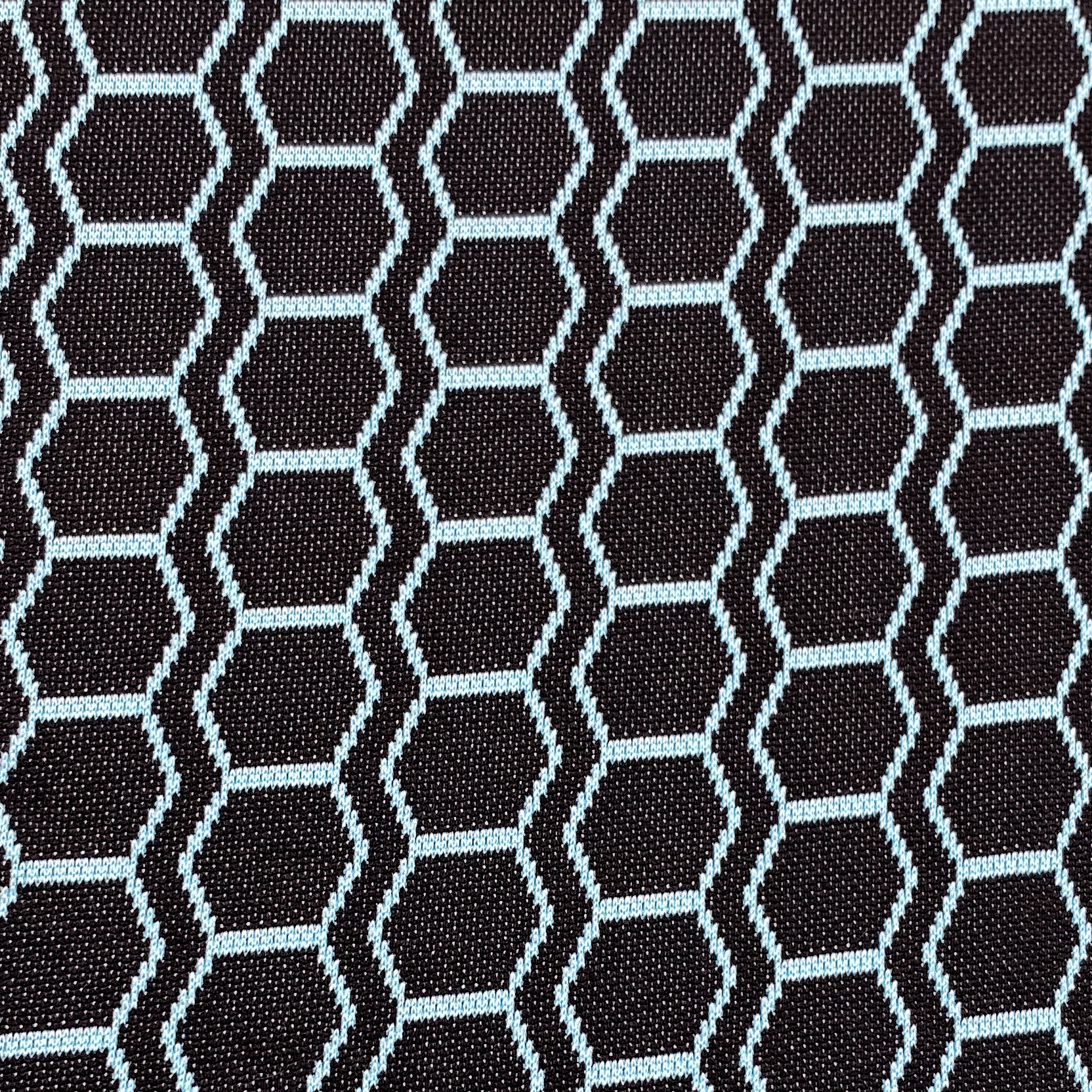 Sustainable 100% Recycled Polyester Honeycomb Fabric for Performance WearSource premium 100% recycled polyester honeycomb fabric (150gsm, 170cm) for sustainable apparel. Ideal for high-performance and eco-frien...View Product → uses an open, engineered geometry to balance strength, air permeability, and textile waste reduction.
Yes. Breathability is determined largely by loop size and fabric density. A mesh polyester knit allows far more air passage than a dense interlock of the same yarn and weight. Specify an open structure such as mesh or piqué and confirm the air permeability value, typically 100-300 L/m2/s at 100 Pa for lightweight mesh.
For most activewear, a single jersey with 15-20 percent elastane provides the best combination of stretch, moisture management, and low weight. For higher support and shape retention, an interlock or a compact double knit works better. Fabric engineers at Haining Yitai Knitting Co., Ltd. typically recommend a 24-28 gauge single jersey for general training tops and a 28-32 gauge interlock for compression-style garments.
Higher gauge means more needles per inch, smaller loops, and a denser fabric. For the same yarn, a 28-gauge interlock will be roughly 20-30 percent heavier than a 24-gauge version, depending on take-down tension. Weight and gauge should be specified together, because a target GSM can be reached with the wrong gauge only by distorting the structure.
Yes. Identical yarn can become a soft, draping single jersey or a firm, dense interlock depending on gauge, stitch structure, and finishing. The yarn sets an upper performance boundary, but knitting technology determines how much of that boundary is actually reached. This is why fabric suppliers with in-house knitting and finishing control, such as Haining Yitai Knitting Co., Ltd., deliver consistent results that yarn-only suppliers cannot match.

As Yitai, since 2004, we have manufactured sportswear knitted fabrics such as interlock fabric, nylon fabric, spandex fabric, polyester fabric etc. With excellent R&D group, marketing team, quality control system, experienced dyeing & finishing supporting facility and customer service system.
Haining Yitai Knitting Co., Ltd
No. 198 Canghai Road, Warp Knitting Zone, Haining City, Zhejiang, 314419, China Tel: +0086 135 6738 5757 Email: [email protected] [email protected] [email protected]FOLLOW US




 英语
英语 中文简体
中文简体