Article Directory
Ask any garment manufacturer why polyester knit fabric appears so often in sportswear, underwear, and casual collections, and the answer usually comes down to one core fact: the material combines the toughness, quick-drying behavior, and color retention of polyester with the stretch, softness, and breathability that a knitted loop structure provides. Polyester knit fabric is a textile produced by interlocking polyester yarns into a series of loops, rather than weaving yarns over and under one another. That structural difference gives the fabric natural elasticity, a notably softer hand feel, and a more forgiving drape, which is why it has become a default choice for apparel that needs to move with the body.
The fastest way to understand polyester knit fabric is to compare it with woven polyester. In a woven fabric, two sets of yarns cross at right angles, creating a tight, stable, and relatively rigid structure. In a knitted fabric, a single continuous yarn, or a set of yarns in warp knitting, forms vertical columns of interlocking loops. When the loops are pulled, the fabric extends; when the tension is released, the loops return toward their original position. This loop-based construction is the reason knit fabrics stretch even without elastane, while woven fabrics generally do not.
This distinction matters for more than just stretch. A knitted structure creates micro-channels between loops that allow air and moisture vapor to pass through more easily, so knitted fabrics and woven fabrics behave quite differently in terms of breathability, comfort, and sewing behavior. Knits also tend to drape better over curved body shapes, which is one reason they dominate close-fitting categories such as base layers, leggings, and performance tops.
Polyester knit fabric starts with polyester polymer chips that are melted and extruded through spinnerets to form continuous filaments. Those filaments are texturized, twisted, or cut into staple fiber, then spun into yarns suitable for knitting. The yarns are fed into knitting machines, most commonly circular knitting machines for single jersey, interlock, and rib structures, or warp knitting machines for tricot and mesh, where needles form and interlock the loops at high speed.
After knitting, the grey fabric typically goes through a series of finishing steps: scouring to remove impurities, heat-setting to stabilize dimensions, dyeing or printing, and then functional finishes such as quick-dry treatments, anti-pilling finishes, or softeners. The polyester content brings one major advantage to this process: it accepts disperse dyes very well, which is why polyester fabric production yields vivid, wash-stable colors that resist fading far better than most natural fibers.
The performance profile of polyester knit fabric is best understood by looking at individual properties and what they mean for a finished garment.
| Property | Practical Impact on Garments |
|---|---|
| Durability and abrasion resistance | Withstands repeated wear, washing, and friction; holds up well in activewear and team uniforms. |
| Quick drying and moisture transport | Polyester absorbs very little water, so sweat moves along the fiber surface and evaporates quickly. |
| Stretch and recovery | The knitted loop structure supplies mechanical stretch; blending with spandex adds elastic recovery. |
| Wrinkle resistance and shape retention | Garments resist creasing and keep their silhouette even after long periods of storage or travel. |
| Colorfastness | Disperse dyeing produces deep, bright shades that stay stable through many wash cycles and UV exposure. |
| Breathability | Moderate and structure-dependent; open constructions such as mesh breathe well, while dense fleece retains heat. |
One of the most valuable features of polyester knit fabric is its low moisture regain, typically around 0.4 percent, compared with about 8 percent for cotton. In simple terms, the fiber does not absorb water into its structure. Instead, moisture is channeled across the surface of the yarn, which is why polyester knit garments feel less heavy and clammy during exercise.
Polyester knit is not a single material; it is a family of constructions, each with its own balance of weight, stretch, surface texture, and end-use suitability.
The most common weft-knit structure, single jersey has visible V-shaped loops on the face and horizontal ridges on the back. It is lightweight, drapes well, and is widely used for t-shirts, dresses, and athletic tops. Because it curls at the edges, cutting and sewing require careful handling.
Interlock is essentially two layers of rib knitted together, producing a thicker, smoother, and more stable fabric than single jersey. Both faces look identical, the fabric does not curl, and it holds its shape well, making it a strong choice for polo shirts, dresses, and base layers.
Rib knit is characterized by alternating vertical wales and grooves on both faces. It offers excellent vertical stretch and recovery, which is why it is the default fabric for cuffs, collars, and close-fitting tops. In heavier weights, rib fabric is also used for outerwear and seamless garments.
Mesh constructions use an open-loop layout to create visible holes that maximize airflow, making them ideal for jerseys, lining panels, and breathable inserts. Tricot is a warp-knit structure with a fine, smooth surface that is commonly used for swimwear linings, lingerie, and lightweight activewear.
Polyester fleece is a knit fabric whose inner surface is brushed to create a soft, insulating layer of trapped air. It is the standard material for hoodies, tracksuits, and cold-weather layers, offering warmth without the weight of woven outerwear.
If you need a broader overview of the wider category, this guide to the different types of knitted fabric explains how each structure is produced and where it performs best. When evaluating a specific yardage, always check both the fiber composition and the construction, because a polyester single jersey and a polyester interlock feel and behave very differently even though they share the same raw material. Many mills offer a wide range of options; you can review representative polyester knit fabric samples to see how the same fiber is transformed across different structures.
Because the material can be engineered across so many weights, constructions, and finishes, polyester knit fabric has become a workhorse in several distinct apparel segments.
Quick-drying polyester knits dominate football jerseys, training tops, and running apparel for a simple reason: they remove sweat from the skin efficiently and dry fast enough to prevent chilling between bouts of exercise. Mesh panels and engineered stripe structures add ventilation exactly where athletes need it. For teams and clubs that require custom colors and prints, the fabric's strong affinity for disperse dyes means bright club colors stay vivid across a long season. A good example of this category is a quick-dry polyester knit fabric, which is commonly specified for performance tops and training wear.
 Wholesale BLACK QUICK DRY FABRIC Suppliers, ExportersHaining Yitai Knitting Co., Ltd is China wholesale BLACK QUICK DRY FABRIC suppliers and Exporters, If you want to be cool, this high qual...View Product →
Polyester knit resists chlorine damage and UV degradation far better than cotton, and it holds its color after repeated exposure to saltwater and pool chemicals. Depending on construction, it can provide four-way stretch, excellent recovery, and a smooth surface that works well for both competition suits and fashion-oriented beachwear.
For underwear, the key advantage is moisture management. Polyester knit underwear moves perspiration away from the skin instead of trapping it, which helps reduce the damp, uncomfortable feeling that cotton develops during physical activity. Thermal polyester knits are also widely used for winter base layers, where brushed interiors trap body heat while the fiber still transports moisture outward.
Polyester fleece and heavier interlock fabrics sit at the center of the casual market. Hoodies, track pants, and relaxed jackets made from polyester knits are lightweight, easy to care for, and hold their shape through many washes. The increasing availability of recycled polyester also makes these casual staples easier to source with a lower environmental footprint.
Being clear about both the strengths and the trade-offs of polyester knit fabric will help you make better sourcing decisions.
For a broader comparison of where this fiber excels and where it falls short, the full rundown of advantages and disadvantages of polyester fabrics is worth reading before you commit to a large order.
A polyester knit fabric purchase can go wrong in several ways: wrong weight, poor dye fastness, insufficient stretch recovery, or unexpected shrinkage after the first wash. The following checks reduce those risks.
Fabric weight, measured in grams per square meter (GSM), determines which applications a fabric suits. A 120–140 GSM single jersey works for t-shirts and training tops; 180–220 GSM interlock suits polos and dresses; 240–320 GSM fleece is appropriate for hoodies and outerwear. Asking for a GSM range in writing prevents the most common specification mismatch.
For fitted garments, stretch percentage matters less than recovery. A fabric can stretch 30 percent but recover poorly, which leads to baggy knees and elbows. Ask the mill for stretch-recovery data, or test the fabric yourself by stretching a swatch repeatedly and watching for permanent deformation. If elastane is present, confirm the blend ratio; 5–8 percent spandex is typical for performance knits.
Request wash-fastness and light-fastness results, especially for bright shades and dark colors. Check whether the fabric has been heat-set properly; poor heat-setting can cause the fabric to curl or shrink unevenly during garment production. For quick-dry claims, confirm whether the performance comes from the fiber itself, the knit structure, or an added finish, because finishes can wear off over time.
Recycled polyester knit fabric is made from post-consumer PET bottles or pre-consumer textile waste, and it now performs very close to virgin polyester in strength, dyeability, and durability. If sustainability targets are part of your brief, look for recycled-content certificates or reputable supply chains that can document the source. A recycled polyester knit fabric such as a honeycomb-structured option can be a practical way to meet both performance and environmental requirements.
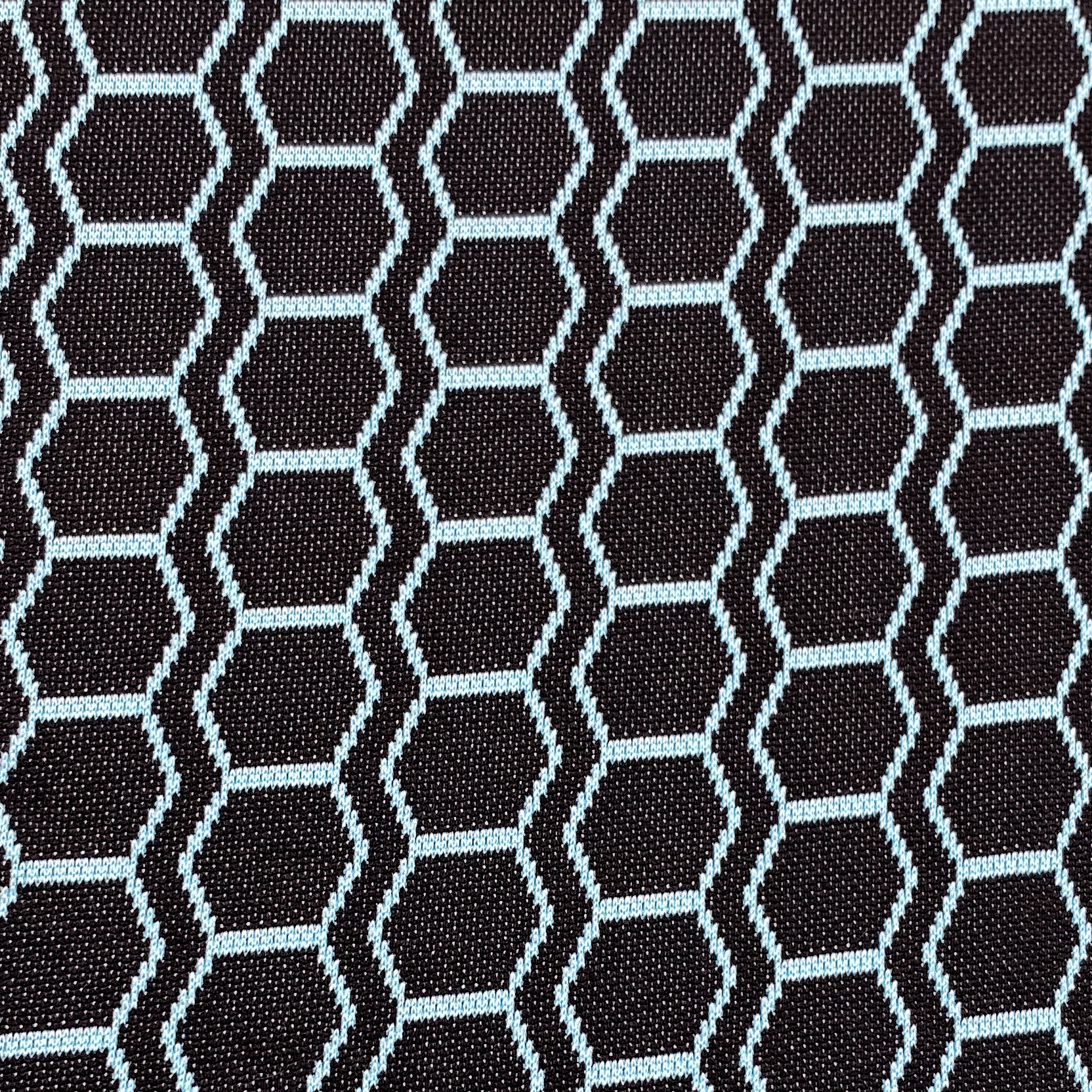 Sustainable 100% Recycled Polyester Honeycomb Fabric for Performance WearSource premium 100% recycled polyester honeycomb fabric (150gsm, 170cm) for sustainable apparel. Ideal for high-performance and eco-frien...View Product →
Polyester knit fabric has earned its place in modern apparel because it solves real problems: it dries quickly, survives heavy use, holds color, stretches with the body, and comes in structures that fit nearly every garment category. The material is not perfect, and breathability in dense constructions plus the environmental cost of virgin polyester remain genuine concerns. But when the right construction is matched to the right application, it outperforms most alternatives in both value and functionality. For designers and buyers, the practical takeaway is simple: understand the structure, verify the performance data, and choose a supplier who can document the specifications behind every roll.

As Yitai, since 2004, we have manufactured sportswear knitted fabrics such as interlock fabric, nylon fabric, spandex fabric, polyester fabric etc. With excellent R&D group, marketing team, quality control system, experienced dyeing & finishing supporting facility and customer service system.
Haining Yitai Knitting Co., Ltd
No. 198 Canghai Road, Warp Knitting Zone, Haining City, Zhejiang, 314419, China Tel: +0086 135 6738 5757 Email: [email protected] [email protected] [email protected]FOLLOW US




 英语
英语 中文简体
中文简体