Article Directory
Two polyester jersey rolls leave the mill with the same GSM, the same color card and the same price. One sews into shirts that hold their shape across thirty machine washes; the other pills after the first wear and feels boardy by the end of the season. The knitting machine is not the variable. The yarn is. Polyester yarn quality is the invisible layer that determines which fabric performs and which fabric fails, long before it reaches the cutting table.
Polyester yarn quality is the set of measurable properties that controls how a yarn knits and how the finished fabric behaves: linear density, filament count, cross-section shape, tenacity, elongation, thermal shrinkage and batch uniformity.
Mills can tune the knitting structure, the dyeing route and the finishing chemicals, but no downstream step can repair a yarn that was drawn badly, textured unevenly or spun from weak polymer. When a fabric complaint reaches the technical desk, the first evidence review is always the yarn specification.
The parameters that matter most in knit fabric development:
The type of polyester yarn, FDY, DTY or spun staple, dictates stretch, hand feel and pilling resistance more than any finishing chemical applied later.
In knitting, yarn structure becomes fabric structure. A smooth fully drawn yarn creates a clean crisp surface; a textured yarn produces bulk, cover and elasticity; a spun staple yarn brings a cotton-like touch that carries a pilling trade-off. POY (partially oriented yarn) is the intermediate feed used for texturizing, so the yarns that actually reach the needles are FDY, DTY and spun staple.
| Yarn type | Structure | Typical knit applications | Fabric traits |
| FDY (fully drawn yarn) | Smooth, high orientation | Interlock, tricot, linings | Crisp surface, lower stretch, strong |
| DTY (draw-textured yarn) | Crimped, bulky | Single jersey, activewear, pique | Soft, stretchy, good cover |
| Spun polyester (staple) | Short twisted fibers | Fleece, casual jersey | Cotton-like hand, higher pilling risk |
| Cationic polyester | Dye-modified filament | Color-effect jacquard, fashion knits | Two-tone dye effects, softer dye uptake |
When the goal is a versatile base with stable strength and a clean surface, a mill-grade option such as the black polyester fabric YT333 keeps the yarn specification tight enough to avoid the hand feel and pilling problems that cheap texturing creates.
Fabric tensile performance and wash shrinkage trace back to yarn tenacity and heat history, not to stitch density.
Tenacity is the breaking strength of the yarn, expressed in grams per denier. Standard polyester filament yarns sit between 4.5 and 5.5 g/den; high-tenacity yarns reach 6.0 g/den or more. In an identical interlock or single jersey construction, that difference can raise burst strength by more than 20 percent and reduce edge tearing during sewing.
High-tenacity yarn
Standard yarn
The drawing and heat-setting sequence behind those numbers is covered in detail in how polyester fabric is made.
Moisture wicking and softness are decided by denier per filament and cross-section shape before any moisture-management finish is applied.
Denier per filament (dpf) is the yarn denier divided by the number of filaments. A 75D/24F yarn has a dpf of about 3.1 and feels firm; a 75D/72F yarn drops to about 1.0 and feels noticeably softer, with finer capillary channels between the filaments. Trilobal cross-sections add around 20 percent more surface area than round filaments and improve moisture transport without changing the polymer chemistry.
Filament fineness versus fabric softness and wicking
Finer filaments form more capillary channels and a softer bending profile. The same polymer, a completely different fabric feel.
That is why activewear brands specify 75D/36F or 75D/72F instead of a generic polyester spec. A quick-dry black polyester fabric like HT1337 is built from fine-filament yarn so the drying speed survives repeated washing.
 Wholesale BLACK QUICK DRY FABRIC Suppliers, ExportersHaining Yitai Knitting Co., Ltd is China wholesale BLACK QUICK DRY FABRIC suppliers and Exporters, If you want to be cool, this high qual...View Product →
Pilling grade and dye uniformity in finished polyester fabric are usually yarn defects that surface during wear and dyeing.
Pilling comes from broken filaments. In low-grade draw-textured yarn, broken filaments create fuzz on the fabric surface, and that fuzz tangles into pills. Filament yarns pill less than spun yarns, and high-quality texturing keeps filament breakage low through the whole knitting process.
Dye consistency is where yarn quality hides most often. Two yarn packages from different production runs can absorb disperse dye differently and produce a visible shade change across one roll. Reliable suppliers test every batch and keep cationic and regular polyester separated. Understanding where polyester fits against other fibers helps when comparing options: see our summary of polyester fabric advantages and disadvantages.
Recycled polyester yarn performs like virgin yarn only when the melt-spinning process holds the same tolerances as virgin production.
Recycled yarn starts from bottle-grade PET or pre-consumer textile waste. The polymer is re-melted and spun, but intrinsic viscosity can vary with the feedstock. When IV drops too low, the yarn loses tenacity and the fabric becomes fragile. Controlled rPET production tests every batch against the same denier, elongation and shrinkage limits used for virgin yarn.
A recycled polyester honeycomb fabric such as HT1317 demonstrates what controlled rPET spinning can deliver: a stable structure with defined breathability that performs on par with virgin material.
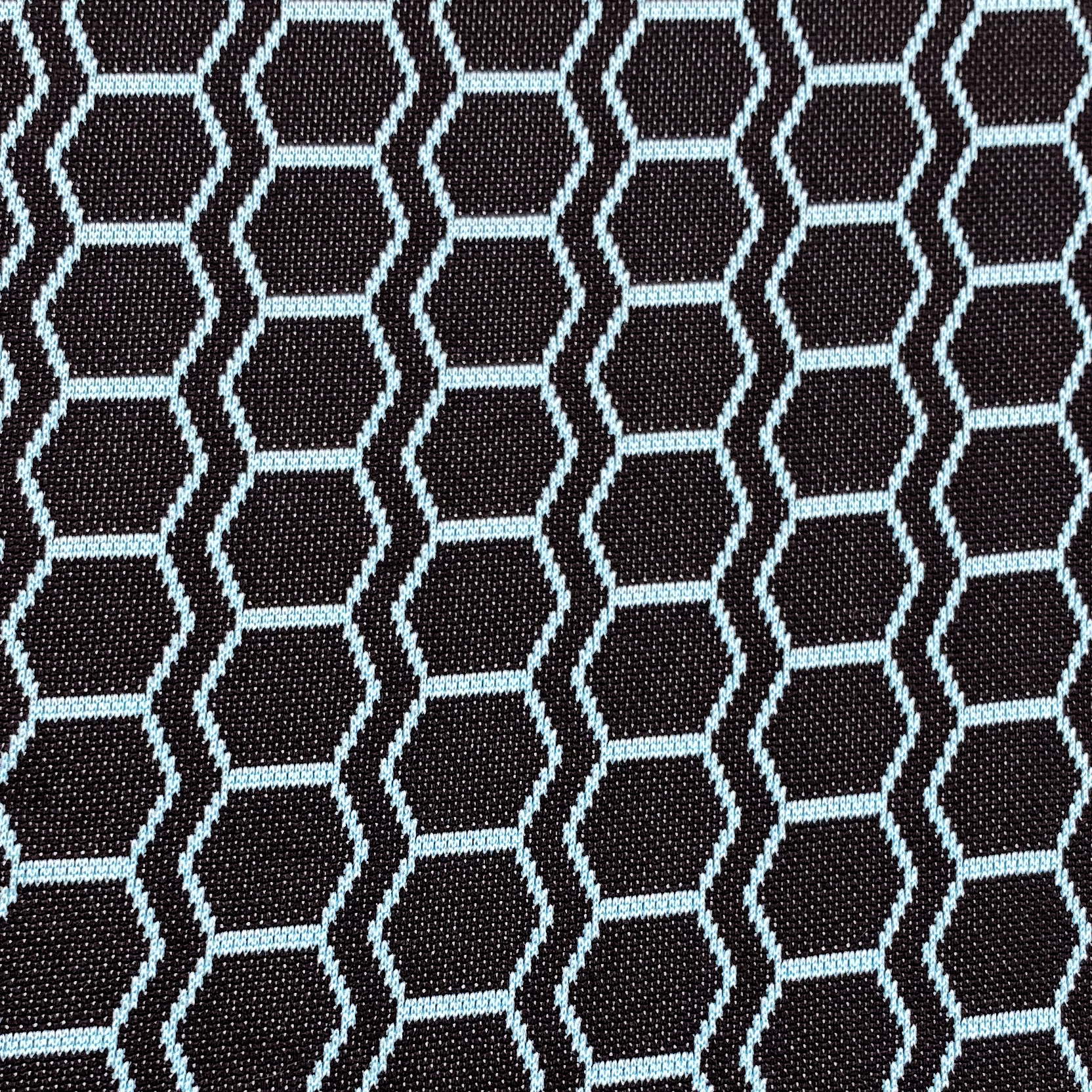 Sustainable 100% Recycled Polyester Honeycomb Fabric for Performance WearSource premium 100% recycled polyester honeycomb fabric (150gsm, 170cm) for sustainable apparel. Ideal for high-performance and eco-frien...View Product →
Give the mill a yarn specification, not just a target weight: denier, filament count, dye type and shrinkage tolerance.
A vertical knit fabric supplier such as Haining Yitai Knitting Co., Ltd. reviews the yarn specification before the first development sample is knitted. The yarn count classification guide on this site explains how linear-density terminology works in practice and helps align your specification with what mills actually quote.
Yes. A 75D/24F yarn feels firm and crisp; a 75D/72F yarn feels soft and drapes differently. The polymer is the same, but filament fineness changes the surface, the flexural stiffness and the way the fabric touches the skin.
Pilling is caused by broken filaments and surface fuzz. Low-quality textured yarn creates more broken filaments and pills after a few washes. Higher-grade DTY and filament yarns resist pilling far better.
Not necessarily. Recycled yarn becomes weaker when intrinsic viscosity drops during melt spinning. Controlled rPET production with batch testing delivers tenacity close to virgin polyester. The specification, not the recycled content, decides the performance.
Start with 75D/36F or 75D/72F polyester filament yarn, regular or cationic disperse dyeing, a shrinkage limit under 5 percent and a stated pilling grade. Add a request for tenacity and elongation data from the yarn batch.

As Yitai, since 2004, we have manufactured sportswear knitted fabrics such as interlock fabric, nylon fabric, spandex fabric, polyester fabric etc. With excellent R&D group, marketing team, quality control system, experienced dyeing & finishing supporting facility and customer service system.
Haining Yitai Knitting Co., Ltd
No. 198 Canghai Road, Warp Knitting Zone, Haining City, Zhejiang, 314419, China Tel: +0086 135 6738 5757 Email: [email protected] [email protected] [email protected]FOLLOW US



 英语
 中文简体