Article Directory
The decision between polyester knit fabric and nylon fabric usually happens at a sample table, not in a laboratory. A developer holds both swatches, checks the stretch, and asks about price. The answer determines whether the final garment is a mass-market team jersey or a premium compression baselayer.
Both materials are synthetic knits and both can be knitted into single jersey, interlock, or mesh structures. Their fiber chemistry, however, creates measurable differences in drying speed, abrasion resistance, UV behavior, and cost. This guide breaks down those differences using the technical specs that matter in production and wholesale purchasing.
Polyester knit fabric is a synthetic knitted textile produced from polyethylene terephthalate (PET) filament or staple yarn. It is engineered for fast drying, high color fastness, and cost efficiency across activewear, swimwear, and casual wear applications.
The knit structure, whether single jersey, interlock, rib, or mesh, determines the fabric's recovery and drape. The PET fiber itself provides chemical resistance. Polyester has a moisture regain below 0.4 percent, which means it absorbs very little water and releases it quickly. This is the technical reason polyester dries faster than nylon and resists water-based stains.
Polyester also responds well to sublimation and digital printing. Disperse dyes bond with the PET molecule at high temperature, producing vivid, washfast colors. UV resistance is another advantage: polyester does not yellow or degrade as quickly as nylon under sun exposure.
From a wholesale perspective, polyester is less expensive than nylon per meter, typically by 15 to 30 percent depending on denier and finishing. Recycled polyester (rPET) is widely available. At Haining Yitai Knitting Co., Ltd, polyester fabrics form a large share of the production catalog because of their balance between performance and cost.
Nylon fabric is a synthetic knit made from polyamide filament yarn, distinguished by very high tensile strength, exceptional abrasion resistance, and a soft, smooth hand feel that is ideal for next-to-skin apparel.
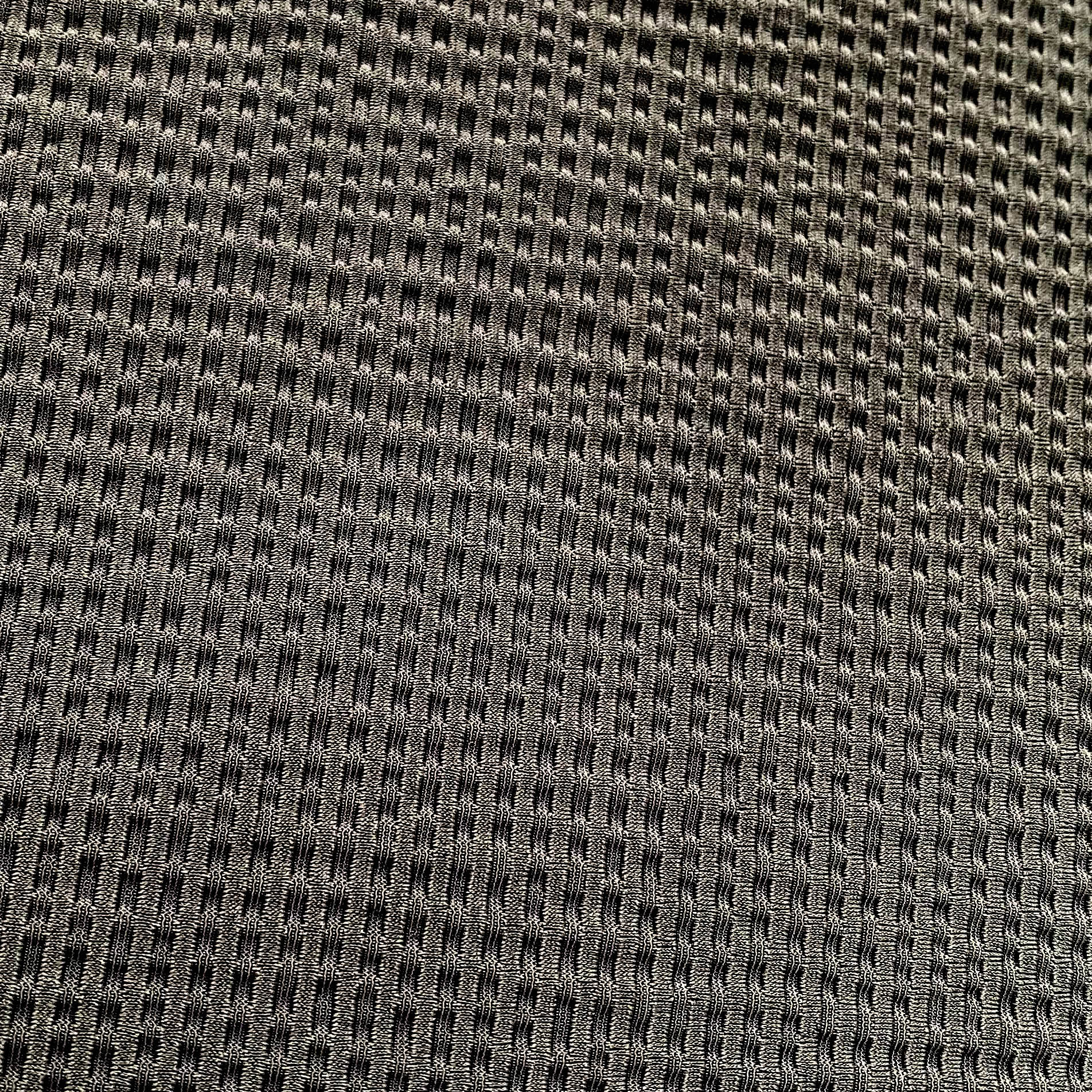 Black Nylon Fabric for Comfortable Base LayersThis black nylon knit combines high tensile strength with a moisture regain near 4.5%, offering a soft, comfortable feel that suits base layers and compression garments.View Product →
Nylon has a moisture regain around 4.5 percent, roughly ten times higher than the polyester moisture regain. This small amount of absorption gives nylon a more comfortable second-skin feel, especially in base layers and compression garments.
The fiber also delivers superior stretch recovery. When blended with spandex, nylon returns to its original shape more reliably than polyester blends. This is why cycling jerseys, leggings, and compression sleeves often specify nylon-spandex blends.
On the downside, nylon has lower resistance to UV light. Prolonged sun exposure can cause the fiber to yellow and lose tensile strength. It is also more expensive, both in raw polymer cost and yarn production. Garment programs with a firm price ceiling usually steer buyers back toward polyester.
The table below compares polyester knit fabric and nylon fabric across the six attributes that matter most in garment production planning.
| Attribute | Polyester Knit | Nylon Knit |
| Moisture regain | Below 0.4 percent | About 4.5 percent |
| Drying speed | Very fast | Moderate |
| UV resistance | High | Moderate |
| Abrasion resistance | Good | Excellent |
| Stretch recovery | Good | Excellent |
| Wholesale cost range | Lower | 15-30 percent higher |
Choose polyester knit fabric when budget control, colorfastness under UV exposure, and rapid drying are the top priorities. This makes it the default for team sportswear, sublimated printed activewear, and pool swimwear.
Chlorine resistance deserves special attention. Polyester degrades more slowly than nylon when immersed in chlorinated pool water, so pool swimwear usually specifies polyester knit. For beach fashion swimwear with a different value proposition, Haining Yitai Knitting Co., Ltd also offers a nylon-spandex swimwear fabric with a softer drape.
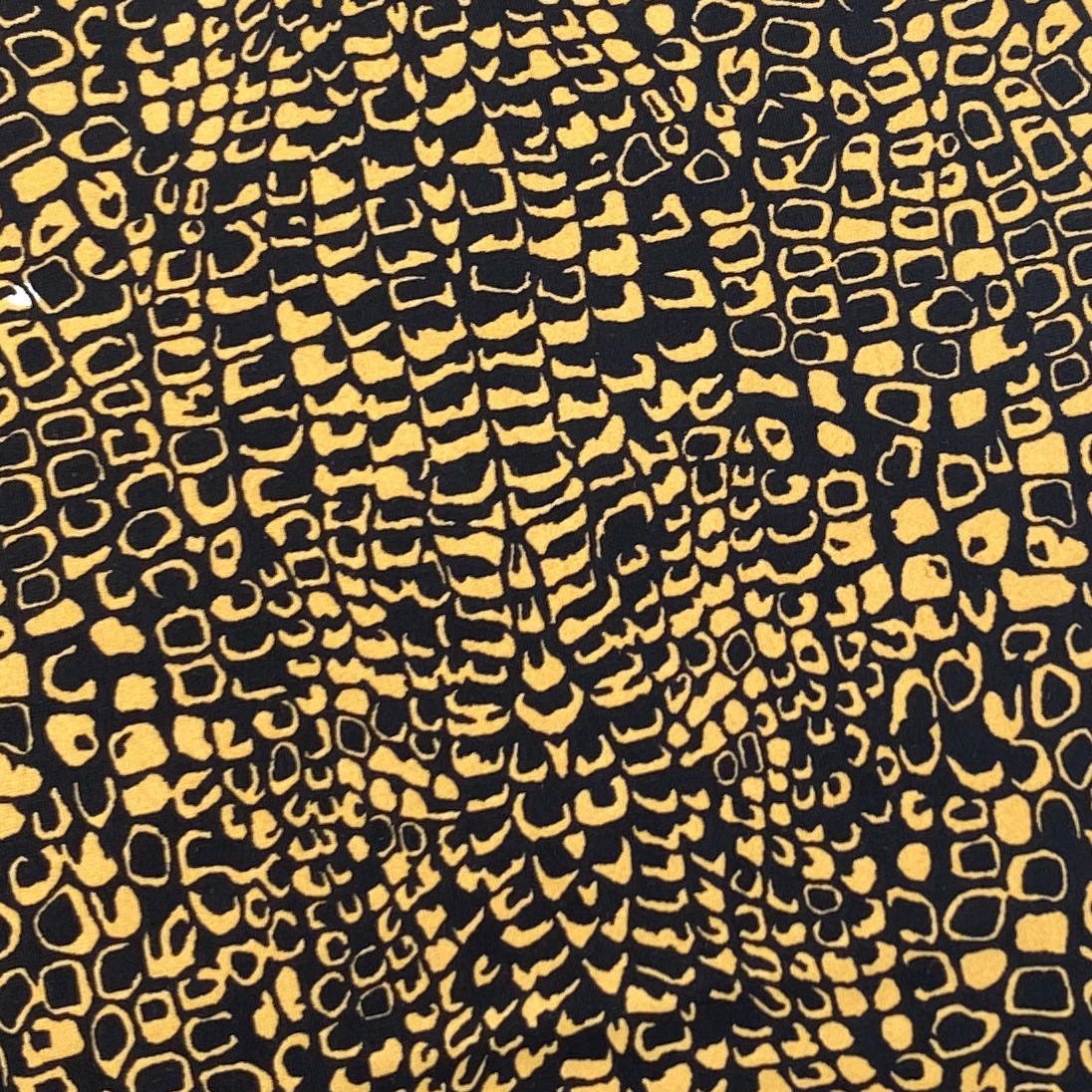 Nylon-Spandex Fabric for Soft Beach SwimwearComposed of 75% nylon and 25% spandex, this lightweight fabric provides high stretch and quick drying, making it a softer alternative for beach fashion swimwear.View Product →
Choose nylon fabric when the garment demands maximum tensile strength, premium stretch recovery, and the smoothest hand feel possible. Nylon is the right material for compression apparel, high-end activewear, and base layers that sit directly on the skin.
Haining Yitai Knitting Co., Ltd has worked with both fibers for close to two decades, and the recommendation always follows the garment specification rather than a blanket preference.
There is no universal winner. Polyester knit fabric wins on cost, drying speed, UV stability, and print quality. Nylon wins on abrasion resistance, stretch recovery, and next-to-skin comfort.
For a buyer evaluating a specific order, the deciding factors are the garment's intended market, the climate where it will be worn, the required wash cycles, and the target price point. If the program is a budget-driven team sportswear collection, polyester knit is the safer decision. If the program is a mid-to-high-end activewear line with compression requirements, nylon is worth the premium.
Yes. Polyester knit fabric is typically 15 to 30 percent less expensive per meter than nylon fabric at comparable denier and finish. The gap comes from the lower raw polymer cost of PET versus polyamide, which is why polyester dominates mass-market activewear.
Polyester dries faster. With a moisture regain below 0.4 percent, polyester releases moisture quickly. Nylon absorbs about 4.5 percent moisture, which softens the skin contact but slows the drying process.
Nylon is more durable in tensile strength and abrasion resistance, and it withstands repeated stretching without thinning. However, polyester has better UV and chlorine resistance, so in a pool or sun-exposed environment, polyester may last longer in color and structure.
Yes. Polyester knit fabric is preferred for pool swimwear because it resists chlorine better than nylon. For fashion swimwear worn at the beach or around the resort, nylon offers a softer feel and better drape. The choice depends on the bathing environment.

As Yitai, since 2004, we have manufactured sportswear knitted fabrics such as interlock fabric, nylon fabric, spandex fabric, polyester fabric etc. With excellent R&D group, marketing team, quality control system, experienced dyeing & finishing supporting facility and customer service system.
Haining Yitai Knitting Co., Ltd
No. 198 Canghai Road, Warp Knitting Zone, Haining City, Zhejiang, 314419, China Tel: +0086 135 6738 5757 Email: [email protected] [email protected] [email protected]FOLLOW US




 英语
英语 中文简体
中文简体