Article Directory
A production manager who switches an order of 40,000 units from cotton jersey to a polyester knit sees measurable differences in three areas: moisture retention, drying time, and shape recovery. Cotton absorbs up to 20% of its weight in water before the wearer feels damp, while polyester knits absorb less than 1% and dry in roughly half the time. These are not subjective preferences; they are testable fiber properties that determine whether a garment meets its intended end use.
A polyester knit fabric is a textile made from synthetic PET polymer chains in a looped construction, while a cotton knit is a natural cellulosic textile built in the same looped structure. The fiber chemistry drives nearly every performance gap that matters in apparel manufacturing.
Both fabrics can be knitted into single jersey, interlock, rib, or mesh structures. That is why a 180 GSM cotton interlock and a 180 GSM polyester interlock look almost identical from the outside. The difference appears in how they handle moisture, heat, movement, and repeated laundering. When comparing knitted vs woven constructions, the knit structure amplifies these fiber-level differences.
Core definition: Polyester knit fabric is a textile produced from polyethylene terephthalate (PET) fibers in a knitted loop structure. Cotton knit fabric is a textile produced from cellulosic cotton fibers in the same loop structure but with natural moisture-absorbing and breathable properties.
The core difference between polyester knit and cotton fabric is measured across seven properties: moisture absorption, drying time, breathability, stretch recovery, pilling resistance, colorfastness, and price. These metrics decide whether a fabric swap makes sense for a given product line.
| Property | Polyester Knit | Cotton Knit |
| Moisture absorption | Low, under 1% of weight | High, up to 20% of weight |
| Drying time | 15 to 20 minutes | 40 to 60 minutes |
| Breathability | Moderate | High |
| Stretch recovery | Excellent with blends | Poor to moderate |
| Pilling resistance | Good | Moderate |
| Colorfastness | High, up to 500 hours UV | Moderate, 200 to 300 hours UV |
| Wholesale price per kg | USD 2.8 to 4.5 | USD 3.5 to 5.5 |
Polyester knits outperform cotton on moisture management, shape retention, and durability; cotton knits outperform polyester on breathability, softness, and natural comfort. This is not a tie; it is a division of labor based on end use.
Polyester fibers have a very low moisture regain of 0.4%, meaning the fiber itself does not hold water. Sweat passes through the voids between fibers and evaporates quickly. Cotton has a moisture regain of 8.5% and an internal absorbency that retains water. In a 60-minute workout, an athlete wearing a cotton t-shirt keeps around two to three times more moisture on the skin compared with a polyester wicking garment.
Cotton serves better for static or low-intensity use. Its porous cellulosic structure allows air movement and releases heat gradually. Polyester feels cooler when dry but can trap heat during high activity unless the knit is engineered with ventilation. Many sportswear brands solve this with a two-layer system: polyester outer layer for wicking and cotton inner layer for comfort.
Polyester delivers higher tensile strength, around 6 to 7 grams per denier, and resists abrasion. Cotton knits typically show the first pilling after 20 to 30 domestic wash cycles. Polyester also accepts disperse dyes that lock into the fiber, reducing fading on sun exposure. In UV exposure tests, a polyester knit can hold its color near 500 hours, while a comparable cotton knit starts fading between 200 and 300 hours. This matters for team sportswear and swimwear lines that need a long visual life.
The performance profile below shows how the two fibers score on the five properties buyers evaluate most often. A higher value means the fabric is stronger in that property.
Use polyester knits for activewear, swimwear, team sportswear, and underwear when quick dry and shape retention are critical; use cotton knits for casual wear, loungewear, and next-to-skin base layers when breathability and softness come first.
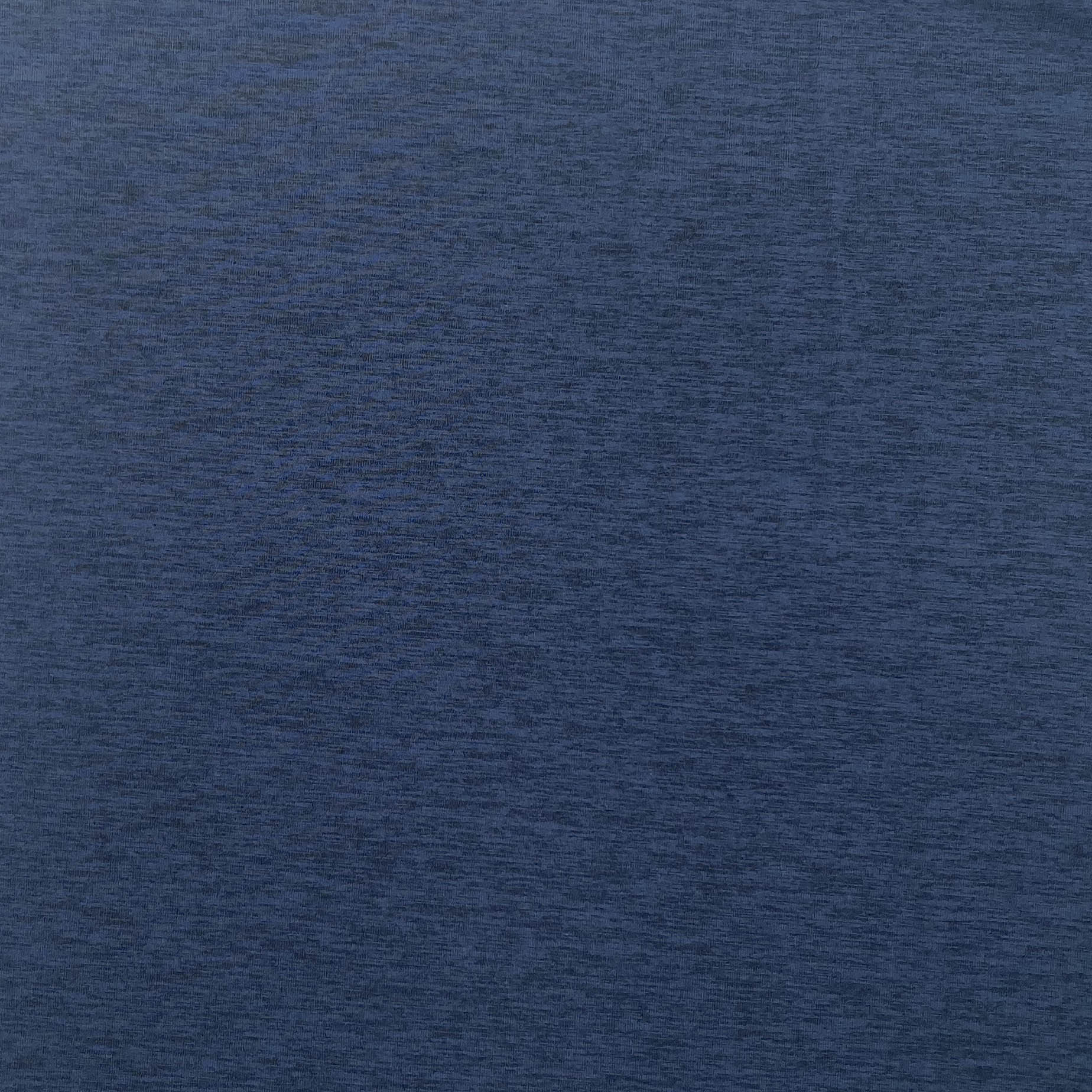
 Blue Interlock Fabric for Performance and Casual WearThis blue interlock knit offers a smooth, durable surface, making it suitable for activewear, swimwear, and loungewear where breathability and comfort are key.View Product →
Polyester knits typically cost 10 to 30% less than an equivalent cotton knit at wholesale and face fewer sourcing constraints, but cotton offers predictable consumer expectations and no microplastic shedding concerns during washing.
| Factor | Polyester Knit | Cotton Knit |
| Raw material | Petroleum-based, abundant | Agricultural, crop-dependent |
| Wholesale price | USD 2.8 to 4.5 per kg | USD 3.5 to 5.5 per kg |
| Dyeing water use | 40 to 50 liters per kg | 60 to 70 liters per kg |
| Delivery stability | Stable through the year | Weather and region dependent |
| End-of-life impact | Recyclable but not biodegradable | Biodegradable, more resource-intensive to grow |
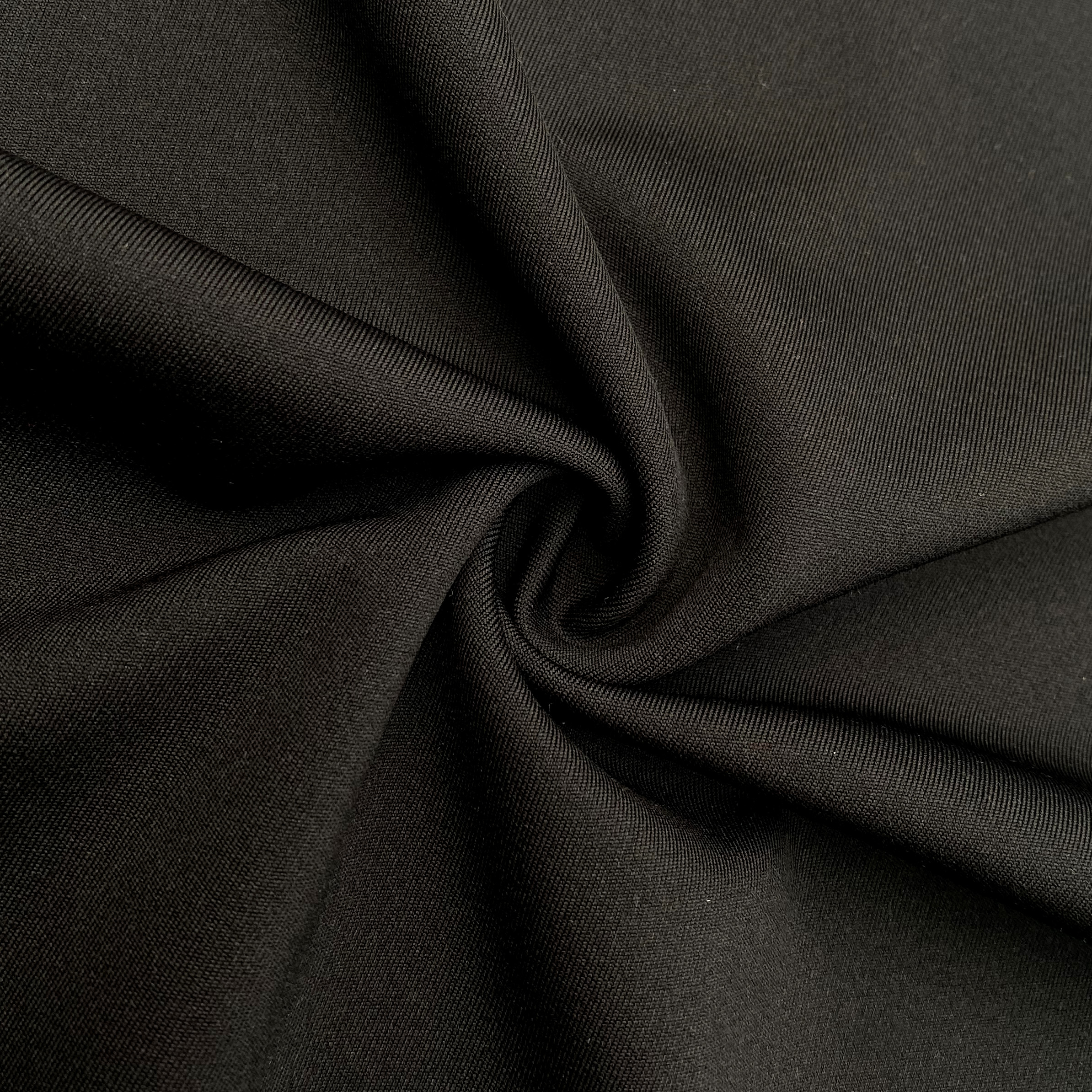 Black Recycled Polyester Fabric with Shrinkage ControlThis black recycled polyester knit, around 180 GSM, is engineered for controlled shrinkage and soft hand feel, providing a cost-effective option for teams seeking sustainable fabric choices.View Product →
When a 180 GSM polyester knit is processed by a specialized knitted fabric supplier such as Haining Yitai Knitting Co., Ltd., the dyeing and finishing stage can be tuned to control shrinkage and hand feel. To see whether this approach fits your own line, review the full advantages and disadvantages of polyester fabrics before committing to a large order.
The four questions below cover the most common sourcing decisions garment teams face when comparing these two fabrics.
There is no universal winner. Polyester knit fabric wins on moisture management, durability, and shape retention. Cotton fabric wins on breathability and natural comfort. The choice should follow the final garment end use, not a general preference.
Yes for activewear, but not for all-day casual wear in hot and humid climates. When quick drying is the priority and spandex is blended for stretch, polyester feels comfortable during movement. In static conditions, cotton is usually more comfortable.
No. Polyester has higher tensile strength and resists pilling better. Cotton knits are more likely to pill after repeated washing, especially in single jersey constructions. The finishing and dyeing process also affects pilling resistance.
Yes, if the knit structure is the same. However, polyester and cotton have different shrinkage behavior during finishing, so you should test a sample with your actual seam type, needle, and dyeing process before producing a full run.

As Yitai, since 2004, we have manufactured sportswear knitted fabrics such as interlock fabric, nylon fabric, spandex fabric, polyester fabric etc. With excellent R&D group, marketing team, quality control system, experienced dyeing & finishing supporting facility and customer service system.
Haining Yitai Knitting Co., Ltd
No. 198 Canghai Road, Warp Knitting Zone, Haining City, Zhejiang, 314419, China Tel: +0086 135 6738 5757 Email: [email protected] [email protected] [email protected]FOLLOW US




 英语
英语 中文简体
中文简体