Article Directory
Most polyester knit fabrics last between three and seven years of regular wear, and many garments made from well-constructed polyester knits remain in good condition for a decade or more. A polyester t-shirt worn every week, washed and dried in a standard household cycle, will typically show visible wear around the three- to four-year mark. The same fabric in a dress worn a few times per season can easily last ten years. For low-use items like swimwear rotated through a summer wardrobe, the polyester itself is rarely the reason the garment gets retired.
The reason polyester performs so well is structural. Polyester fibers are extruded synthetic filaments, which makes them inherently more uniform and more resistant to abrasion, stretching, and moisture damage than most natural fibers. Unlike cotton, which weakens significantly when wet, or wool, which felts and pills under friction, polyester holds its dimensional stability under conditions that would degrade other fibers.
The simple "three-to-seven-year" answer hides a lot of variation, because the lifespan of a polyester knit is determined less by the fiber itself and more by how the fabric is engineered. Two fabrics both labeled "polyester knit" can differ by a factor of three or more in durability.
Not all polyester is created equal. Virgin polyester fiber produced under controlled conditions has consistent polymer chains and fewer weak points than lower-grade recycled or repurposed material. Recycled polyester has improved considerably in recent years, and good-quality recycled fiber now performs close to virgin fiber, but processing history matters. The way polyester fabric is made, from polymer extrusion to final finishing, sets the baseline for strength and elongation. Honeycomb-structured recycled polyester knit fabric, for instance, can deliver both sustainability and durability when the recycled content is properly graded.
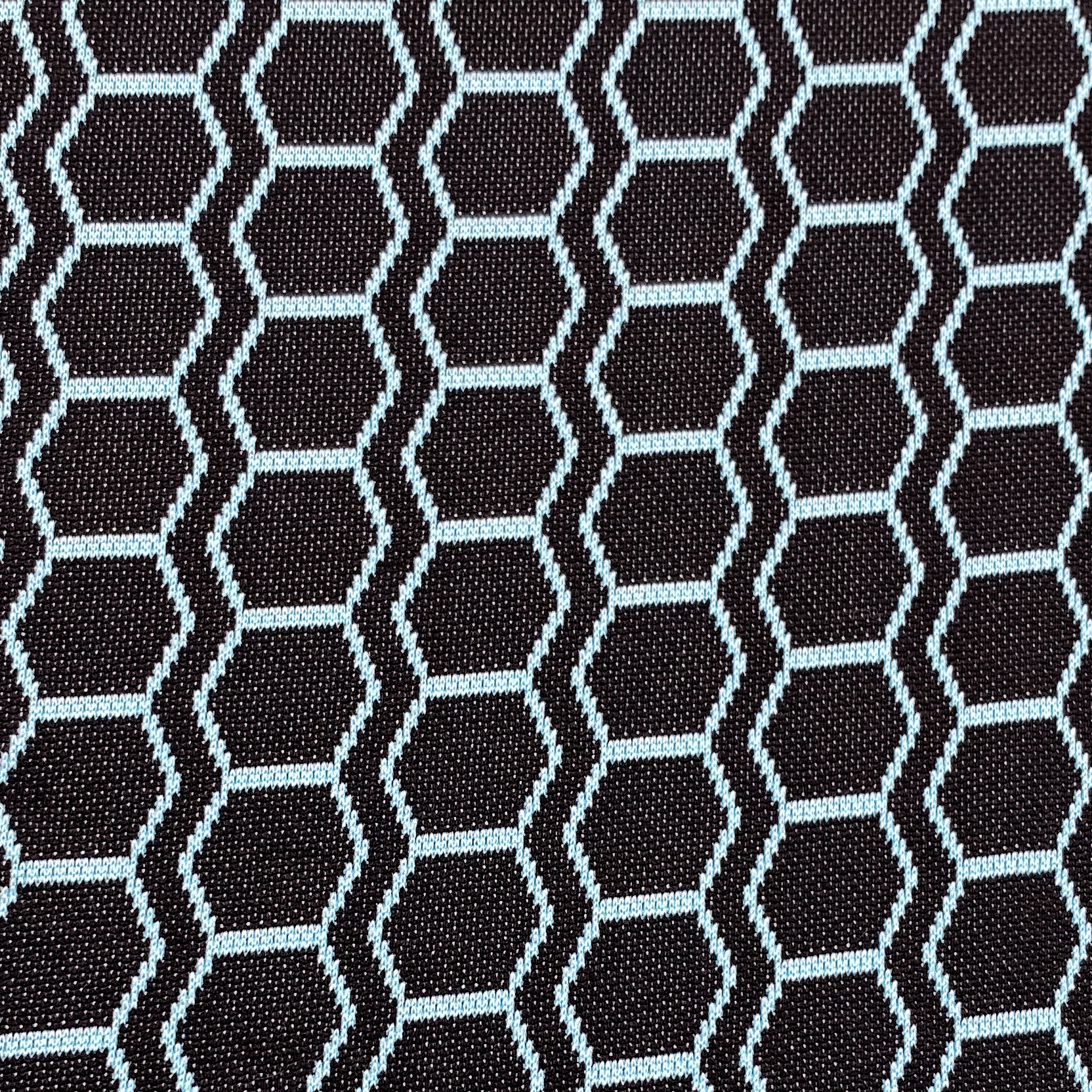 Sustainable 100% Recycled Polyester Honeycomb Fabric for Performance WearSource premium 100% recycled polyester honeycomb fabric (150gsm, 170cm) for sustainable apparel. Ideal for high-performance and eco-frien...View Product →
Fiber denier also matters. Finer denier fibers feel softer but are more prone to breaking under repeated stress. Heavier denier fibers give a firmer, more abrasion-resistant surface. A 150-denier polyester knit will generally outlast a 75-denier version of the same structure, all else being equal.
The knit structure determines how forces are distributed across the fabric. A tight, compact structure holds its shape longer than a loose, open one. Single jersey, for example, has a flat, open loop structure that snags and pills more easily. Interlock is a double-knit construction that is denser, more stable, and noticeably more durable. Rib knit sits somewhere in between, offering good stretch recovery but less abrasion resistance than interlock.
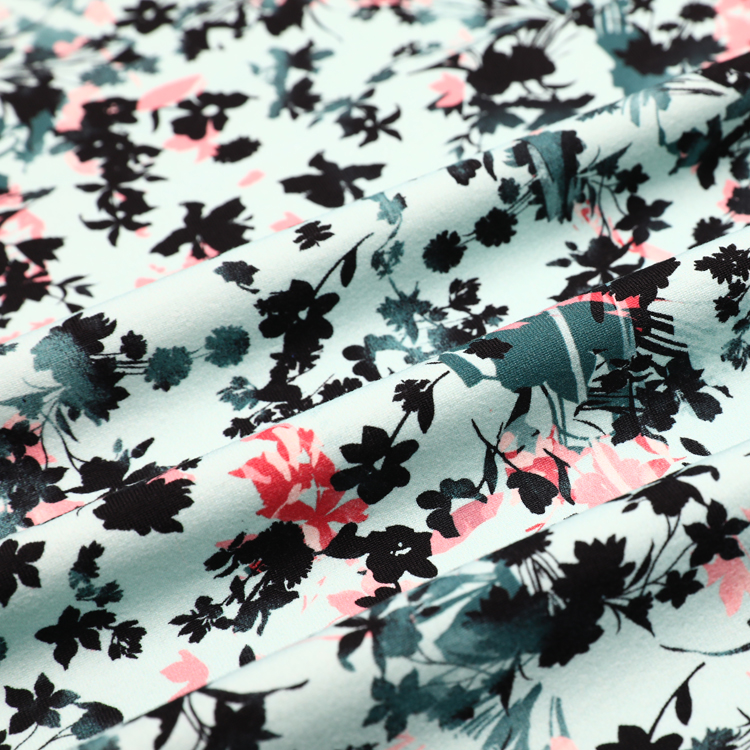
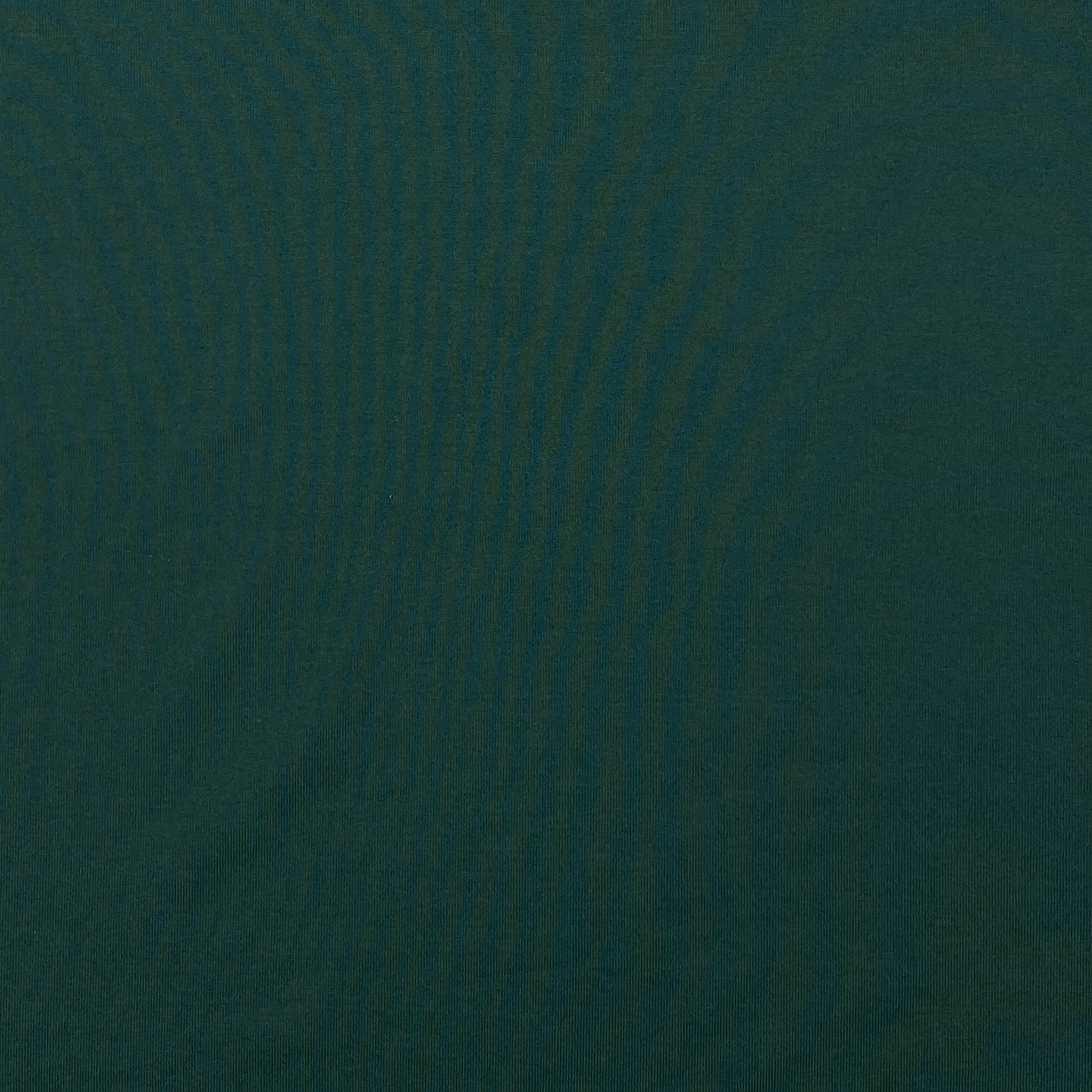
Fabric weight, expressed in GSM (grams per square meter), correlates with longevity. A 240 GSM interlock will take far longer to develop thinning or pilling than a 120 GSM single jersey. When buyers ask about durability, weight is the first specification to check. Even within the same weight range, construction matters: a densely knit black polyester fabric built for everyday garments will hold its shape noticeably longer than a loosely structured printed jersey of the same GSM.
Polyester is commonly dyed at high temperatures with disperse dyes. If the dyeing and reduction-cleaning steps are rushed, residual dye and chemicals can weaken the fiber over time. Finishes like brushing, sanding, and peaching intentionally abrade the surface to create softness, which shortens the fabric's usable life slightly. On the other hand, functional finishes such as anti-pilling treatments and UV stabilizers can extend it.
Different knit structures dominate different garment categories, and their lifespans differ accordingly. The table below summarises typical expectations for common polyester knit structures under normal wear and care.
| Knit Structure | Typical Applications | Expected Lifespan | Main Failure Point |
|---|---|---|---|
| Single Jersey | T-shirts, dresses, linings | 2-4 years | Pilling, surface snags |
| Interlock | Polos, dresses, outerwear | 5-8 years | Edge wear, loss of hand feel |
| Rib | Cuffs, collars, fitted tops | 3-5 years | Loss of elasticity |
| Mesh | Sportswear, lining panels | 3-5 years | Snags, hole formation |
| Fleece / Brushed | Hoodies, loungewear | 2-3 years | Surface shedding, thinning |
| Tricot / Warp Knit | Swimwear, activewear | 4-6 years | Fiber breakdown from chlorine |
Care is the single biggest variable in whether a polyester knit lasts two years or eight. The fiber is durable, but how it is washed, dried, and worn changes the failure curve.
Polyester is hydrophobic, meaning it does not absorb water, so it does not need hot water to be cleaned. Cool water between 30°C and 40°C preserves both the fiber and the dye. Hot water above 60°C accelerates fiber fatigue, particularly in thinner knits. Tumble drying is the most aggressive step in the care cycle. High heat causes polyester to gradually lose its elastic recovery, leading to bagging and sagging. Air drying is the simplest way to meaningfully extend the life of any polyester knit garment.
Friction is what kills knit fabrics. Pilling starts when loose fibers on the surface tangle into small balls. Polyester's high fiber strength actually works against it here: the pills stay attached to the fabric instead of breaking off, making the surface look worn. Anti-pilling polyester grades exist and are worth specifying for garments that will see heavy abrasion, such as team sportswear and activewear. Washing polyester items inside-out and avoiding heavy co-washes with denim or towels reduces surface friction considerably.
Three environmental factors degrade polyester faster than anything else. Prolonged UV exposure causes the polymer chains to break down, which shows up as color fading and a gradual loss of tensile strength. Chlorine attacks the fiber surface over time, particularly in swimwear. Repeated contact with chlorinated pool water will eventually weaken even the best polyester, though it still outlasts nylon and elastane blends in the same environment. Heat from ironing, hot pressing, or leaving garments in a hot car accelerates all of these effects.
Durability is not the same as infinite life. A polyester knit garment should be retired when it shows any of these signs:
Replacing a garment at the right time matters for both appearance and cost. A shirt kept beyond its useful life looks worn no matter how well it is styled. For manufacturers and brands, understanding these failure points makes it easier to select fabrics that will not be the reason a customer stops buying.
For clothing brands, private-label developers, and sewing professionals who want fabric that lasts, specification discipline at the sourcing stage is more effective than any care instruction. Check the fabric's abrasion resistance under a recognised standard, such as Martindale or Wyzenbeek testing, and compare results across suppliers rather than accepting a single number. Ask for pilling test data, usually graded on a 1-5 scale, where grade 4 or higher indicates a fabric that will hold its surface appearance for years. Confirm the stretch recovery percentage, especially for activewear and fitted garments. A fabric that returns to within 3-4% of its original dimensions after repeated stretching is a far better long-term choice than one with high initial stretch but poor recovery.
Request samples and run your own wash tests. Cycle a sample ten times through the washing and drying process that your end customer is most likely to use, and inspect the surface, dimensions, and hand feel afterwards. This simple test is one of the most reliable predictors of real-world lifespan. For activewear and performance garments, a quick-dry polyester fabric with stabilised dyeing and an anti-pilling finish will outperform a low-cost alternative in exactly the areas customers notice first. A well-constructed interlock or performance knit that passes a ten-cycle wash test with minimal change will typically serve a customer well for half a decade or more.
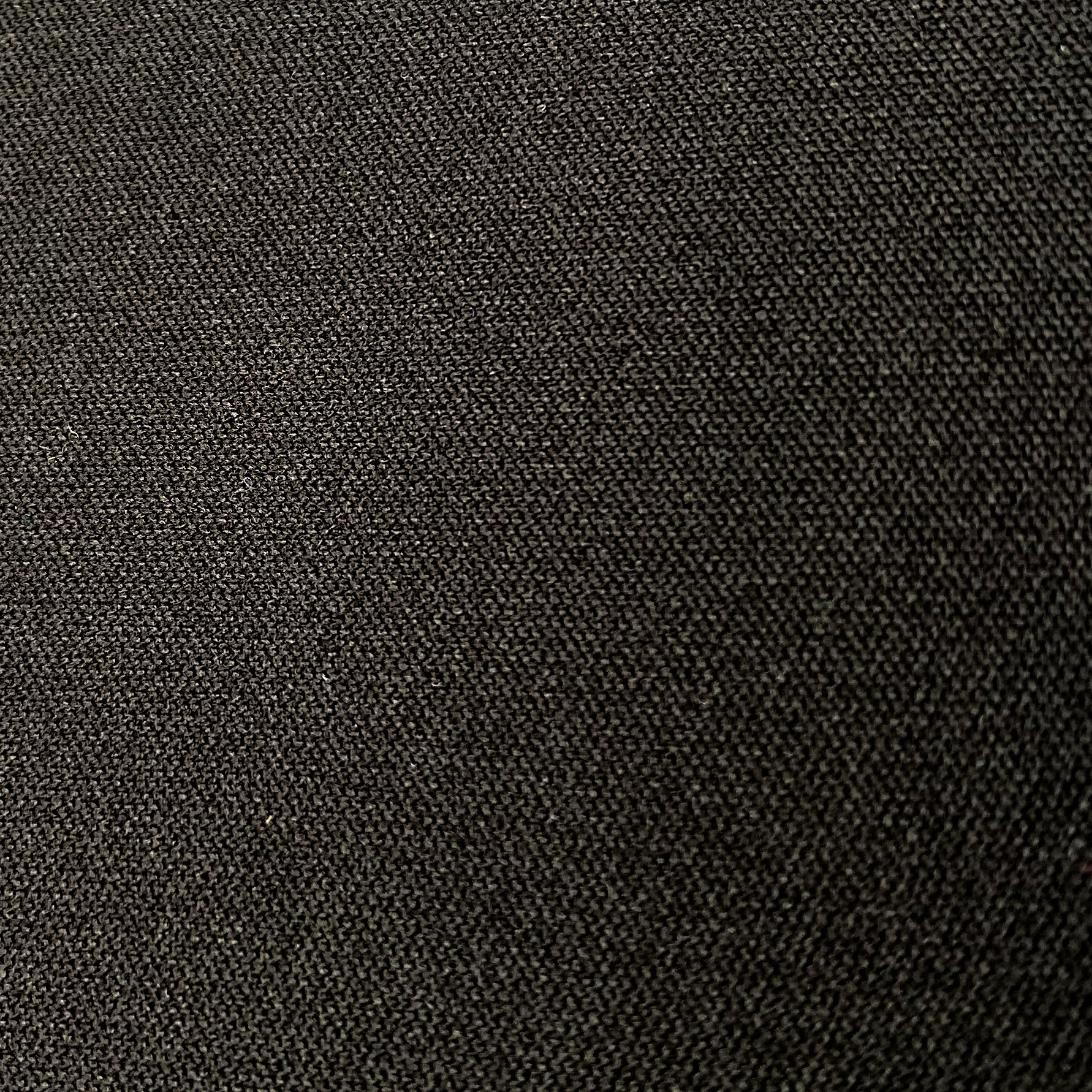 Wholesale BLACK QUICK DRY FABRIC Suppliers, ExportersHaining Yitai Knitting Co., Ltd is China wholesale BLACK QUICK DRY FABRIC suppliers and Exporters, If you want to be cool, this high qual...View Product →
When evaluating suppliers, ask about the dyeing and finishing process, not just the base fiber. Suppliers with in-house dyeing and finishing facilities tend to have better control over process parameters, which translates into more consistent fabric quality and fewer weak batches. This is the point that separates a fabric that looks good on a spec sheet from one that holds up in actual garments, and it is where the practical guidance on how to choose knitted fabric for your project becomes most useful.
Polyester knit fabric lasts three to seven years under normal wear, and closer to ten or more with reasonable care and a durable knit structure. The range is wide because the real determinants are structural: fiber quality, knit construction, fabric weight, finishing, and care habits. Buyers who choose a dense knit like interlock, specify anti-pilling and UV-stabilised finishes, and provide clear care instructions will get the most years out of every metre of fabric. For most garment categories, polyester knit is not the weak link in the product lifecycle; it is the component most likely to outlast everything else in the garment.

As Yitai, since 2004, we have manufactured sportswear knitted fabrics such as interlock fabric, nylon fabric, spandex fabric, polyester fabric etc. With excellent R&D group, marketing team, quality control system, experienced dyeing & finishing supporting facility and customer service system.
Haining Yitai Knitting Co., Ltd
No. 198 Canghai Road, Warp Knitting Zone, Haining City, Zhejiang, 314419, China Tel: +0086 135 6738 5757 Email: [email protected] [email protected] [email protected]FOLLOW US




 英语
英语 中文简体
中文简体