Article Directory
The core advantage of modern yoga wear lies in its advanced fabric engineering. Moisture-wicking technology uses microfiber structures to draw sweat away from the skin and facilitate rapid evaporation, effectively avoiding the heavy, clammy feeling associated with traditional cotton fabrics after perspiration. Concurrently, breathable fabrics with air permeability help regulate body temperature, reducing fatigue during practice.
In terms of mobility, four-way stretch technology endows the garment with the ability to expand and contract naturally in all directions, ensuring practitioners feel unconstrained during deep stretches or complex asanas. Complementing this is stretch recovery technology, which guarantees the fabric returns to its original shape after being stretched. This not only helps maintain the garment's support and shaping effect over the long term but also preserves its fit even after multiple washes.
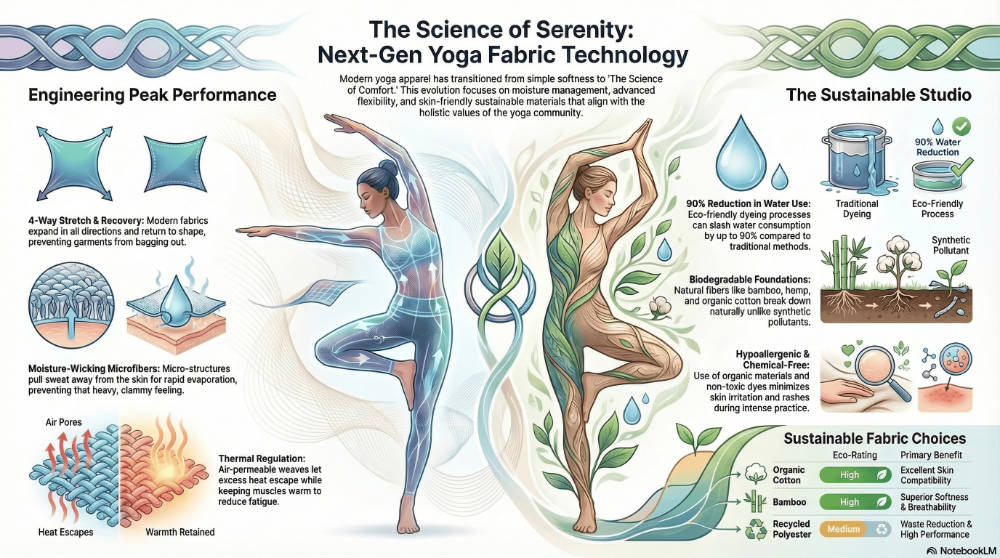
Focusing on skin comfort, the industry is turning towards natural, biodegradable fibers such as organic cotton, bamboo, and hemp. Compared to synthetic fibers, these materials are generally softer, more breathable, and can significantly reduce skin irritation and allergic reactions.
Because organic materials are grown without synthetic pesticides or chemical fertilizers, they are free from chemical residues. When combined with low-impact, eco-friendly dyes and chemical-free processing techniques, this effectively minimizes friction and helps prevent rashes. Furthermore, the application of seamless designs further eliminates chafing, providing wearers with a "second-skin" sensation.
Technological innovation in modern yoga wear also encompasses emotional and value-based comfort. By utilizing recycled polyester and organic materials, yoga brands can lessen their environmental impact. Organic farming protects soil ecology, and the resulting natural materials possess biodegradability, aligning closely with the mindfulness and environmental values cherished by many yoga practitioners. Moreover, employing eco-friendly dyeing techniques can reduce water consumption by up to 90%, contributing to resource conservation.
Finally, advancements in fabric technology enhance the versatility of the clothing. Modern yoga wear is designed to meet the performance demands of studio practice while its stylish aesthetics also make it suitable for daily wear, enabling a seamless transition from the yoga studio to the street. This holistic sense of well-being allows practitioners to feel better supported both physically and psychologically.

As Yitai, since 2004, we have manufactured sportswear knitted fabrics such as interlock fabric, nylon fabric, spandex fabric, polyester fabric etc. With excellent R&D group, marketing team, quality control system, experienced dyeing & finishing supporting facility and customer service system.
Haining Yitai Knitting Co., Ltd
No. 198 Canghai Road, Warp Knitting Zone, Haining City, Zhejiang, 314419, China Tel: +0086 135 6738 5757 Email: [email protected] [email protected] [email protected]FOLLOW US




 英语
英语 中文简体
中文简体