Article Directory
Most product-lifecycle analyses assign 70 to 80 percent of a garment's environmental impact to design and material-selection decisions. For sportswear, that decision is knitted into the fabric: how much recycled polymer it contains, how much water and heat are needed to finish it, how quickly it loses shape, and whether it can survive 100 more wash cycles. Haining Yitai Knitting Co., Ltd., a high-performance knitted fabric supplier founded in 2004, treats these choices as the starting point of responsible manufacturing rather than an afterthought.
A sustainable knit fabric reduces the environmental burden per finished garment across fibre origin, production chemistry, longevity, and end-of-life options, while still passing the mechanical tests that sportswear requires.
Three practical questions determine whether a fabric is more responsible than the one it replaces. First, what raw material will be consumed? Second, what energy, water, and chemical inputs are needed to finish it? Third, how long will it hold its shape, colour, and comfort after repeated wear and washing?
Switching sportswear from virgin polyester to recycled knit fabric is one of the fastest ways to lower embodied carbon because fibre production is often the largest single emissions contributor.
The numbers do not mean every recycled-knit fabric outperforms a virgin equivalent. Actual performance depends on yarn quality, knit geometry, and finishing controls. A recycled-content claim without test data is a marketing statement. For mills that build fabrics from validated recycled yarns, however, recycled and virgin four-way stretch knit fabrics can perform close enough for most sportswear programmes.
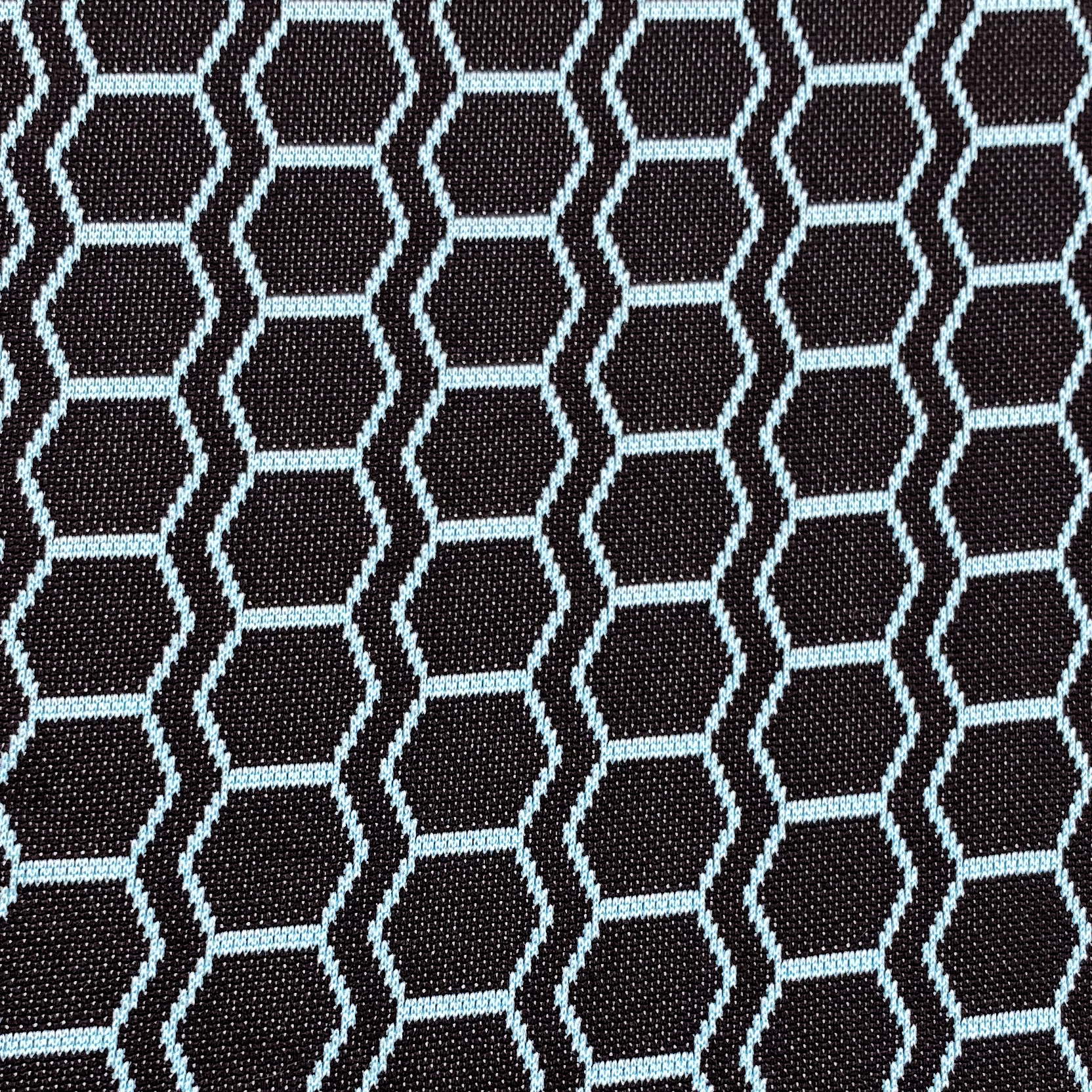 100% POLYESTER 150GSM 170CM HONEYCOMB RECYCLED POLYESTER FABRIC HT1317100% POLYESTER 150GSM 170CM HONEYCOMB RECYCLED POLYESTER FABRIC - Sustainable High-Performance TextileView Product →
Keeping a sportswear garment in regular use for three years instead of one lowers its lifetime footprint more than any end-of-use recycling programme can recover.
Pills after ten washes, loses recovery, and fades in UV testing. The garment is discarded while the rest of the jacket is still intact.
Passes abrasion, pilling, and stretch-recovery protocols. The same recycled yarn carries a lower carbon footprint per wear cycle.
Wash-test protocols used by sports brands often require pilling grades of 3.5 or higher and shrinkage below 5 percent. A fabric that meets these levels for 50 washes will outperform a cheaper fabric that fails after ten.
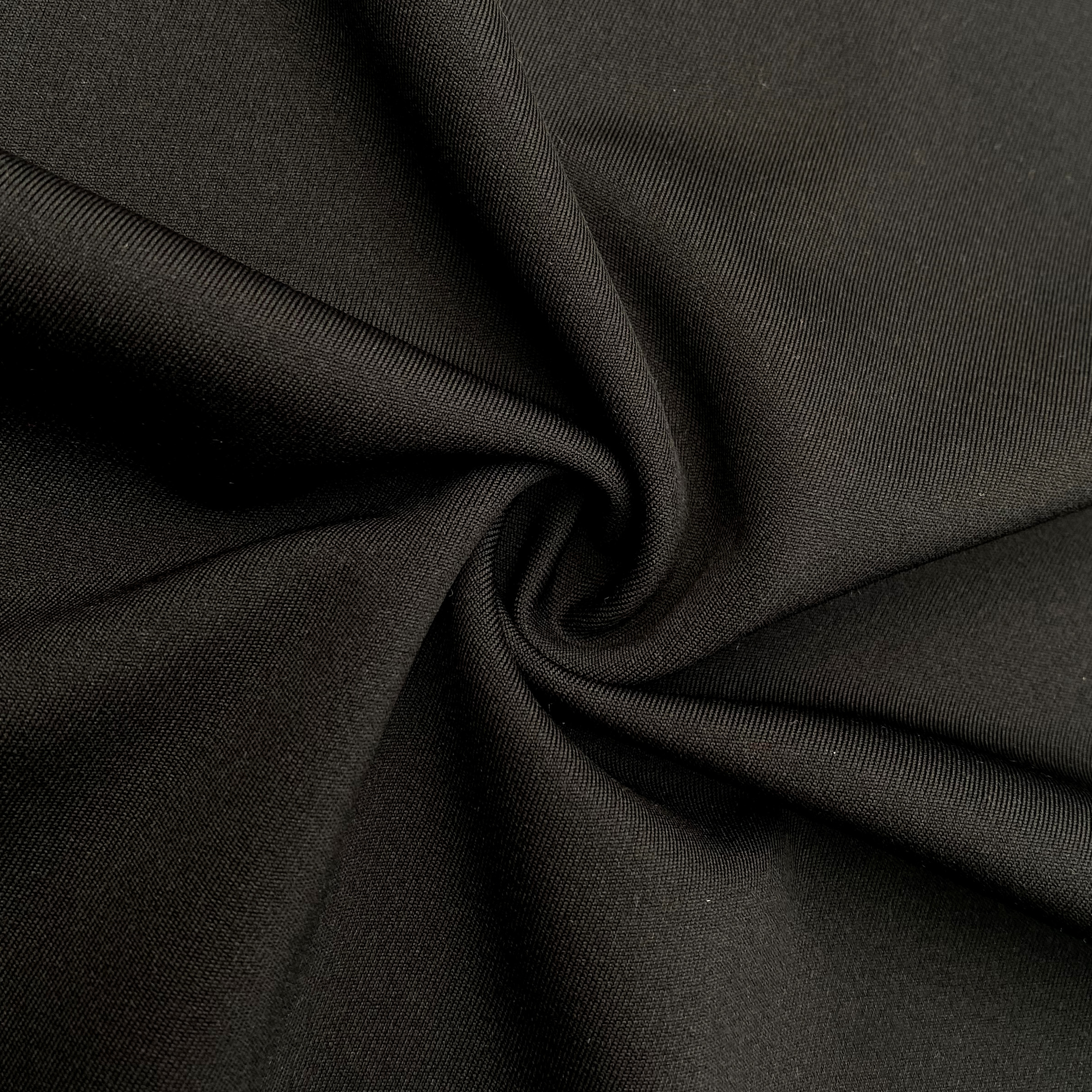 BLACK RECYCLE FABRIC HT1443PERFORMANCE KNIT MATT & PLAIN HT045View Product →
The most responsible sportswear fabrics do not ask athletes to trade speed, breathability, or fit for a lower eco footprint; they meet the same mechanical standards while using less-impactful materials.
| Knit structure | Typical sportswear use | Why it is chosen | Sustainability link |
| Single jersey | Base layers, T-shirts | Lightweight, smooth face, easy print surface | Can run with high recycled polyester content |
| Interlock | Gym tops, joggers | Stable, soft, low curl | Heavier but longer service life |
| Rib | Cuffs, hems, fitted panels | High elasticity, good shape recovery | Reduces the need for added elastic trims |
| Mesh | Ventilation panels, lining | Open structure, fast dry | Lower material use per square metre |
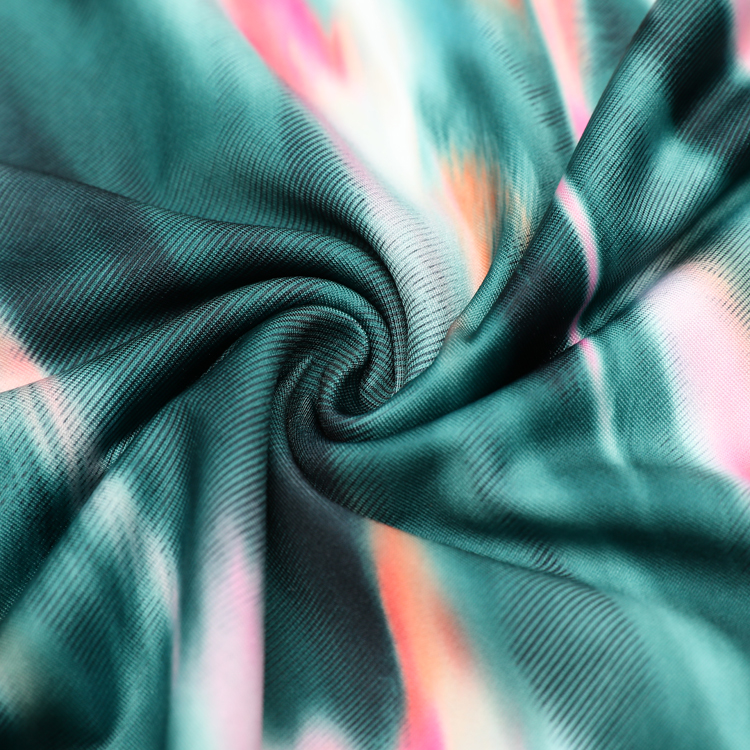 MAGIC WOODS RECYCLE JERSEY FABRIC HT739PERFORMANCE KNIT MATT & PLAIN HT045View Product →
The way loops are formed controls how much dye and water a fabric absorbs, how stable it is during cutting, and how much edge waste lands on the cutting-room floor.
Choosing mesh for ventilation zones instead of heavier laminated panels cuts yarn weight. Choosing interlock for a training top can remove the need for a separate lining. These structural decisions are as important as the polymer itself.
A responsible supplier is one that can prove its material claims, stabilise the fabric across bulk lots, and communicate limits before the order is placed.
Per metre, recycled yarn can cost more. Per wear cycle, a durable recycled knit can be cheaper because it keeps the garment in service longer and reduces returns or claims.
Yes, if the yarn and knit structure are engineered together. Interlock and mesh constructions with recycled polyester can meet abrasion and pilling requirements for football and training kits.
It means a fabric uses less-impactful inputs, cleaner processing, and a construction durable enough to justify those investments. The concept is grounded in measurable processes rather than a single label.
By choosing dye methods with lower liquor ratios, using recycled polyester that needs less washing during pre-treatment, and controlling finishing chemistry to avoid excess reprocessing.

As Yitai, since 2004, we have manufactured sportswear knitted fabrics such as interlock fabric, nylon fabric, spandex fabric, polyester fabric etc. With excellent R&D group, marketing team, quality control system, experienced dyeing & finishing supporting facility and customer service system.
Haining Yitai Knitting Co., Ltd
No. 198 Canghai Road, Warp Knitting Zone, Haining City, Zhejiang, 314419, China Tel: +0086 135 6738 5757 Email: [email protected] [email protected] [email protected]FOLLOW US



 英语
 中文简体