Article Directory
When a buyer or designer asks how polyester knit fabric is made, the question is rarely academic. They usually have a specific end use in mind: a football jersey that must survive repeated washing, a pair of leggings that has to hold shape through a full workout, or a casual top that should not pill after three washes. Knowing the production route helps them specify the right fabric and avoid costly mismatches between expectation and performance.
The direct answer is that polyester knit fabric is produced in four broad stages: PET chips are melted and extruded into filament yarn; the yarn is textured or cut to achieve the right hand feel; the yarn is knitted into loop structures on circular or warp knitting machines; and the greige fabric is scoured, dyed, heat-set, and finished. Every decision made in one stage shows up in the next, and eventually in the garment. For the polymer chemistry in more detail, our breakdown of how polyester fabric is made covers fiber production, while this guide focuses on the journey from yarn to finished knit roll.
Polyester begins as polymer chips made from purified terephthalic acid and ethylene glycol, polymerized into polyethylene terephthalate (PET). The chips are dried, melted at roughly 260-270°C, and forced through a spinneret, a metal plate with hundreds of tiny holes. As the extruded filaments cool and solidify, they are drawn and wound onto packages.
Two yarn families come out of this step:
Because flat filament yarn is slippery and feels somewhat plasticky, most knitted apparel uses textured yarn. During draw-texturizing, flat filaments are heated, twisted, and heat-set to develop a crimped, springy structure. The result, usually called DTY (draw-textured yarn), is bulkier, softer, and traps air between the filaments. This is why a polyester single jersey can feel closer to cotton than to a thin plastic sheet.
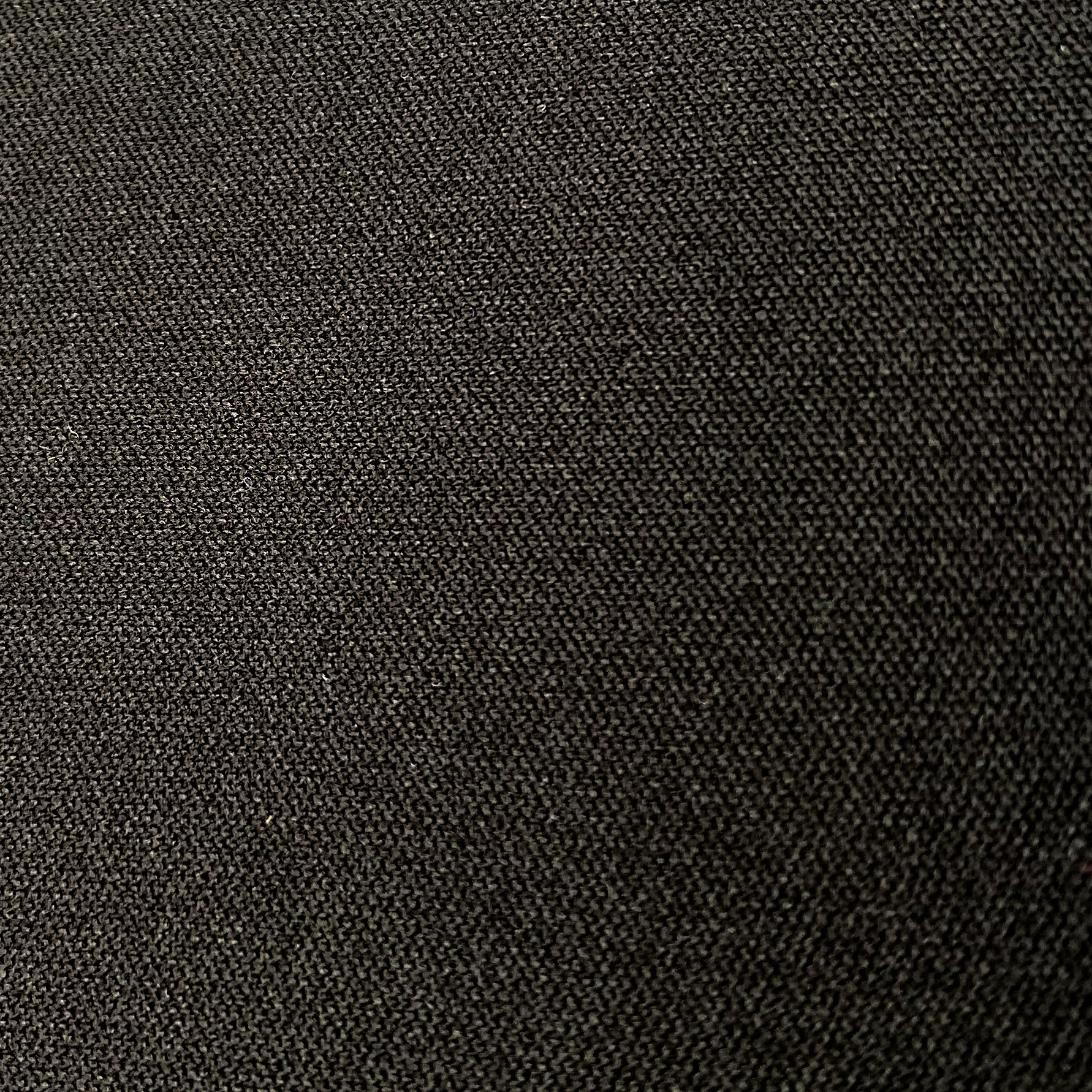
For some products, polyester is cut into short staple fibers and spun on cotton-style spinning lines, producing a spun yarn with a matte, cotton-like appearance. Fleece, brushed-back interlock, and many underwear knits rely on this route because surface softness matters more than filament smoothness. Whichever yarn is chosen, the final fabric inherits its crimp, strength, and dye behavior. A representative example of what textured yarn and circular knitting produce together is this black polyester fabric.
Knitting turns yarn into fabric by forming interlocked loops. Unlike weaving, which uses two perpendicular yarn sets, knitting uses one continuous yarn that forms horizontal rows (courses) connected by vertical columns (wales). The arrangement of those loops determines stretch, recovery, opacity, and surface texture far more than fiber chemistry alone.
The most common route is weft knitting on circular machines. Yarn feeds through a rotating needle cylinder, and each needle forms a loop in sequence. Different needle arrangements and cam settings create different structures:
Comparing polyester products from different suppliers shows that the same fiber content can behave very differently because of structure. A 200 gsm interlock and a 200 gsm single jersey are not interchangeable. This is why activewear fabrics are usually specified by both structure and yarn blend, not by fiber content alone.
Warp knitting works differently. Hundreds of yarns are drawn from a warp beam, and needles knit them in vertical columns. The resulting tricot fabric is flatter, more stable, and generally lighter than weft knits. It has more controlled stretch and is less likely to run, which makes it a dependable base for swimwear linings, activewear inner layers, and lightweight outerwear shells.
A polyester knit leaves the machine as greige fabric, off-white or gray, contaminated with spinning oils, and dimensionally unstable. It cannot be used in that state. The next two steps define its commercial quality.
Polyester is hydrophobic, so conventional water-soluble dyes are ineffective. Disperse dyes are suspended in the dye bath and enter the fiber at approximately 130°C under pressure, usually in a jet dyeing machine. The high temperature swells the polymer chains enough for dye molecules to diffuse inside. After dyeing, a reduction clearing step removes surface dye and prevents poor crockfastness and dull shades. Unstable temperature control or uneven yarn tension in this stage shows up as barré, a streaky color variation that no garment finisher can correct later.
Dimensional stability comes next. Polyester needs heat setting, usually dry heat at 170-200°C for a short dwell time, to relax internal stress and lock in width, shrinkage, and surface smoothness. The difference between a fabric that washes flat and one that curls is often determined in those seconds of heat treatment.
After heat setting, the finisher applies chemical or mechanical treatments:
This stage makes the same base knit suitable for completely different end uses. A quick-dry finish only works when it is matched with the right yarn cross-section and fabric structure; it is not a simple spray-on. Our quick-dry fabric is a commercial example of how these variables are combined in a performance knit.
 Wholesale BLACK QUICK DRY FABRIC Suppliers, ExportersHaining Yitai Knitting Co., Ltd is China wholesale BLACK QUICK DRY FABRIC suppliers and Exporters, If you want to be cool, this high qual...View Product →
A finished polyester roll looks reassuringly uniform, but the real differences appear after washing, stretching, and exposure to light. Before bulk production, review these parameters with your supplier:
| Property | Why it matters | Typical apparel target |
|---|---|---|
| Fabric weight (GSM) | Determines drape, opacity, and garment cost | 140-160 gsm jersey; 180-220 gsm interlock |
| Dimensional stability | Shrinkage after washing changes garment fit | 3-4% or less after three washes at 40°C |
| Colorfastness to crocking | Prevents dye transfer from friction | Grade 4+ dry; grade 3-4 wet |
| Colorfastness to light | Fading in activewear and swimwear | Grade 4 or higher |
| Pilling resistance | Surface durability after abrasion | Grade 3-4 in Martindale testing |
| Stretch recovery | Shape retention after repeated pulls | Varies with spandex content; test at 20-30% elongation |
Buyers also need to watch for filamentation, barré, and dye lot variation. These defects rarely appear at the development stage because sample quantities are small and carefully handled. A supplier with a proper quality control system will test production lots and provide shade bands for approval before bulk goods are shipped.
When comparing knitting suppliers, the most important question is whether dyeing and finishing are controlled internally. A mill that only knits can deliver greige fabric, but it cannot control shrinkage, hand feel, or shade consistency. A vertical operation, like ours at Haining Yitai Knitting Co., Ltd., knits, dyes, and finishes polyester fabrics in the same facility, which shortens the feedback loop between structure, chemistry, and mechanical treatment.
This matters in practice. The same polyester interlock can become a crisp sportswear shell, a brushed-back fleece, or a soft underwear base depending on how it is processed after leaving the knitting machine. Experienced suppliers will ask about your garment type, required GSM, shrinkage limit, and wash protocol before recommending a structure. Those questions are a good sign; they mean your order will be treated as an engineering problem rather than a commodity request.
Sustainability has also entered the conversation. Recycled polyester yarns now perform closer to virgin fiber than they did a decade ago, and brands increasingly want documented recycled content in their supply chain. Our honeycomb recycled polyester fabric is one example of how a textured, durable knit can be made from recycled yarn without compromising drape. If you are comparing material options across categories, our sustainable knit fabric options can help you identify which structures are available in recycled form.
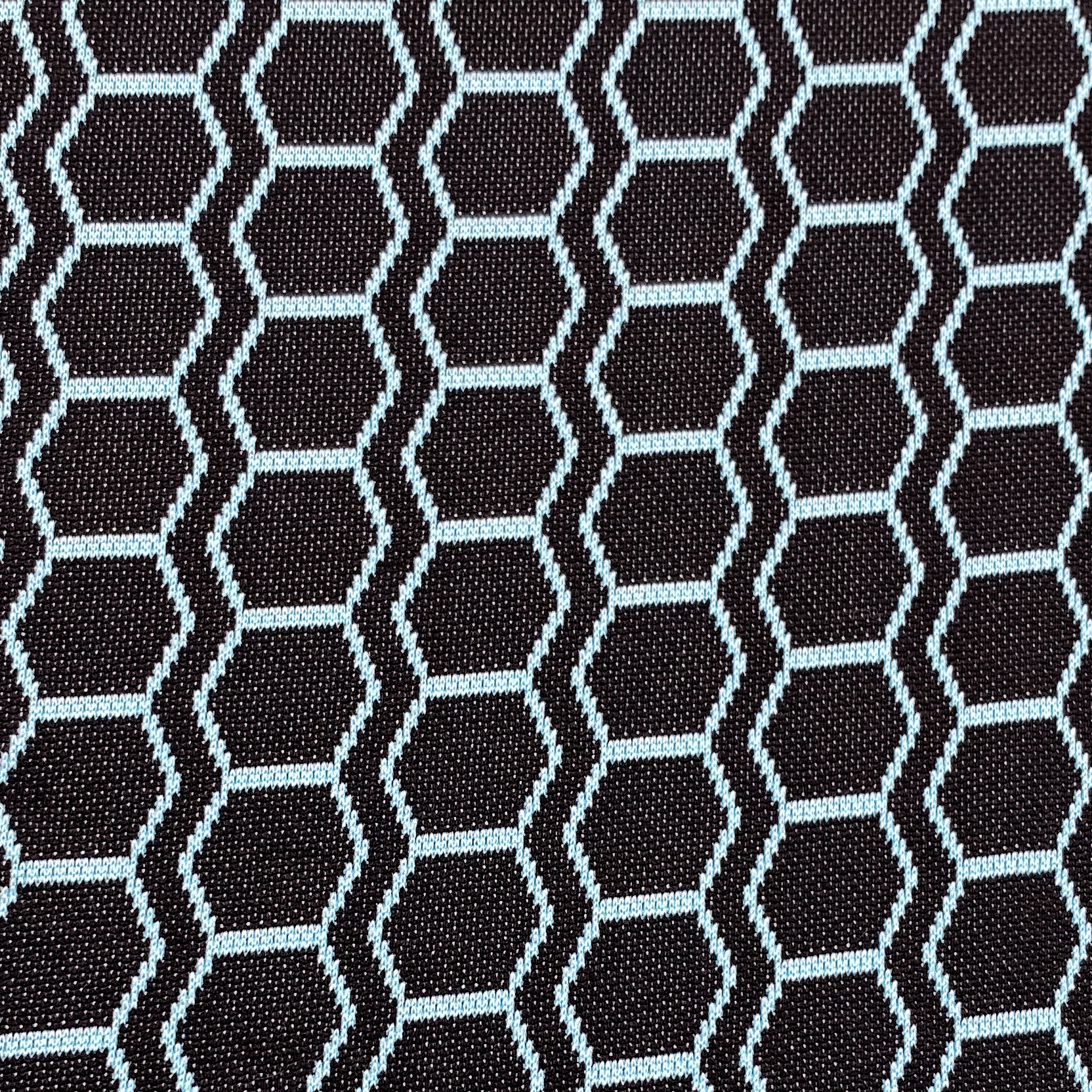 Sustainable 100% Recycled Polyester Honeycomb Fabric for Performance WearSource premium 100% recycled polyester honeycomb fabric (150gsm, 170cm) for sustainable apparel. Ideal for high-performance and eco-frien...View Product →
In the end, how polyester knit fabric is made matters less than how well the process is controlled. The chemistry and machinery are available to every mill; what separates a reliable supplier is consistency, testing discipline, and the willingness to solve problems before they reach your production line.

As Yitai, since 2004, we have manufactured sportswear knitted fabrics such as interlock fabric, nylon fabric, spandex fabric, polyester fabric etc. With excellent R&D group, marketing team, quality control system, experienced dyeing & finishing supporting facility and customer service system.
Haining Yitai Knitting Co., Ltd
No. 198 Canghai Road, Warp Knitting Zone, Haining City, Zhejiang, 314419, China Tel: +0086 135 6738 5757 Email: [email protected] [email protected] [email protected]FOLLOW US




 英语
英语 中文简体
中文简体