Article Directory
Every polyester knit fabric that reaches a garment factory has already passed through a decisive stage most buyers never see: finishing. The same greige single jersey can become a silky activewear base, a napped thermal layer, or a stable printing substrate depending on the treatments applied after knitting. For a brand sourcing activewear knits, the finishing route is often the difference between a winning product and a returns problem.
Finishing treatments are post-knitting processes that alter the surface, hand feel, dimensional behavior, or functional performance of a fabric without changing its fundamental loop construction. They are the last technical gate between the mill and the cutting table, and for polyester they carry extra weight because the fiber itself is hydrophobic, static-prone, and inclined to pilling.
Finishing is every mechanical or chemical treatment applied to greige or pre-treated knit fabric that changes its surface character, dimensional stability, or end-use performance before garment assembly.
Raw polyester knit arriving from the knitting machine is technically usable, but commercially weak. It feels slippery and cool, it pills visibly after a few wears, it does not absorb sweat, and its dimensions move with every wash. Finishing closes all four gaps, which is why the treatment route determines the product tier.
On standard polyester single jersey, the right finishing sequence can lift pilling performance from Grade 2 to Grade 4-5 on the Martindale scale and cut moisture absorption time from over 60 seconds to under 5 seconds.
To understand why the base fiber behaves this way, it helps to look at how polyester fabric is made from melt-spun filament or staple yarns. The polymer chemistry gives durability and shape retention, but the same chemistry creates the finishing challenges that the treatments below solve.
Mechanical finishing changes the fabric surface through physical contact, and for polyester knits the three most commercially important processes are peaching, brushing, and calendering. Each one alters the tactile and visual identity of the fabric while leaving its knit structure untouched.
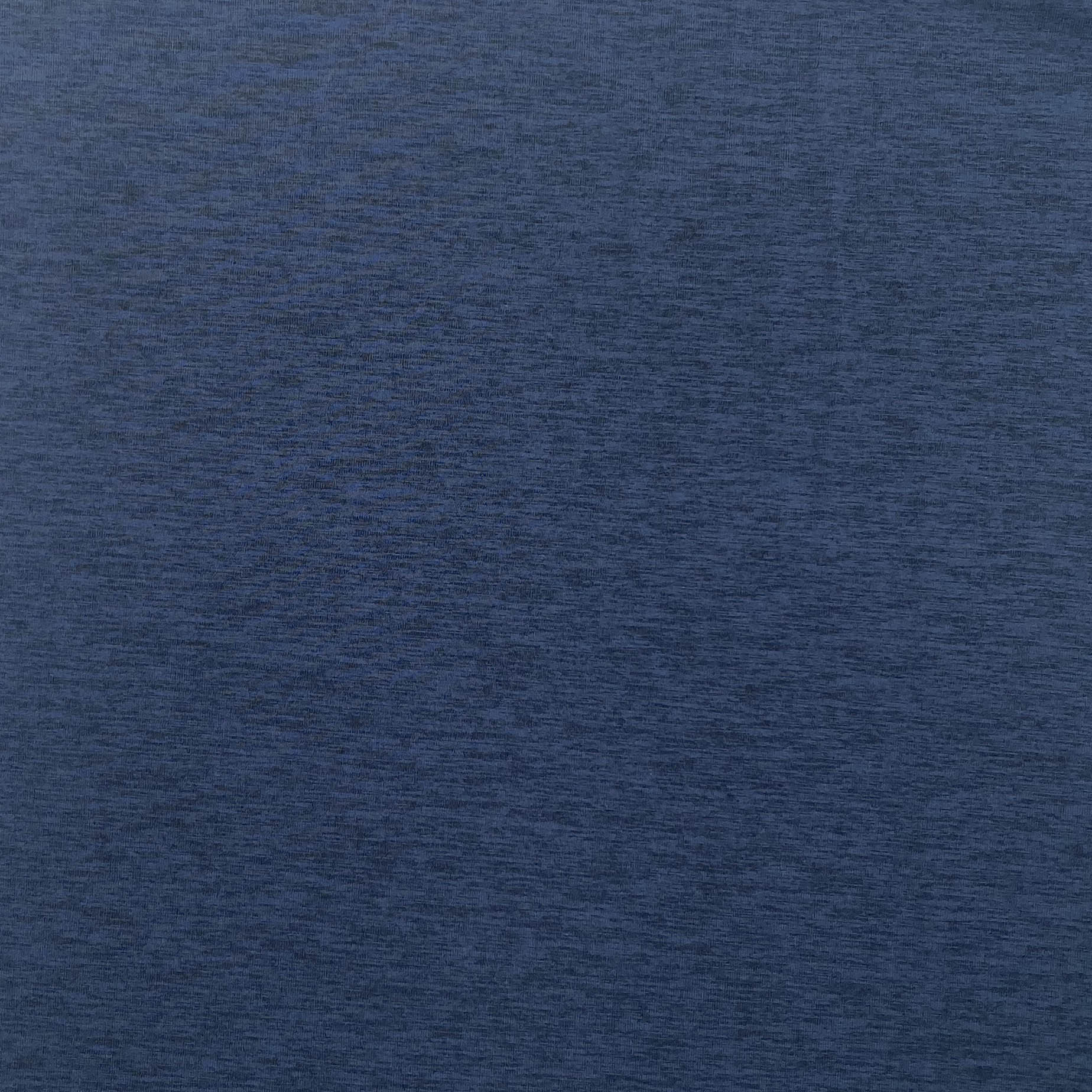
Peaching uses fine abrasive rollers to lift a short, dense micro-fiber nap on the face of the fabric. The result turns the cool, slippery touch of raw polyester into a soft, matte surface that feels warmer against the skin. Brushing is the more aggressive cousin, used mainly on the back of fleece and thermal knits to create an insulating air layer. A peached interlock fabric, for example, combines the dimensional stability of an interlock construction with a cashmere-like handle that suits loungewear and mid-layer garments.
 Wholesale PEACHED INTERLOCK FABRIC Suppliers, ExportersHaining Yitai Knitting Co., Ltd is China wholesale PEACHED INTERLOCK FABRIC suppliers and Exporters, If you want to be cool, this high q...View Product →
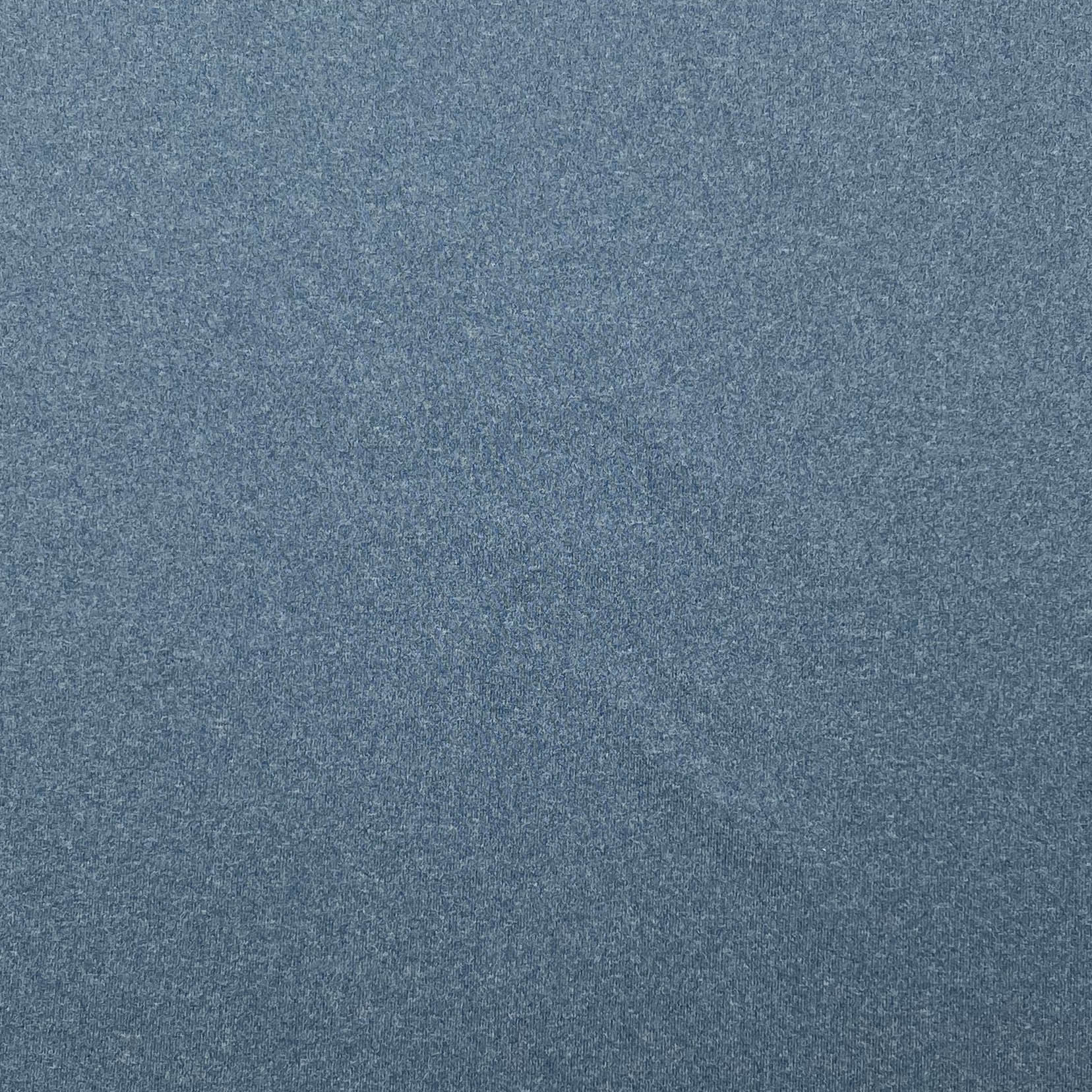
Calendering passes fabric between heated rollers under controlled pressure and speed. The treatment flattens yarn crowns, reduces apparent thickness, and produces a smooth, slightly lustrous face that improves print sharpness and gives shell fabrics a clean drape. Mills specify calendering-finished fabric when the buyer needs a compact surface and controlled GSM for outerwear or printed sportswear panels.
 Wholesale CALENDERING FABRIC Suppliers, ExportersHaining Yitai Knitting Co., Ltd is China wholesale CALENDERING FABRIC suppliers and Exporters, Light, soft and breathable fabric ideal fo...View Product →
| Treatment | Process principle | Key effect | Common end use |
| Peaching | Abrasive rollers lift micro-fibers | Soft matte hand, warm touch | Activewear, loungewear, thermal layers |
| Brushing | Wire brushes raise a deeper nap | Loft, insulation, fuzzy back | Fleece, hoodies, winter wear |
| Calendering | Heated rollers compress the surface | Smoothness, sheen, controlled thickness | Printing substrates, sportswear shells |
Mechanical finishing changes what the fabric feels like, but it does not change what the fabric can do. A napped polyester is still hydrophobic; it still needs chemical help for moisture management.
Chemical and performance finishing adds functions that mechanical processes cannot deliver, and for polyester knit the most requested results are quick-dry behavior, UV protection, anti-pilling stabilization, and durable moisture management.
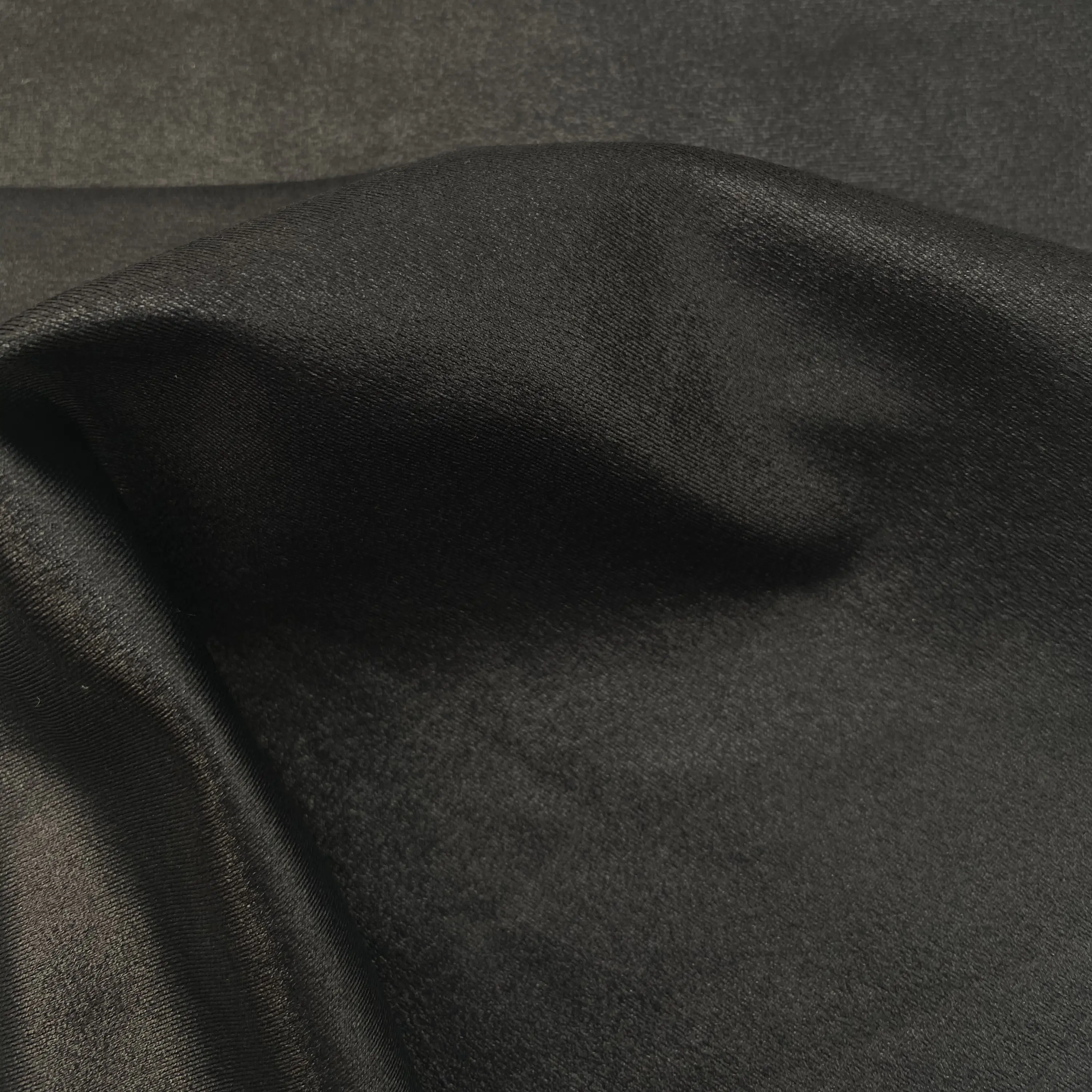
Polyester yarn is inherently non-absorbent, so an untreated knit traps sweat against the skin. Hydrophilic finishing agents graft water-attracting groups onto the fiber surface, allowing moisture to spread across the fabric and evaporate rapidly. This is the chemical step that separates an ordinary poly top from a genuine performance garment. Buyers who need that function typically specify a quick-dry polyester knit fabric with a documented wicking time and a wash-durability target.
 Wholesale BLACK QUICK DRY FABRIC Suppliers, ExportersHaining Yitai Knitting Co., Ltd is China wholesale BLACK QUICK DRY FABRIC suppliers and Exporters, If you want to be cool, this high qual...View Product →
Polyester absorbs some UV radiation naturally, but reaching a rated UPF 50+ usually requires UV absorbers or ceramic-loaded particles applied in the finishing bath. The treatment matters most in swimwear, beachwear, and outdoor team sport settings where garments are worn in direct sun for hours.
Anti-pilling finishes reduce the migration of broken fibers into fuzz balls by coating the fiber surface or binding loose micro-fibers with resin. Anti-static finishes lower the static charge that polyester accumulates in low-humidity environments, which improves both wearing comfort and garment finish during cutting and sewing.
5s
wicking time after finish
UPF 50+
with UV absorber finish
Grade 4-5
pilling after anti-pill finish
Performance finishing converts a commodity polyester knit into a functional textile by engineering the fiber surface, not by changing the polymer itself.
When reviewing a finishing specification, confirm the following points before bulk production:
The knit structure controls how a finishing treatment behaves, because yarn mobility, surface area, and loop geometry all change with the construction. The same chemical bath can perform differently on single jersey, interlock, and mesh.
Single jersey
Open back and exposed floats make it the most responsive to peaching and brushing; chemical finishes penetrate easily and wicking gains are strong.
Interlock
Double-sided, stable construction holds calendered finishes cleanly and gives predictable shrinkage control, which is why interlock is preferred for premium bases.
Mesh and net
Open voids reduce contact area, so chemical finishes need higher add-on rates to reach the same effect, and mechanical contact finishing has less surface to work on.
Fabric structure plus finishing equals the actual product specification. The same polyester yarn at the same GSM can feel like a luxury base layer or a stiff technical shell depending purely on the finishing route.
Typical performance gains of finished polyester knit relative to untreated greige fabric
A well-designed finishing route is only as good as the testing behind it, so buyers should evaluate the supplier's laboratory capacity and its quality control system, not just the hand feel of a swatch.
Key test methods used on finished polyester knit include pilling assessment with Martindale or ASTM D4970, dimensional change per AATCC 135, moisture wicking per AATCC 197, and colorfastness to washing and light. A mill that can run these tests internally delivers far more reliable bulk production than one that only ships lab dips.
Questions to ask before bulk order
Which finishing agents are used, and are they compliant with Oeko-Tex or REACH restrictions?
How many home launderings does the finish survive before performance drops?
What is the acceptable batch-to-batch variation in hand feel, wicking time, and shade?
Can the mill match a physical standard sample, including the finished surface, not just color?
Haining Yitai Knitting Co., Ltd. operates an experienced dyeing and finishing supporting facility with an in-house laboratory, so finishing and testing happen under one roof before fabrics are shipped. Buyers working across product categories can compare the sustainable knit options from the same finishing line when recycled polyester needs the same performance as virgin material.
Dyeing adds color to the fabric, while finishing modifies its surface, hand feel, or function. Both occur in the wet-processing stage, but finishing is a separate set of machines, chemicals, and quality checks that follows after dyeing is complete.
Yes. Mechanical finishing under heat can relax or set stretch yarns, and high-temperature calendering can reduce elasticity in spandex blends if temperature and speed are not controlled. Experienced finishers tune these parameters to protect the stretch and recovery properties of the base fabric.
Durable performance finishes are designed to survive 20 to 50 home launderings. The actual durability depends on the chemical type, the add-on rate, the wash conditions, and whether the garment is dried in high heat.
Recycled polyester shares the same polymer chemistry as virgin polyester, so the same finishing families apply. However, fiber quality varies with the recycling source, so add-on rates and machine settings may need adjustment to achieve an identical hand feel and wicking result.
Finishing specifications should always be locked with a physical reference sample, because numbers alone cannot capture hand feel.

As Yitai, since 2004, we have manufactured sportswear knitted fabrics such as interlock fabric, nylon fabric, spandex fabric, polyester fabric etc. With excellent R&D group, marketing team, quality control system, experienced dyeing & finishing supporting facility and customer service system.
Haining Yitai Knitting Co., Ltd
No. 198 Canghai Road, Warp Knitting Zone, Haining City, Zhejiang, 314419, China Tel: +0086 135 6738 5757 Email: [email protected] [email protected] [email protected]FOLLOW US



 英语
 中文简体