Article Directory
A sportswear brand receives the first production samples of a new training jersey. The fabric stretches impressively on the rack, yet after five wash cycles the elbows bag, the waistband rolls, and athletes say the garment grew on their bodies. The stretch was excellent; the recovery was not.
Fabric stretch recovery, the ability of a knitted fabric to return to its original dimensions after being stretched and released, is one of the most underrated performance properties in sportswear. It controls whether a garment keeps its fit, holds its compression, and survives the repeated strain of movement and laundering. For brands sourcing performance knit fabrics, recovery data often separates a long-selling silhouette from a returns problem.
Stretch recovery is the percentage of total elongation that a fabric reclaims after an applied tensile force is removed. If a fabric is stretched 40 percent and returns to within 2 percent of its original length, recovery is 95 percent.
Stretch recovery measures how completely a fabric returns to its original length after being stretched and released; a performance sportswear knit should show at least 85-90% recovery under standardized test conditions.
Most buyers evaluate sportswear fabric by how far it stretches. That is only half of the performance equation. Two fabrics can both stretch to 50% elongation, yet one returns almost fully while the other permanently grows by 5-8%. The first holds its shape; the second bags after a single workout.
The textile industry separates the two properties deliberately. Stretch refers to immediate elongation under load. Recovery refers to the degree of return once the load is removed. Immediate recovery is measured seconds after release; delayed recovery is measured after a longer rest period, typically 30 to 60 minutes. The difference between the two is called permanent set, the percentage of elongation the fabric never reclaims. In performance wear, permanent set above 3-5% is usually unacceptable.
A fabric that stretches 50% but recovers only 80% will show visible shape loss long before a fabric that stretches 30% and recovers 95%.
| Parameter | Typical value | Why it matters |
| Applied elongation | 30% to 90% of maximum | Determines the stress level the fabric must recover from |
| Hold time | 30 seconds | Simulates sustained muscle or joint pressure |
| Rest time | 60 seconds to 30 minutes | Separates immediate recovery from delayed recovery |
| Recovery rate | 85-90% or higher | Prevents bagging, rolling, and compression loss |
| Permanent set | 3-5% or lower | Indicates long-term shape retention |
Poor stretch recovery is the root cause of sagging elbows, bagging knees, rolling waistbands, and lost compression in sportswear.
During exercise, a knit fabric is deformed continuously: at the knee in a squat, at the elbow in a tennis serve, across the shoulders during a bench press. Each deformation pulls the yarn structure beyond its relaxed state. When recovery is weak, the stitches slide and lock into a new, wider position. After repeated cycles, the garment permanently changes shape.
Compression garments are especially sensitive. Compression wear works by applying consistent radial pressure to muscles; if recovery is poor, pressure drops within minutes of wear. Product testing on sportswear knits commonly shows that fabrics with recovery below 78% lose 15-25% of their initial compression force after ten wash cycles.
Every 5% drop in stretch recovery accelerates visible shape loss; in most sportswear knit fabrics, noticeable bagging appears below the 80% recovery threshold after repeated washing.
Fiber type, elastane content, knit structure, and finishing quality determine stretch recovery more than a fabric's appearance or price.
Recovery is engineered, not accidental. Every decision from fiber selection to final heat-setting shifts the recovery curve. Understanding these factors makes specification sheets more useful during sourcing.
Typical recovery values for finished knit fabrics under standardized stretch testing.
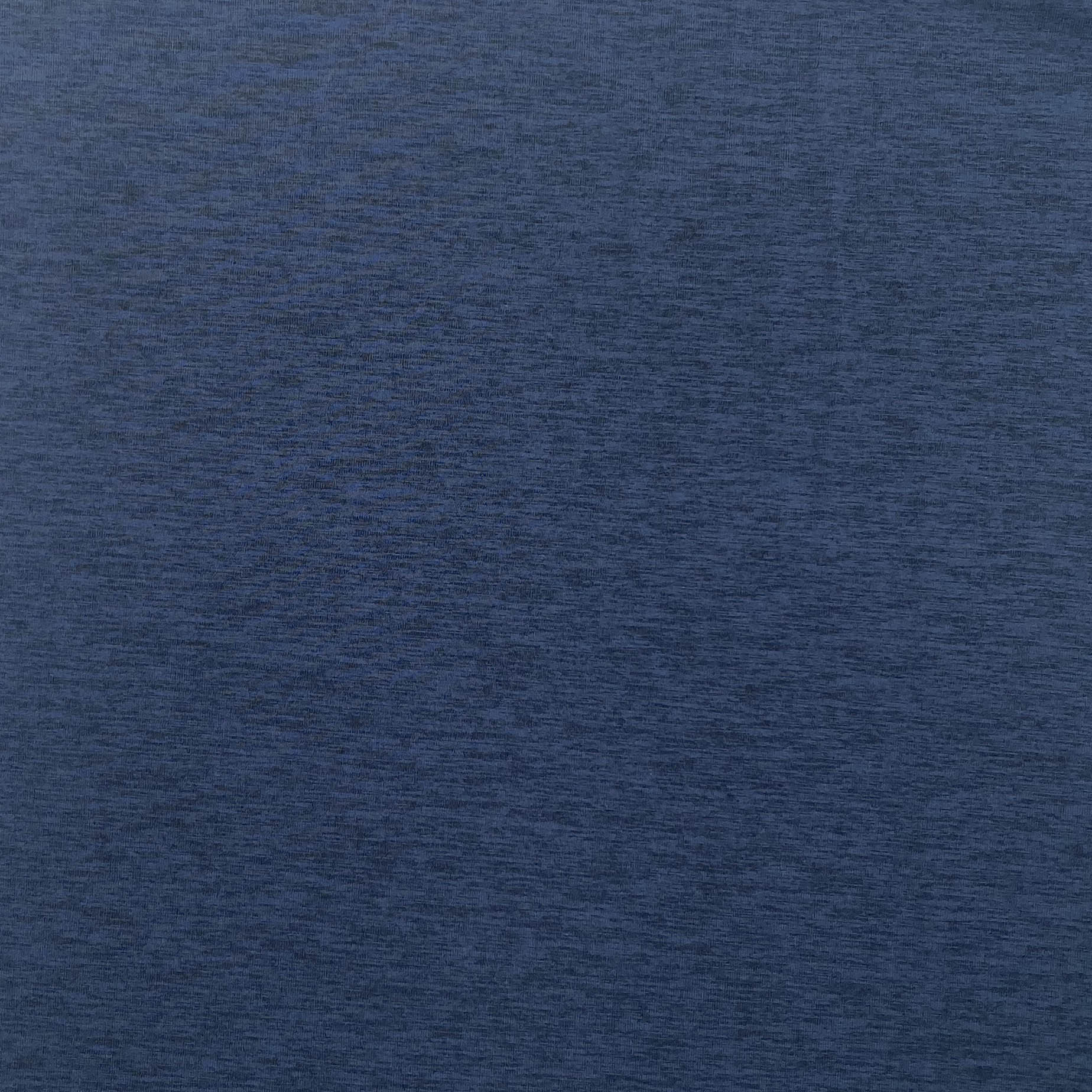
For high-performance activewear, blends with 15-20% spandex in a nylon base are the most reliable starting point. One example is the High Stretch Nylon Fabric HT928, a nylon-spandex single jersey engineered specifically for garments where recovery must outlast the season.
 High Stretch Nylon Fabric HT928 for Durable ActivewearThis nylon-spandex single jersey is engineered for performance garments where recovery must last beyond a season, making it a reliable choice when evaluating stretch fabrics for activewear.View Product →
Recycled and low-grade elastane fibers can lose up to 30% of their recovery performance after 20 industrial wash cycles, even when the initial test data looks acceptable.
| Blend and structure | Typical stretch | Typical recovery | Best applications |
| Nylon/Spandex 80/20 interlock | 50-70% | 92-97% | Compression, yoga, team training |
| Polyester/Spandex 85/15 single jersey | 40-60% | 85-90% | Running, cycling, base layers |
| Recycled Polyester/Spandex 82/18 | 45-60% | 84-88% | Sustainable activewear |
| Cotton/Spandex 95/5 | 20-35% | 70-78% | Casual athleisure tops |
| 100% Polyester interlock | 20-30% | 60-70% | Outer shells, lining panels |
Use a standardized test such as ASTM D4964 or ISO 22821:2021, and always request both immediate and delayed recovery values before bulk production begins.
Evaluating recovery is not complicated, but it must be done on finished, washed fabric. Testing greige or unwashed samples gives misleadingly high recovery numbers because the elastane has not yet relaxed after dyeing and finishing.
Condition the specimen at a standard atmosphere of 21 degrees C and 65% relative humidity for at least 24 hours.
Mark the gauge length and mount the specimen in the tensile testing machine.
Apply the specified elongation at a constant rate and hold it for the defined period, usually 30 seconds.
Release the specimen and allow the specified rest time before taking the first measurement.
Calculate recovery percentage and permanent set, then repeat the cycle after multiple industrial washes if required.
A supplier that cannot provide stretch recovery data on request is not ready for performance sportswear production.
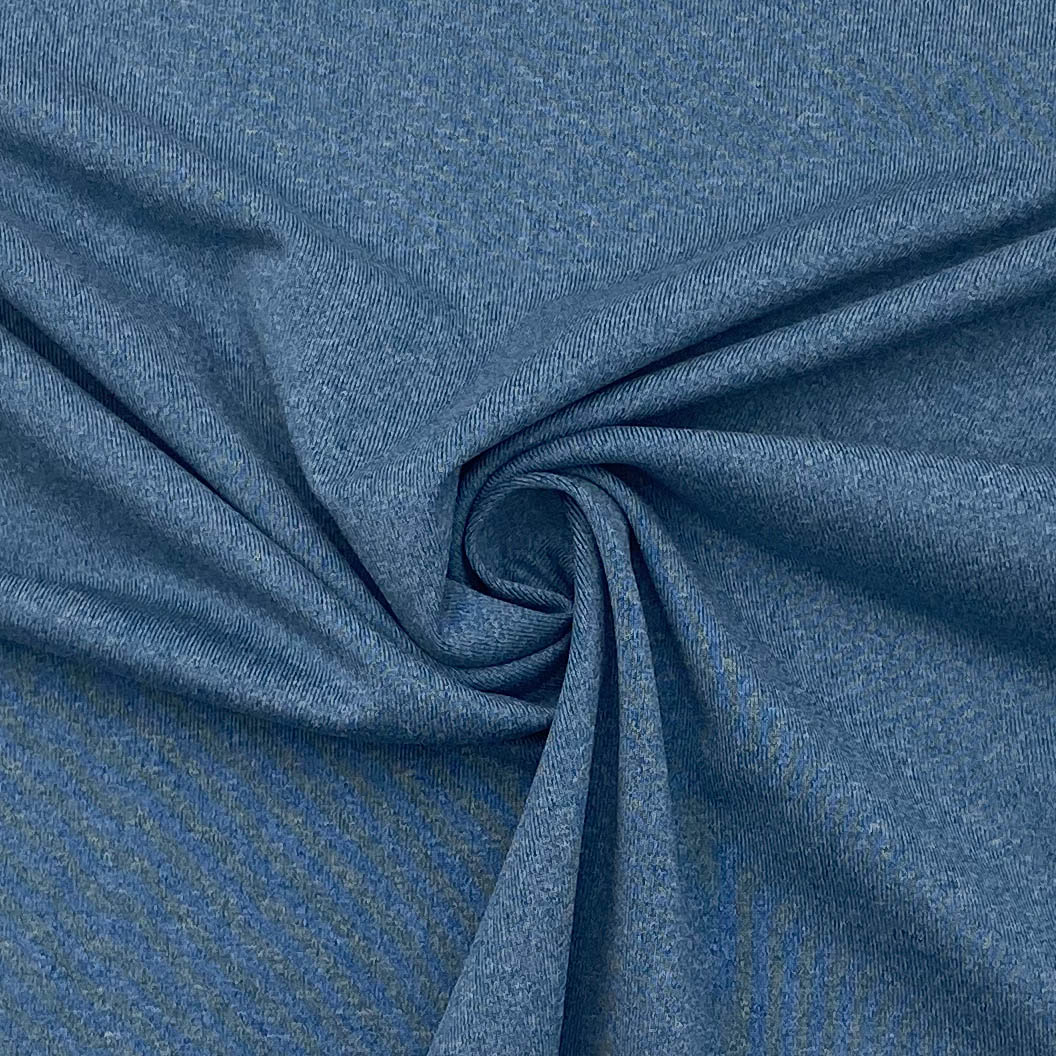
The same evaluation logic applies to stretchy jersey fabrics used in yoga and fitted sportswear. A Matt Stretchy Single Jersey HT009-2, for example, is selected by pattern engineers specifically because it balances immediate stretch with dependable dimensional return.
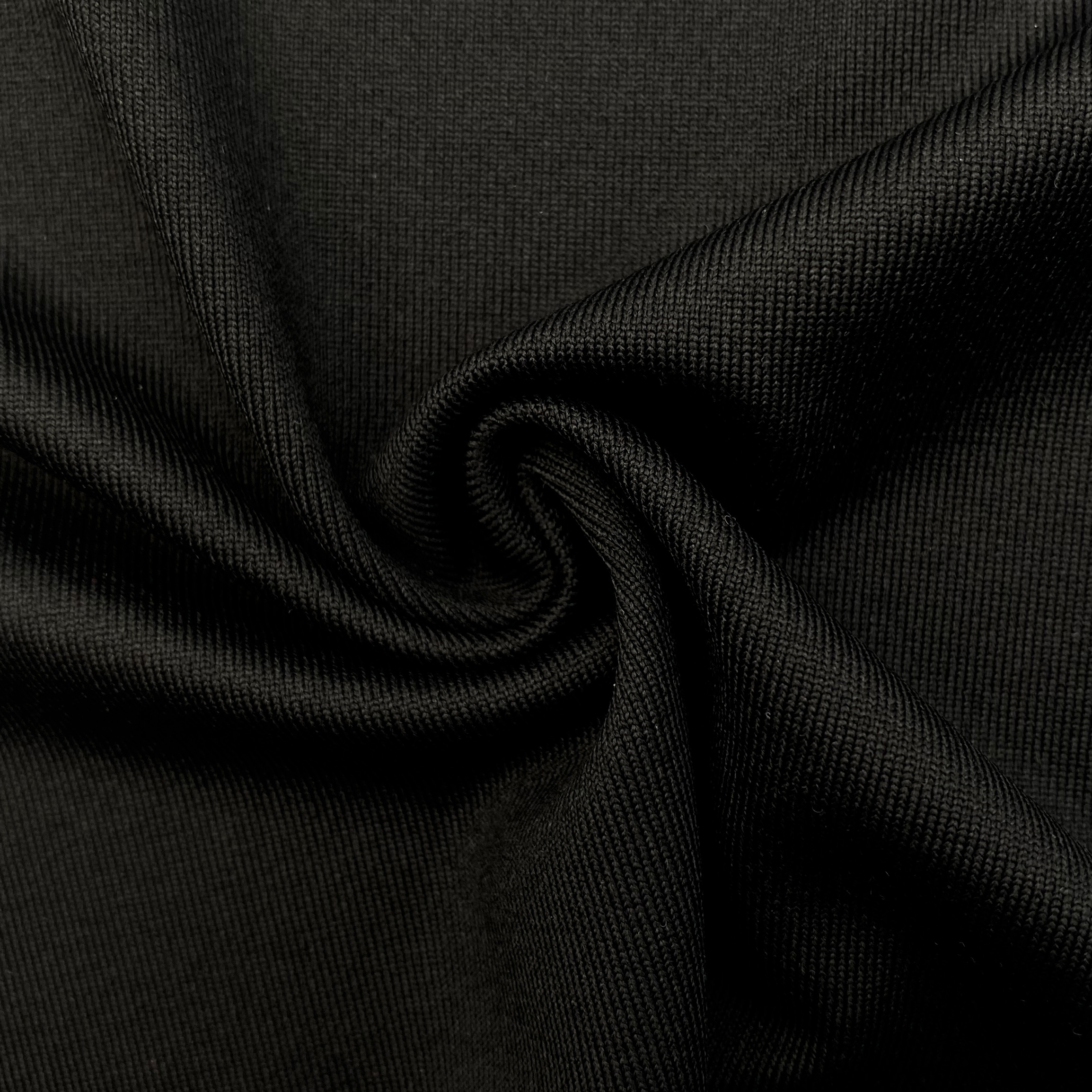 Matt Stretchy Single Jersey HT009-2 for Yoga WearBalancing immediate stretch with dependable dimensional return, this stretchy jersey suits yoga and fitted sportswear, and is worth checking when verifying recovery and wash-test performance.View Product →
Buyers should verify recovery values, elastane quality, knit structure documentation, and wash-test results instead of relying on hand-feel or stretch alone.
When evaluating a knitting mill or fabric supplier, request documented evidence rather than verbal assurances. Haining Yitai Knitting Co., Ltd, a performance knit fabric manufacturer with in-house dyeing and finishing capabilities, conducts fabric analysis in its own laboratory so that recovery behavior is checked from greige through final finished goods.
Recovery data from greige fabric is almost always better than data from finished fabric. Always evaluate recovery on final finished and washed specimens.
The difference between recovery and expansion in four-way stretch knits is a common source of confusion. Our guide on fabric recovery versus expansion in 4-way stretch knits explains how to read supplier data without being misled. To compare usable options, browse the activewear fabrics collection and check the documented performance data for each construction.
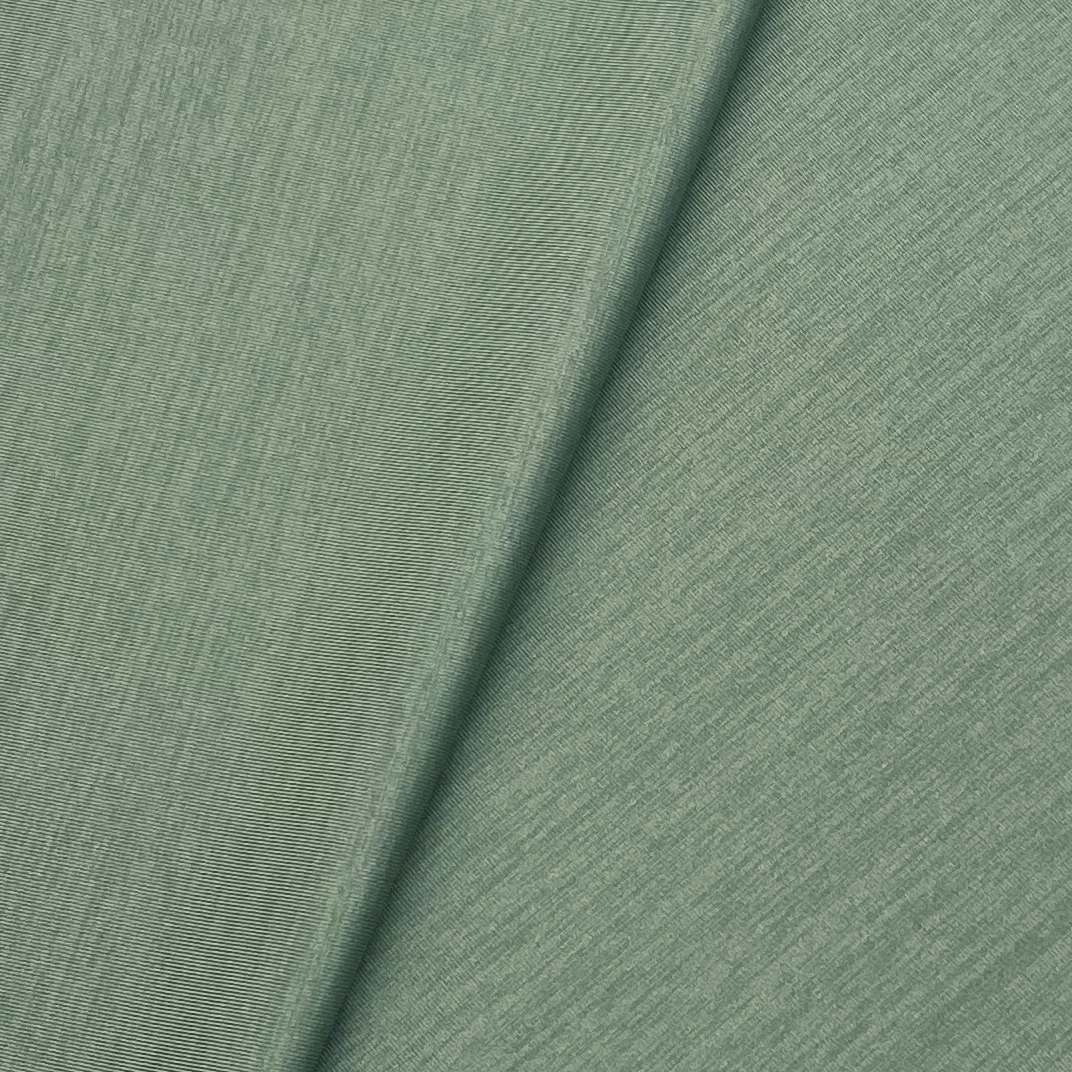
For team sportswear and performance tops where consistent fit over many washes is critical, the Performance Knit Matt Plain HT045 offers controlled stretch with a matte surface and stable recovery behavior across repeated laundering.
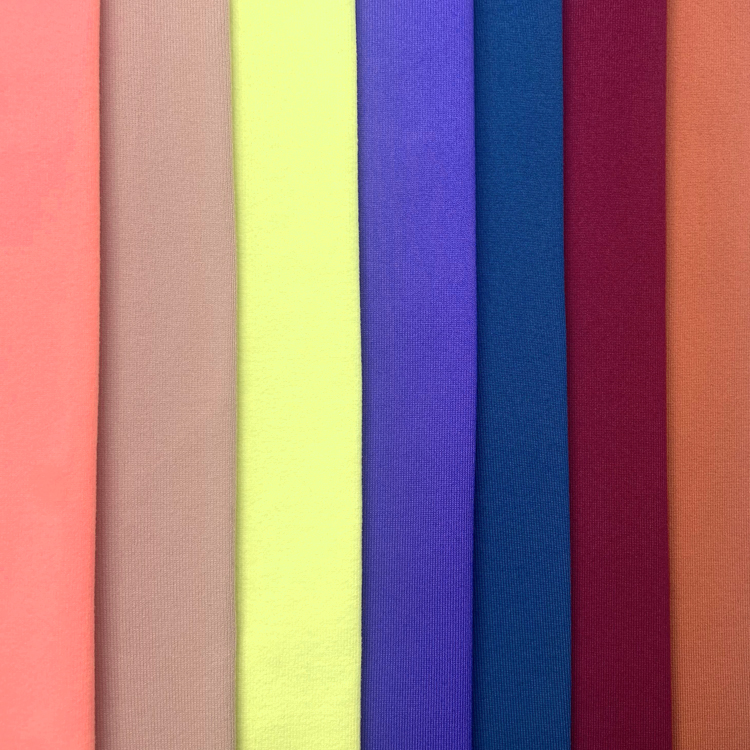 Performance Knit Matt Plain HT045 for Team SportswearOffering controlled stretch and a matte surface, this knit maintains stable recovery across repeated laundering, making it a practical option for team tops and performance wear.View Product →
For most performance garments, recovery should be at least 85% under the standard test method, with permanent set below 5% after release. Compression garments should target 90% or higher on both immediate and delayed recovery.
No. Recovery depends on elastane quality, yarn integration, knit structure, and finishing conditions. A poorly finished 20% spandex fabric can perform worse than a well-engineered 12% spandex fabric with proper heat-setting.
Bagging is a recovery problem, not a stretch problem. If stitches slide under repeated strain and the elastane cannot pull them back, permanent set accumulates and the garment grows in stressed areas, most commonly at the knees, elbows, and seat.
Stretch recovery is the percentage of elongation that a fabric reclaims after release. Fabric growth, also called permanent set, is the percentage of elongation that remains after the recovery period. In high-performance knits, growth above 5% after the test cycle is considered a quality risk.
Ask your fabric supplier for both numbers: recovery percentage and permanent set. A fabric can show 90% recovery and still fail if the remaining 10% growth is concentrated at high-stress garment areas.

As Yitai, since 2004, we have manufactured sportswear knitted fabrics such as interlock fabric, nylon fabric, spandex fabric, polyester fabric etc. With excellent R&D group, marketing team, quality control system, experienced dyeing & finishing supporting facility and customer service system.
Haining Yitai Knitting Co., Ltd
No. 198 Canghai Road, Warp Knitting Zone, Haining City, Zhejiang, 314419, China Tel: +0086 135 6738 5757 Email: [email protected] [email protected] [email protected]FOLLOW US




 英语
 中文简体