Article Directory
For B2B buyers procuring materials for performance apparel, the thermal comfort of yoga knit fabric is paramount. This comfort is directly dictated by the fabric's ability to manage moisture—specifically, its wicking performance (moving sweat away from the skin) and its drying rate (releasing that moisture into the air). Claims of "high-performance" must be substantiated by standardized testing.
Founded in 2004, Haining Yitai Knitting Co., Ltd. is dedicated to developing and manufacturing high-quality performance knitting fabrics. Our focus is on achieving higher quality and better supporting service, driven by our excellent R&D group and experienced dyeing & finishing supporting facility. This technical guide outlines the standards necessary to objectively evaluate the moisture management properties of yoga knit fabric.
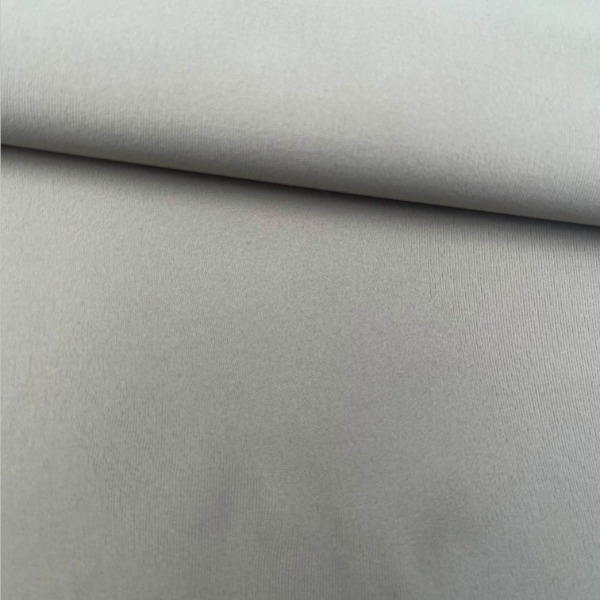
73% Nylon 27% Spandex, WEIGHT 220 GSM WIDTH 156 CM Khaki Solid Weft Interlock Fabric HT1645
Wicking is a function of the fabric's capillary structure and the surface tension between the liquid (sweat) and the fiber. It is a critical metric for assessing how quickly a yoga knit fabric moves liquid away from the skin, preventing saturation and clamminess.
The American Association of Textile Chemists and Colorists (AATCC) Test Method 195 is the benchmark for measuring moisture management. This test quantifies the rate of liquid transport in both the vertical (upward) and horizontal (spreading) directions. Analysis of AATCC 195 wicking test results for yoga apparel allows engineers to set performance targets:
Wicking is only half the solution; if the fabric wicks moisture but retains it, the latent heat of evaporation cools the skin excessively, leading to post-exercise chill and thermal discomfort. Therefore, the drying rate is essential.
The drying rate is highly dependent on fiber composition and the yarn structure. Hydrophobic fibers (like polyester or nylon) generally dry faster than hydrophilic fibers (like rayon or cotton). However, the inclusion of elastic fibers poses a challenge. The impact of spandex content on yoga knit fabric drying rate must be carefully managed:
Spandex (Elastane), while necessary for stretch in yoga knit fabric, is structurally a polyurethane, which can retain more moisture and slow the overall drying process compared to pure polyester. This necessitates the use of specialized hydrophobic finishes on the spandex or polyester component to maintain a competitive drying rate. The table below illustrates the trade-off:
| Base Fiber Composition | Wicking Performance (AATCC 195) | Drying Rate (Relative) | Drawback for Activewear |
|---|---|---|---|
| Polyester/Nylon Blend (Hydrophobic) | High (Requires chemical treatment) | Fast | Poor initial hand feel if untreated; potential odor retention. |
| Natural/Cellulosic Blend (Hydrophilic) | Very High (Inherent) | Slow | High moisture retention leading to heavy feel and chill. |
| Polyester/Spandex (High Content) | Good (Treated) | Moderate-Slow | Spandex mass can slow overall drying rate; potential fabric deformation. |
The true measure of a performance fabric is its physiological comfort. This requires moving beyond simple wicking to analyze the fabric's evaporative capacity using advanced instrumentation.
The ISO 11092 water vapor resistance testing for activewear provides the Ret value (Resistance to Evaporative Heat Transfer). Ret measures the difficulty water vapor encounters passing through the fabric. A lower Ret value indicates better breathability and higher evaporative cooling capacity. For high-performance yoga knit fabric, an excellent Ret value is typically considered below 10 (measured in square meters Pascal per Watt) for minimizing heat stress.
The goal when quantifying thermal comfort in high-performance knit fabric is to achieve a low Ret (high breathability) paired with a low Rct (thermal resistance) to facilitate efficient heat dissipation. This combination is essential for the B2B guide to moisture management in knit yoga fabrics when selecting materials for hot yoga or high-intensity classes.
For B2B buyers, consistency is critical. Haining Yitai Knitting Co., Ltd. ensures that the performance of our yoga knit fabric is consistent across all dyeing and finishing batches. We no longer pursue lower labor costs or cheaper prices; instead, we focus on higher quality and better supporting service.
We recommend that procurement specifications include:
The development of high-performance yoga knit fabric is a precise endeavor involving material science and standardized testing. Only by adhering to metrics defined by tests like AATCC 195 and ISO 11092 can manufacturers genuinely claim to offer materials that deliver continuous thermal comfort and minimal fatigue. Haining Yitai Knitting Co., Ltd. continues to abide by the "customers come first" service idea, forging ahead bravely to the world stage with intelligence creation and high quality performance fabrics.
Wicking (AATCC 195) measures the fabric's ability to transport liquid across its surface via capillary action, moving sweat away from the skin. Drying rate measures how quickly the absorbed moisture evaporates into the atmosphere. Both are essential for optimal B2B guide to moisture management in knit yoga fabrics.
Ret (Resistance to Evaporative Heat Transfer) is a metric from ISO 11092 water vapor resistance testing for activewear that quantifies breathability. A lower value means better breathability. For high-intensity activewear like premium yoga knit fabric, an excellent Ret value is typically considered below 10 (measured in square meters Pascal per Watt).
Excellent AATCC 195 wicking test results for yoga apparel directly translate to a "dry-to-the-touch" feel during exercise, preventing the fabric from clinging uncomfortably to the skin due to saturation.
High spandex content, while increasing stretch, can slow the drying rate. To counteract this, manufacturers must use hydrophobic base fibers (polyester) and/or specialized hydrophobic finishes that coat the spandex and polyester components to maintain a competitive drying speed.
The practical purpose is to objectively predict the user's physiological response (core temperature and sweat rate) to wearing the garment during exercise. By measuring Ret and Rct, engineers can confirm that the fabric will manage heat and moisture effectively, reducing the risk of overheating or post-exercise chill.

As Yitai, since 2004, we have manufactured sportswear knitted fabrics such as interlock fabric, nylon fabric, spandex fabric, polyester fabric etc. With excellent R&D group, marketing team, quality control system, experienced dyeing & finishing supporting facility and customer service system.
Haining Yitai Knitting Co., Ltd
No. 198 Canghai Road, Warp Knitting Zone, Haining City, Zhejiang, 314419, China Tel: +0086 135 6738 5757 Email: [email protected] [email protected] [email protected]FOLLOW US




 英语
英语 中文简体
中文简体