Article Directory
The success of high-performance athletic apparel relies fundamentally on the underlying textile. For yoga knit fabric, the material must simultaneously offer dynamic, multi-directional stretch for unrestricted movement, robust compression for muscle support, and a tactile experience that promotes user comfort. The engineering challenge is complex: how to achieve a luxurious, soft Hand Feel while maintaining a structure (knit density) open enough to allow sufficient air permeability to prevent the "clammy" sensation during intense activity.
Founded in 2004, Haining Yitai Knitting Co., Ltd. has dedicated over 15 years to developing and manufacturing high-quality performance knitting fabrics. Our business philosophy, centered on "intelligence creation and high quality," guides our R&D group and quality control system to ensure every fabric delivered to our B2B partners meets the highest standards for both tactile and functional excellence, focusing especially on Optimizing hand feel and comfort in yoga fabric.
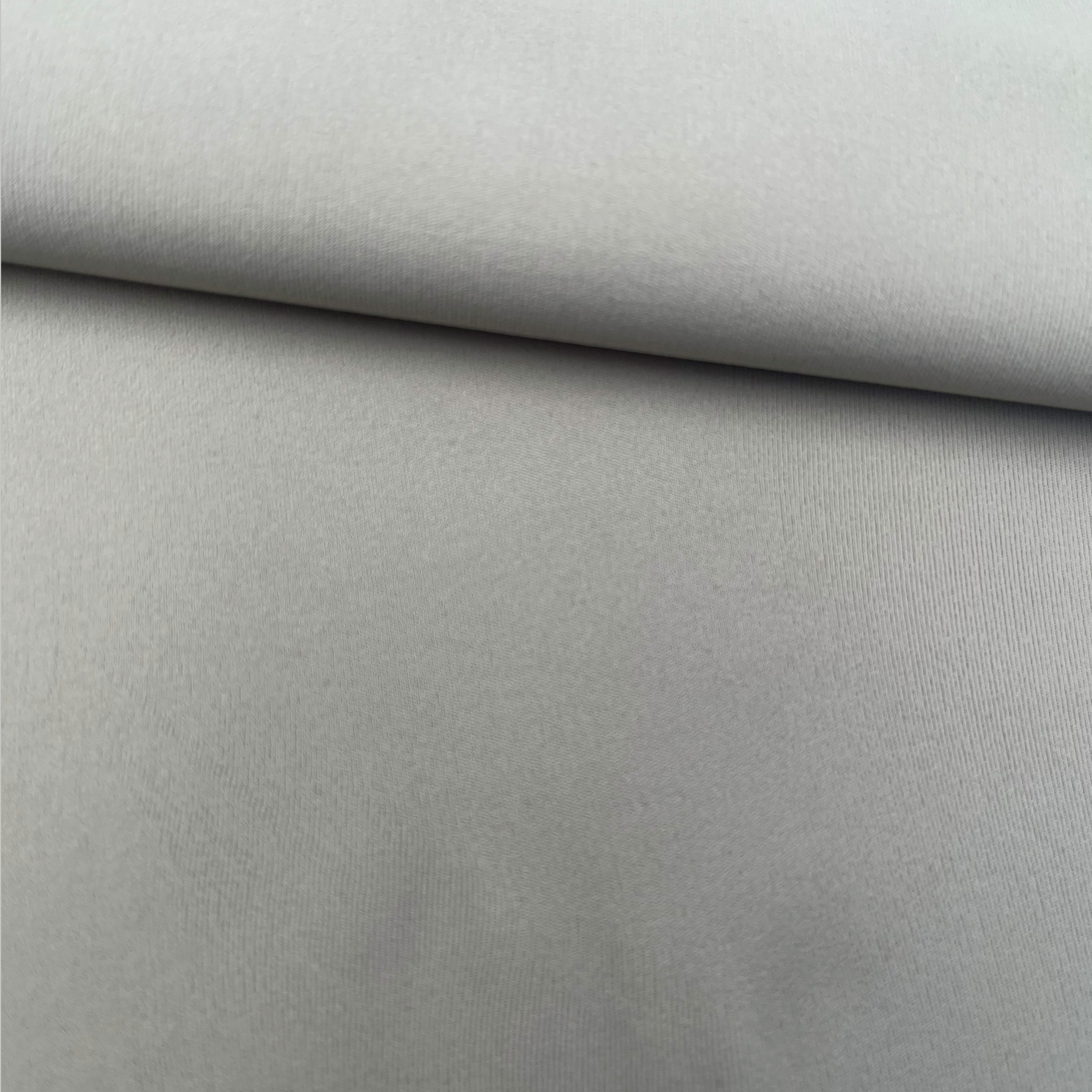
The Hand Feel—the texture and sensation perceived upon touching the fabric—is determined by the finest details of the yarn and knit structure.
To achieve a soft, plush Hand Feel, the textile engineer focuses on selecting yarns with micro-denier filaments. Micro-denier yarns (typically less than 1.0 denier per filament, or DPF) are thinner, resulting in a higher number of filaments packed into a single yarn. This significantly increases the number of contact points on the fabric surface, reducing the size of the "bites" the fibers take on the skin, thereby minimizing friction and maximizing softness. This is a primary factor in Achieving superior skin contact comfort in yoga knits.
The relationship between Knit density and yarn structure for soft yoga fabric is nuanced. Finer gauge knitting machines (which create higher density, tighter stitches) typically produce a smoother, less textured surface, enhancing the soft hand feel. However, too high a density can impede the collapse performance of the fabric and reduce breathability. The optimal structure often utilizes a dense, tight knit (like an interlock or double knit) combined with brushing or peaching finishes to mechanically raise the fiber ends, creating a soft, velvet-like surface while maintaining structural integrity.
| Yarn Filament Denier (DPF) | Effect on Fabric Hand Feel | Impact on Achieving superior skin contact comfort |
| Coarse Denier (e.g., DPF > 3.0) | Rougher, stiffer feel | Lower comfort; higher surface friction |
| Micro-Denier (e.g., DPF < 1.0) | Softer, fluid, bulkier feel | Superior comfort; essential for Optimizing hand feel |
The yoga knit fabric must manage heat and moisture effectively without compromising the necessary support, which is critical for Balancing compression and breathability in knitwear.
Air Permeability is the volume of air that passes through a specific area of fabric over a given time, measured in Liters per square meter per second (L/m2/s). For activewear, air permeability must fall within a functional range, typically 100 to 300 L/m2/s, depending on the intended compression level. A fabric below 100 L/m2/s is likely to feel clammy (stifling), regardless of its wicking ability. This metric, combined with high MVTR (the ability to wick and evaporate sweat), is crucial for meeting Air permeability testing standards for athletic knits and ensuring physiological comfort.
There is an inherent technical trade-off: high compression is achieved through tight knit structures and high elastane content (typically > 15%). This naturally reduces the air porosity of the fabric. Effective Balancing compression and breathability in knitwear requires selecting stitch patterns (e.g., a balanced interlock) and yarn compositions that provide the necessary compression forces (e.g., greater than or equal to 0.5 PSI for muscle support) while utilizing specialized hydrophobic yarns and surface treatments to ensure high MVTR and air flow, thus preventing heat buildup.
The final properties of the yoga knit fabric are often cemented during the dyeing and finishing stage.
Post-knitting, specialized chemical treatments are applied to enhance performance. Hydrophilic softeners are used to maximize the final Hand Feel and further aid in Achieving superior skin contact comfort in yoga knits. Furthermore, durable wicking finishes are applied to the surface to ensure high MVTR, guaranteeing the long-term effectiveness of the Optimizing hand feel and comfort in yoga fabric strategy.
Haining Yitai's quality control system is rigorous, verifying that production batches adhere to all technical specifications. We use standardized testing to confirm that the finished fabric meets the required Air permeability testing standards for athletic knits and dimensional stability (shrinkage). This dedication to consistent high quality ensures that B2B customers receive a reliable, high-performance product every time.
Micro-denier filaments are extremely thin fibers that increase the total number of filaments on the fabric surface. This results in a much smoother, softer, and more fluid drape, significantly reducing friction against the skin and is key to Achieving superior skin contact comfort in yoga knits.
Higher knit density (tighter stitches) generally increases support and compression but tends to reduce air porosity, potentially limiting breathability. Engineers must carefully select the density and yarn structure to maintain the functional requirements while ensuring adequate air flow for Balancing compression and breathability in knitwear.
While highly variable, high-performance active yoga knit fabric often targets an air permeability range between 100 and 300 L/m2/s. A value below this range risks trapping body heat and moisture, leading to the clammy sensation.
Specialized chemical softeners, often hydrophilic (water-loving) agents, are applied during the finishing process. These treatments enhance the final luxurious hand feel and often contribute to the fabric's initial wicking capability, further Optimizing hand feel and comfort in yoga fabric.
The key challenge is that the mechanical requirements for high compression (tight structure, high elastane content) inherently reduce the physical porosity of the fabric. Engineers must counteract this by optimizing the yarn cross-section and stitch type to create micro-channels for vapor transfer while maintaining the necessary tension and recovery forces.

As Yitai, since 2004, we have manufactured sportswear knitted fabrics such as interlock fabric, nylon fabric, spandex fabric, polyester fabric etc. With excellent R&D group, marketing team, quality control system, experienced dyeing & finishing supporting facility and customer service system.
Haining Yitai Knitting Co., Ltd
No. 198 Canghai Road, Warp Knitting Zone, Haining City, Zhejiang, 314419, China Tel: +0086 135 6738 5757 Email: [email protected] [email protected] [email protected]FOLLOW US




 英语
英语 中文简体
中文简体