Introduction: Fabric is the "Soul" of Yoga Wear
In the practice of yoga, fabric is far more than just a material; it serves as a critical interface between the practitioner and their performance. Unlike standard activewear, yoga apparel demands a sophisticated balance between static comfort and extreme dynamic stretching.
Beyond Fashion: Why Fabric Matters in Practice
- Dynamic Extensibility: Yoga involves profound folding, twisting, and stretching. High-quality fabric must provide structural support without restriction, ensuring that during poses like Hanumanasana (Splits) or Urdhva Dhanurasana (Wheel Pose), the garment moves as a second skin.
- Tactile Feedback and Mindfulness: Yoga emphasizes the union of body and mind. Coarse fibers or irritating seams can disrupt focus. The hand-feel of the material directly influences a practitioner's ability to remain immersed in meditation and deep practice.
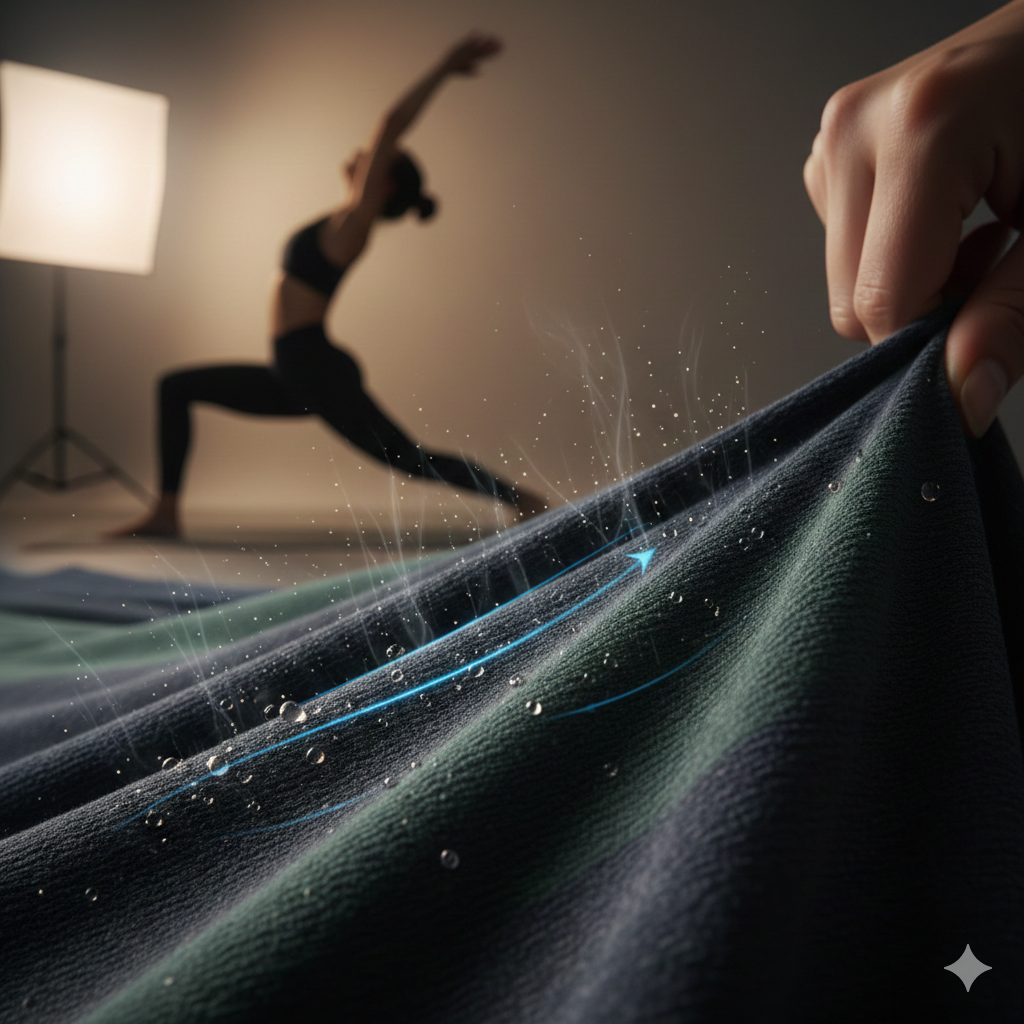
- Physiological Protection: During high-sweat sessions like Hot Yoga or Vinyasa Flow, breathability and moisture-wicking efficiency determine the success of thermoregulation, preventing skin irritation or the discomfort of heavy, sodden clothing.
The Evolution of Fabric Technology: From Natural to High-Performance
The development of yoga wear fabric has transitioned from basic natural fibers to multi-dimensional functional textiles:
- The Traditional Era (Cotton Dominance): Early practitioners favored pure cotton for its skin-friendly nature. However, cotton absorbs moisture without releasing it, becoming heavy, losing shape, and chafing during movement.
- The Technical Intervention (Nylon & Spandex): The introduction of Nylon (Polyamide) blended with Spandex (Elastane) revolutionized the industry, offering a perfect marriage of high elasticity and superior abrasion resistance.
- The Modern High-Performance Era: Contemporary fabrics utilize micro-fiber cross-sections, silver-ion anti-odor treatments, and Recycled Polyester. These innovations ensure professional-grade performance while addressing environmental sustainability and long-term durability.
Comparison: Traditional Fabrics vs. Modern Technical Yoga Fabrics
| Dimension |
Traditional Cotton Fabric |
Modern Technical Fabric |
| Elastic Recovery |
Low; prone to "bagging" at the knees or permanent stretching. |
Superior; features 4-way stretch that retains shape after infinite washes. |
| Moisture Management |
Absorbent but retains water; slow to dry and becomes heavy when wet. |
Moisture-Wicking; channels sweat to the surface for rapid evaporation. |
| Tactile Texture |
Naturally soft but can become stiff or rough after multiple washes. |
Brushed or Peached finishes provide a consistent, buttery-soft sensation. |
| Durability |
Moderate resistance to pilling and tearing. |
High Durability; engineered to resist pilling and friction from mats. |
Core Fabric Compositions: The Science of High-Performance Textiles
Modern yoga wear relies on a sophisticated blend of synthetic and semi-synthetic fibers. Understanding the chemical properties of these materials allows practitioners to select garments that optimize compression, durability, and moisture control.
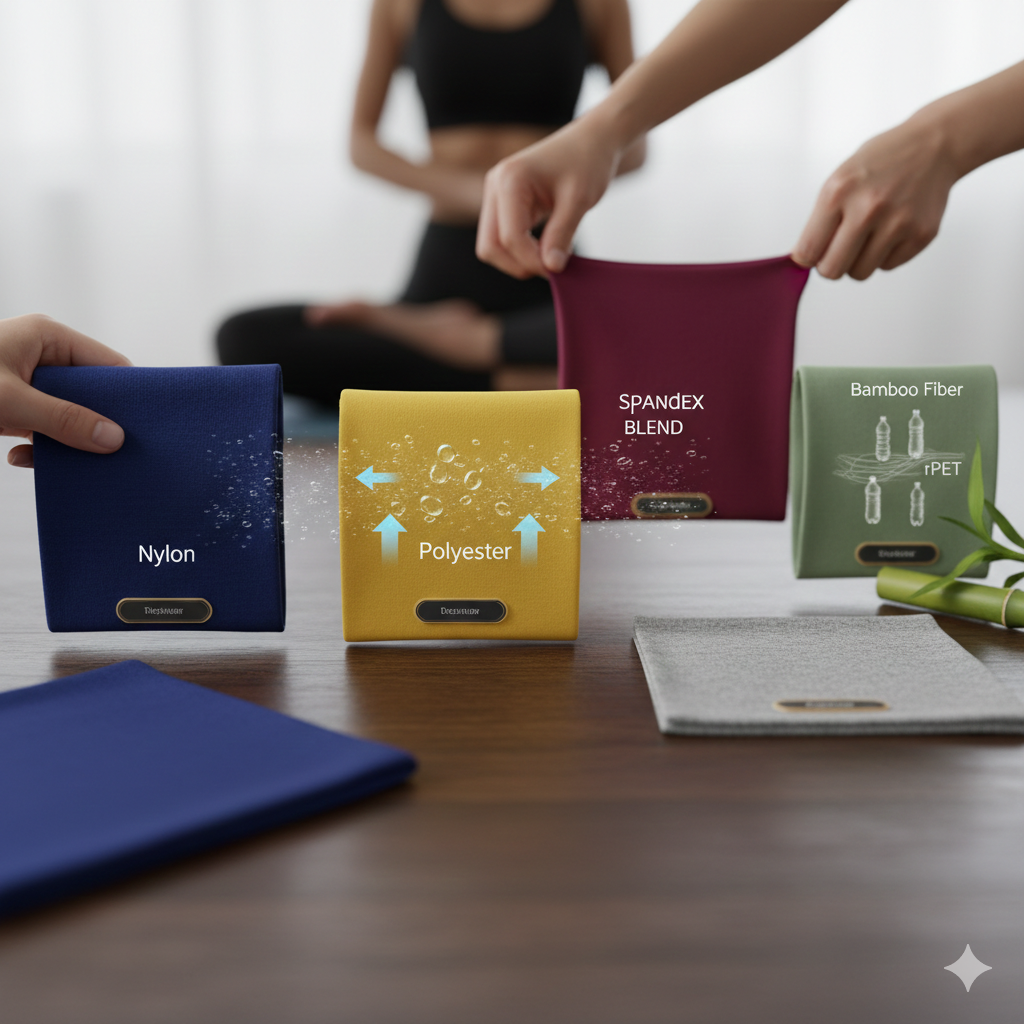
1. Nylon (Polyamide): The Gold Standard for Feel and Durability
Nylon is the primary fiber used in premium yoga apparel. It is prized for its exceptional strength-to-weight ratio and its ability to mimic the softness of natural fibers while maintaining technical superiority.
- Softness: Often referred to as having a "buttery-soft" or "peached" hand-feel.
- Resilience: Highly resistant to abrasion and pilling, making it ideal for high-friction activities on the yoga mat.
- Color Vibrancy: Nylon fibers take dye exceptionally well, resulting in deep, rich colors that do not fade easily.
2. Polyester: The Moisture-Wicking Powerhouse
While often compared to Nylon, Polyester serves a distinct purpose, especially in high-intensity "Hot Yoga" or Vinyasa flows where sweat management is the top priority.
- Hydrophobic Nature: Polyester fibers naturally repel water, meaning they don't get heavy when wet; instead, they move sweat to the surface to evaporate.
- UV Resistance: Excellent for outdoor yoga sessions as it provides natural protection against sun damage.
- Sustainability: Many modern yoga fabrics use rPET (Recycled Polyester) sourced from post-consumer plastic bottles, significantly reducing environmental impact.
3. Spandex (Elastane): The Key to "4-Way Stretch"
No professional yoga garment is complete without Spandex (often known by the trade name Lycra). It is never used alone but is blended with Nylon or Polyester to provide the necessary elasticity.
- Shape Retention: Allows the fabric to stretch up to 5-8 times its original length and immediately snap back to its original shape.
- Compression: Higher percentages of Spandex (typically 15%–25%) provide muscle support and a "sculpting" effect.
Material Comparison: Selecting the Right Blend
| Feature |
High-Nylon Blend |
High-Polyester Blend |
| Primary Benefit |
Luxury Touch and high durability. |
Fast Drying and moisture management. |
| Stretch Feel |
More "giving" and second-skin-like. |
Firmer, often providing more compression. |
| Best For |
Hatha, Yin, and daily lifestyle wear. |
Hot Yoga, Power Yoga, and heavy sweating. |
| Pilling Resistance |
Excellent; stays smooth longer. |
Good, but slightly more prone to surface wear. |
4. Eco-Friendly Alternatives: The Rise of Plant-Based Fibers
For those seeking a more sustainable practice, several bio-based fabrics are gaining popularity:
- Modal/Tencel: Derived from beech or eucalyptus trees, these fibers are biodegradable and offer a silky, cool-to-the-touch sensation.
- Bamboo Fiber: Naturally antibacterial and highly breathable, though often blended with Spandex to maintain the necessary stretch for yoga.
Key Performance Indicators: The Technical Standards of Yoga Fabrics
When evaluating Yoga Wear Fabric, professional manufacturers and practitioners look beyond the label. High-performance textiles must pass rigorous technical tests to ensure they can handle the physical demands of a diverse yoga practice.
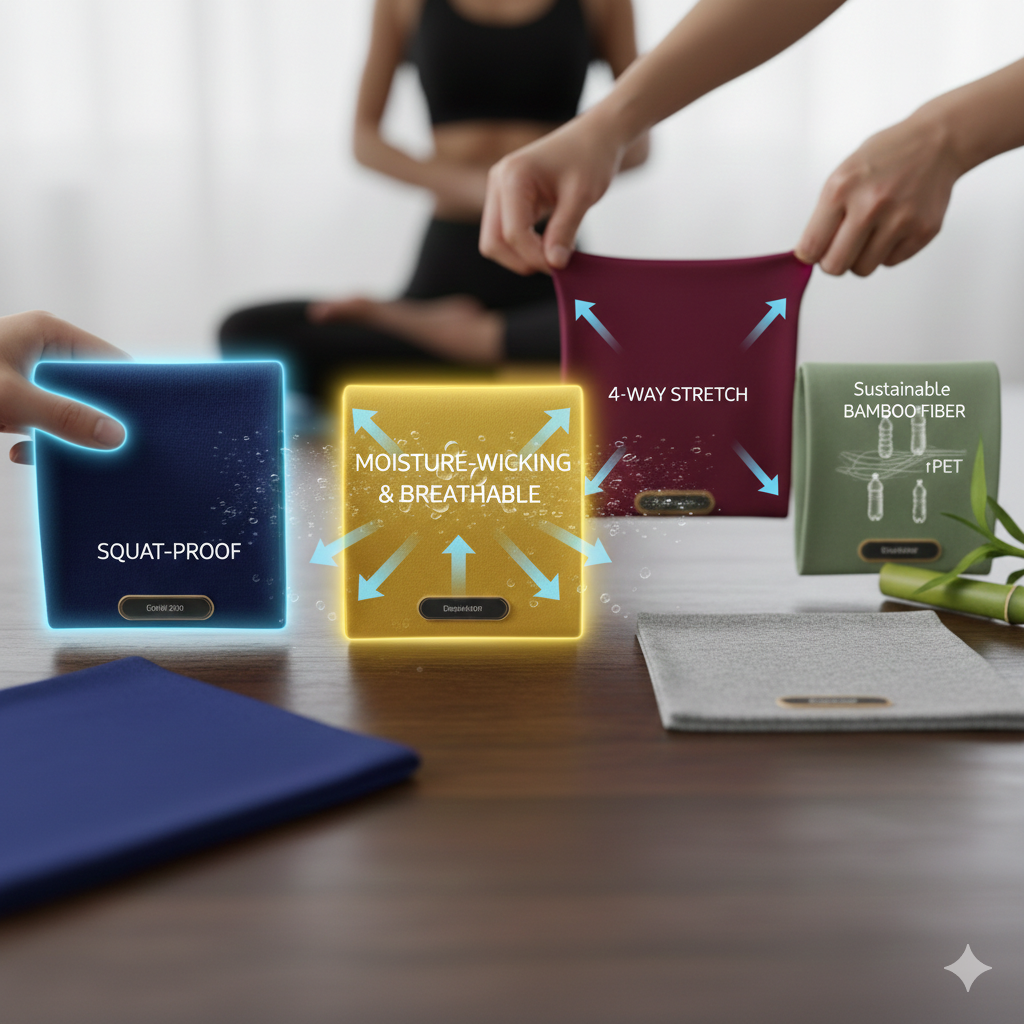
1. 4-Way Stretch: Total Freedom of Movement
Unlike standard "2-way stretch" fabrics that only expand in one direction, professional yoga fabric features 4-way stretch. This means the material expands both crosswise and lengthwise.
- Bi-directional Elasticity: Ensures the waistband stays in place during inversions while the legs stretch freely during lunges.
- Structural Integrity: High-quality 4-way stretch allows the garment to return to its original shape without over-stretching or sagging over time.
2. Moisture-Wicking and Breathability
This is a measurement of capillary action—the fabric's ability to pull moisture away from the skin and transport it to the outer surface for evaporation.
- Vapor Permeability: Measures how easily air can pass through the fabric to regulate body temperature.
- Quick-Dry Rating: High-performance polyester and nylon blends are engineered to dry significantly faster than natural fibers, preventing the "wet-towel" feel during restorative poses following a vigorous flow.
3. Squat-Proof Assurance (Opacity and GSM)
One of the most critical safety features of yoga leggings is opacity. This is determined by the fabric's GSM (Grams per Square Meter), which indicates the density and weight of the knit.
- High-Density Knitting: A higher GSM (typically between 220g and 320g for leggings) ensures that the fabric remains opaque even when fully stretched in a deep squat or downward dog.
- Interlock Construction: A specialized knitting technique that creates a double-sided fabric, providing maximum coverage and a smooth finish on both sides.
4. Pilling Resistance and Durability
Yoga involves constant friction against mats and props. Pilling (the formation of small balls of fiber on the surface) is a common failure in low-quality fabrics.
- Abrasion Testing: Professional fabrics undergo Martindale or Wyzenbeek tests to simulate thousands of rubs, ensuring the surface remains smooth and "like-new."
Technical Performance Summary
| Technical Metric |
Standard Requirement |
Practical Benefit |
| Elongation Rate |
Typically >150% in both directions |
Prevents ripping and restriction during extreme poses. |
| Fabric Weight (GSM) |
250 - 300 GSM for leggings |
Ensures the garment is squat-proof and durable. |
| Drying Time |
<30 minutes (Standardized Test) |
Keeps the body light and prevents post-exercise chills. |
| Pilling Grade |
Grade 4 or 5 (Scale of 1-5) |
Maintains a smooth aesthetic despite heavy mat use. |
Selecting Fabrics for Different Yoga Styles
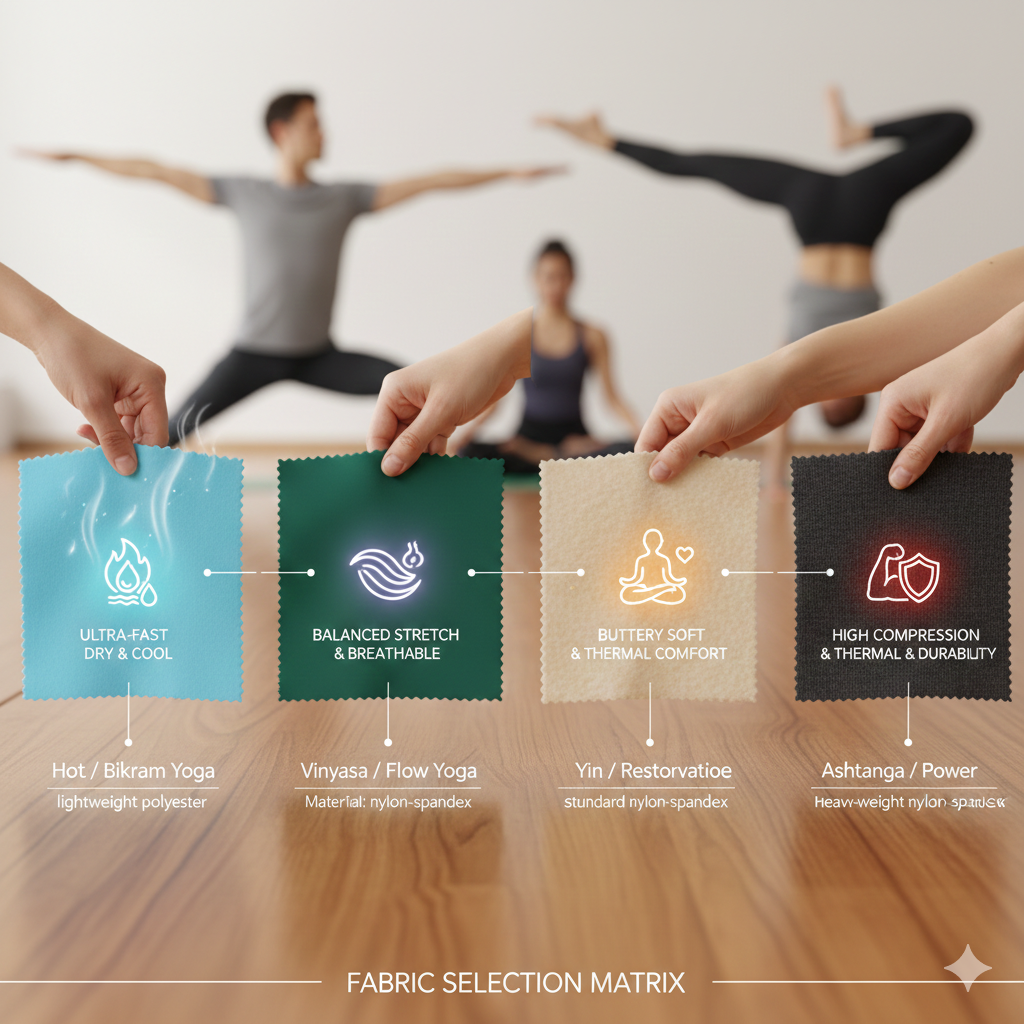
Not all yoga practices are created equal, and neither are the fabrics designed for them. Choosing the right Yoga Wear Fabric depends heavily on the intensity, temperature, and spiritual focus of your session.
1. High-Intensity & Hot Yoga: Maximum Performance
In practices like Bikram or Power Vinyasa, the primary challenges are heat and heavy perspiration. The fabric must prioritize rapid cooling and moisture management.
- Recommended Blend: High-Polyester and Spandex (Elastane) blends.
- Key Features: Lightweight (lower GSM), cool-to-the-touch, and exceptionally fast-drying.
- Why: Polyester's hydrophobic nature prevents the garment from becoming a heavy "wet sponge," maintaining agility throughout the flow.
2. Static & Yin Yoga: Comfort and Mindfulness
Yin or Restorative Yoga involves long-held poses with minimal movement. Here, the focus shifts from moisture-wicking to thermal comfort and soft tactile feedback.
- Recommended Blend: Nylon-Spandex blends with a Brushed finish, or Tencel/Modal blends.
- Key Features: "Naked feel" or "Buttery soft" textures, moderate thickness for warmth.
- Why: These fabrics minimize sensory distraction, allowing the practitioner to focus entirely on deep tissue release and meditation.
3. Athletic & Ashtanga Yoga: Support and Compression
For rigorous, athletic styles that involve many "vinyasas" and inversions, muscle support and garment stability are paramount.
- Recommended Blend: High-density Nylon-Spandex (with 20%–25% Spandex).
- Key Features: High compression, Squat-proof thickness (high GSM), and a secure waistband.
- Why: High compression helps reduce muscle vibration and ensures the leggings stay perfectly in place during dynamic transitions.
Fabric Selection Matrix by Practice Type
| Yoga Style |
Ideal Fabric Property |
Preferred Material |
| Hot / Bikram |
Ultra-fast dry & Heat dissipation |
Lightweight Polyester + Spandex |
| Vinyasa / Flow |
Balance of stretch & Breathability |
Standard Nylon + Spandex |
| Yin / Restorative |
Soft touch & Heat retention |
Brushed Nylon or Modal blends |
| Ashtanga / Power |
High compression & Durability |
Heavy-weight Nylon + Spandex |
Advanced Fabric Treatments and Construction
Beyond the raw fiber composition, the finishing processes and construction methods applied to yoga wear fabric are what elevate a garment from basic gym gear to professional-grade apparel. These technologies enhance the tactile experience and the functional longevity of the clothing.
1. The "Brushed" Finish: Achieving the Buttery-Soft Feel
Many practitioners seek a "naked sensation" or a "peached" texture. This is achieved through a mechanical process called brushing.
- Mechanical Abrasion: Metal brushes gently tease the tiny fibers on the fabric surface, creating a soft, downy nap.
- One-Sided vs. Two-Sided: Fabric can be "single-brushed" (usually on the inside for comfort) or "double-brushed" for ultimate softness inside and out.
- Thermal Benefit: The raised fibers trap a thin layer of air, providing slight insulation for restorative practices.
2. Anti-Odor and Antibacterial Technology
Synthetic fibers like polyester can often trap bacteria that cause odors. Advanced yoga fabrics incorporate anti-odor treatments to keep the garment fresh through multiple sessions.
- Silver Ion Technology: Microscopic silver particles are embedded into the fibers. Silver is naturally antimicrobial and inhibits the growth of odor-causing bacteria.
- Sustainable Zinc: An alternative to silver, zinc-based treatments provide similar protection while being environmentally friendly.
- Permanent vs. Topical: High-quality fabrics integrate these treatments at the fiber level so they don't wash out over time.
3. Seamless Construction: Friction Reduction
Traditional seams can cause chafing during repetitive movements like "Sun Salutations." Seamless technology changes how the fabric interacts with the body.
- Circular Knitting: Garments are knit in a continuous tube rather than being cut and sewn from flat sheets of fabric.
- Targeted Ventilation: Breathable mesh structures can be knit directly into high-heat zones (like the back of the knees) without the need for extra seams.
- Zoned Compression: Different levels of tightness can be engineered into a single piece of fabric to support specific muscle groups.
Advanced Treatment Comparison
| Technology |
Mechanism |
Primary Practice Benefit |
| Brushed Finish |
Raised surface fibers (nap) |
Eliminates skin irritation; provides luxury "peach" feel. |
| Silver Ion (Ag+) |
Antimicrobial chemical reaction |
Keeps clothing fresh after intense, high-sweat flows. |
| Seamless Knit |
Continuous circular loom knitting |
Zero chafing; maximum aesthetic "sculpting" effect. |
| Anti-Static |
Conductive fiber treatment |
Prevents the fabric from clinging to the skin or mat. |
Care and Maintenance of Yoga Fabrics
The longevity of high-performance Yoga Wear Fabric depends significantly on how it is laundered. Because synthetic fibers like Nylon and Spandex are sensitive to heat and chemicals, improper care can lead to a loss of elasticity, reduced breathability, and the development of persistent odors.
1. Washing Guidelines: Preserving the Fibers
To maintain the technical integrity of the fabric, a gentle approach is essential. Synthetic fibers have a low melting point and can be damaged by aggressive agitation.
- Cold Water Wash: Always use cold or lukewarm water. High temperatures break down the Spandex fibers, leading to a permanent loss of "snap-back" elasticity and causing the garment to sag.
- Turn Garments Inside Out: This protects the outer finish (especially Brushed or peached textures) from pilling caused by friction with other clothes or the washing machine drum.
- Use a Laundry Bag: Placing yoga wear in a mesh bag prevents straps from tangling and protects the delicate 4-way stretch structure.
2. The "No-Go" List: Common Mistakes
Certain household laundry products can chemically "clog" or destroy the performance features of yoga textiles.
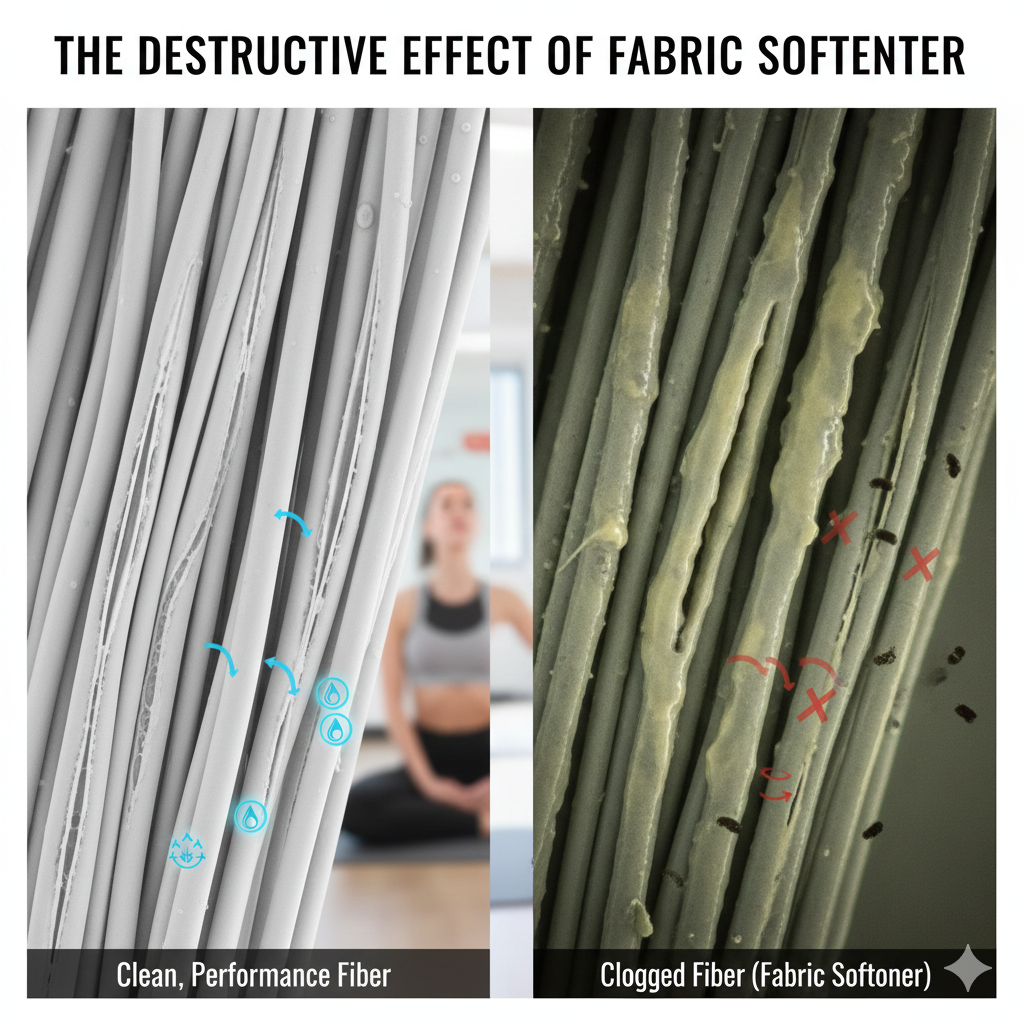
- Avoid Fabric Softeners: Softeners coat the fibers in a waxy film. This film clogs the microscopic pores of moisture-wicking fabrics, effectively "locking in" sweat and bacteria and destroying breathability.
- No Bleach: Chlorine bleach is extremely corrosive to Spandex and will cause the elastic fibers to snap and yellow over time.
- Skip the Dryer: The high heat of a tumble dryer is the number one enemy of yoga wear. It causes the fibers to become brittle and lose their compressive strength.
3. Drying and Storage
Proper drying ensures the garment retains its original fit and remains free of mildew.
- Air Dry Only: Lay the garment flat or hang it in a well-ventilated area.
- Avoid Direct Sunlight: UV rays can degrade synthetic polymers and cause vibrant colors to fade. Dry your yoga wear in the shade.
- Don't Wring: Instead of twisting the fabric to remove water (which can distort the 4-way stretch), gently press the water out with a towel.
Summary of Care Instructions
| Action |
Recommended Practice |
Reason |
| Water Temp |
Cold (below 30°C) |
Prevents Spandex degradation. |
| Detergent |
Mild, Liquid detergent |
Easily rinses out without leaving residue. |
| Softener |
Never Use |
Maintains moisture-wicking capabilities. |
| Drying |
Line dry / Flat dry |
Extends the "life" and shape of the garment. |
Conclusion and Future Trends in Yoga Fabric
The selection of Yoga Wear Fabric is a delicate balance between material science and personal sensory preference. As technology advances, the boundary between "sportswear" and "lifestyle apparel" continues to blur, leading to even more innovative textile solutions.
Finding Your Perfect Balance
When choosing your next set of yoga apparel, remember that no single fabric is "the best"—only the best for your specific needs. Consider the following three pillars:
- Tactile Preference: Do you prefer the "naked" sensation of brushed nylon or the firm, cool support of a high-performance polyester blend?
- Activity Demand: Will you be holding long, cooling Yin poses or sweating through a vigorous Power Flow?
- Functional Requirements: Are squat-proof opacity and high compression non-negotiable for your practice?
The Future of Yoga Textiles
The industry is moving toward a more conscious and technologically integrated future. Key trends to watch include:
- Circular Sustainability: Beyond just using recycled materials, the future lies in monomaterial garments that can be infinitely recycled back into new yoga clothing at the end of their life cycle.
- Bio-Engineered Fibers: Scientists are developing lab-grown fibers and plant-based polymers that offer the same elasticity as spandex but are completely biodegradable.
- Smart Fabrics: The integration of thermally-conductive materials that can sense body temperature changes and adjust breathability levels in real-time.
- Natural Antimicrobials: Moving away from chemical treatments toward fabrics infused with seaweed, peppermint, or other natural elements to maintain freshness.
Final Takeaway
Investing in high-quality Yoga Wear Fabric is an investment in your practice. By understanding the fibers, construction, and care required, you ensure that your gear supports your journey toward mindfulness and physical strength rather than distracting from it.
| Trend Focus |
Innovation |
User Benefit |
| Eco-Conscious |
Biodegradable Elastane |
High stretch without environmental microplastic waste. |
| Intelligence |
Phase Change Materials (PCM) |
Maintains optimal skin temperature (37.5°C) during practice. |
| Skin Health |
Aloe/Vitamin E Infusion |
Moisturizes skin and reduces friction-induced irritation. |





 英语
英语 中文简体
中文简体